When Your Morning Shower Goes Ice Cold: Broken Water Heater Repair in the South Sound
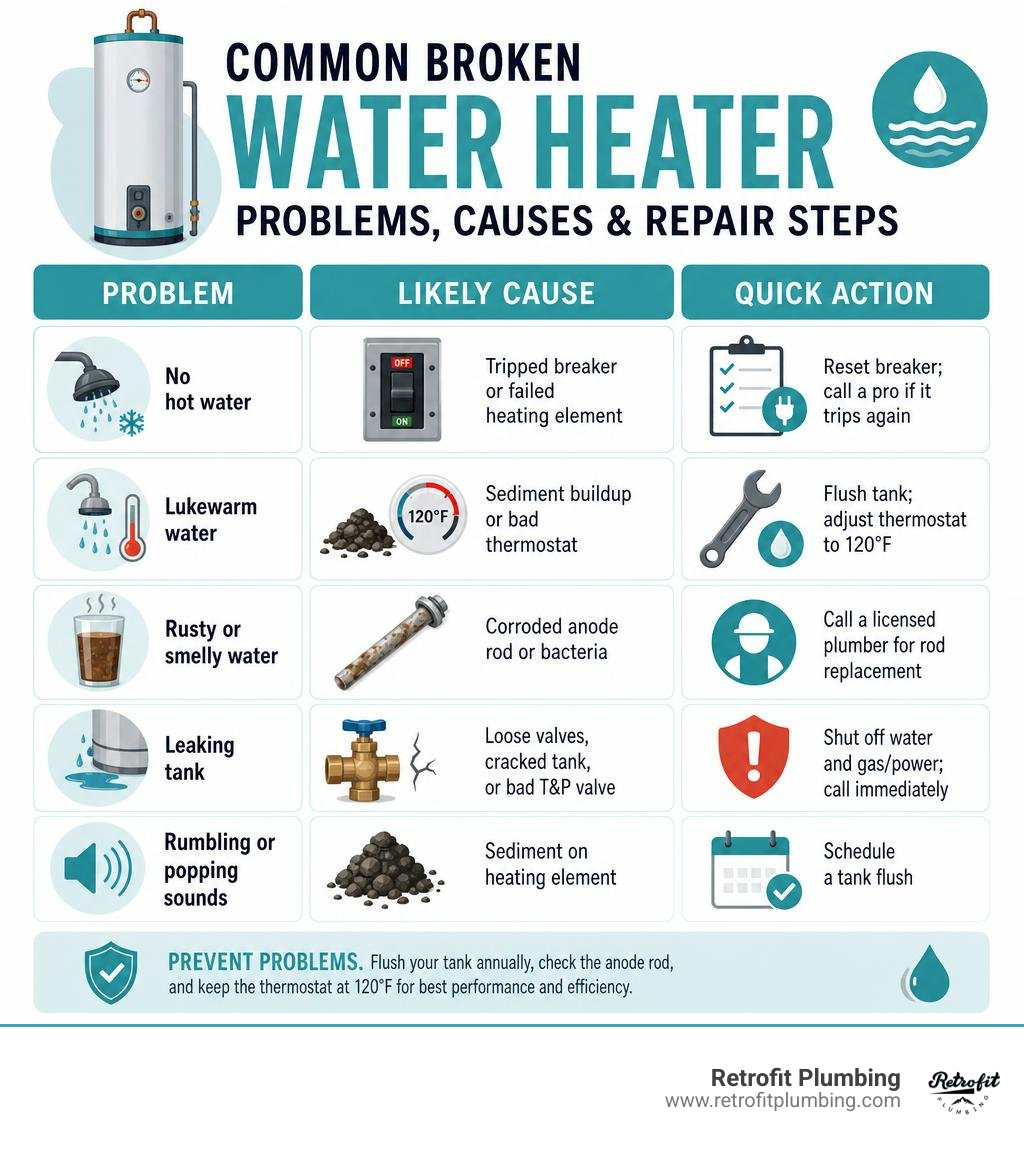
Here's how to handle the most common broken water heater issues:
| Problem | Likely Cause | Quick Action |
|---|---|---|
| No hot water | Tripped breaker or failed heating element | Reset breaker; call a pro if it trips again |
| Lukewarm water | Sediment buildup or bad thermostat | Flush tank; adjust thermostat to 120°F |
| Rusty or smelly water | Corroded anode rod or bacteria | Call a licensed plumber for rod replacement |
| Leaking tank | Loose valves, cracked tank, or bad T&P valve | Shut off water and gas/power; call immediately |
| Rumbling or popping sounds | Sediment on heating element | Schedule a tank flush |
There are few things worse than stepping into a cold shower on a gray Pacific Northwest morning. Whether you're in Covington, Auburn, or anywhere across the South Sound, a broken water heater can throw off your entire day before it even starts.
The good news? Most water heater problems follow predictable patterns. Sediment buildup, failed heating elements, tripped breakers, and worn-out anode rods account for the vast majority of failures. Many issues are fixable — if you catch them early and respond correctly.
Water heaters typically last 8 to 12 years, and the most common cause of early failure is slow sediment accumulation from our region's hard water supply. A little maintenance goes a long way. But when something does break, knowing what you're dealing with saves time, money, and stress.
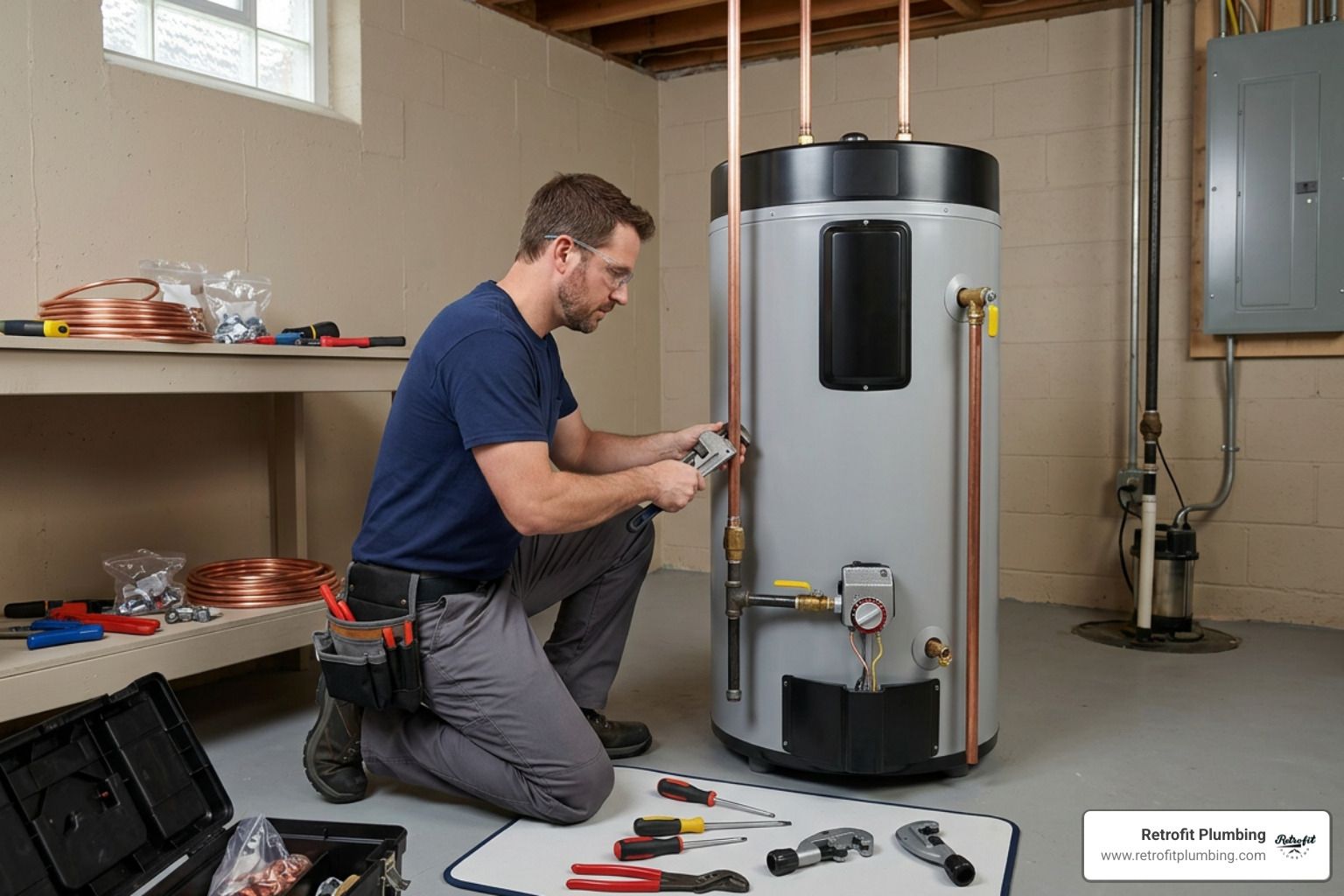
I'm Josh Klimp, owner of Retrofit Plumbing, with over 20 years of hands-on experience in broken water heater repair, new construction plumbing, and commercial remodel projects across the greater South Sound area. In this guide, I'll walk you through exactly how to diagnose the problem, when to fix it yourself, and when to call a pro.
How to Diagnose a Broken Water Heater Repair Need
When your hot water stops flowing, your first instinct might be to panic. But before you call us out to your home in Covington or Bellevue, taking a moment to evaluate the situation can save you a lot of headache.
Diagnosing a broken water heater repair starts with understanding how our Pacific Northwest climate and local water quality impact your plumbing. In Western Washington, we love our towering Douglas firs and beautiful rainy seasons, but our local water systems—especially if you're on a private well near Kent or Renton—often carry dissolved minerals. Over time, these minerals settle at the bottom of your tank, creating a thick layer of sediment.
When a winter cold snap hits the South Sound, your water heater has to work twice as hard to heat the freezing water entering your home. If there is sediment built up at the bottom of your tank, it acts as a barrier between the burner or heating element and the water. This leads to overheating, tank fatigue, and eventually, a total system breakdown.
To help you navigate these issues safely, we’ve put together our Covington Water Heater Repair Guide to help local homeowners identify issues before they turn into emergencies. If you notice water pooling around the base of your unit, you should immediately consult our Water Heater Emergency Repair Guide to prevent costly water damage to your basement or utility closet.
Two critical safety and maintenance components to look at during your initial inspection are the pressure relief valve (T&P valve) and the anode rod. The T&P valve is designed to release water if the pressure or temperature inside the tank gets too high. If this valve is dripping constantly, it’s a clear warning sign. The anode rod, on the other hand, is a sacrificial metal rod that attracts corrosive elements in the water so your steel tank doesn't rust out. If the anode rod is completely corroded, your tank is next.
Spotting the Signs of a Failing System
You don't always have to wait for a freezing cold shower to know your water heater is struggling. Often, your system will give you several warning signs:
- Lukewarm Water: If your showers are getting shorter and your water never quite reaches that steaming, comfortable temperature, your lower heating element or thermostat is likely failing.
- Rusty Runoff: If discolored, reddish-brown water is flowing from your hot water taps but your cold water runs perfectly clear, it’s a sign that the interior of your tank is actively corroding. In these cases, you may have active Services Water Heater Leaks developing along the seams.
- A Rotten Egg Smell: When bacteria react with the magnesium in your anode rod, it creates hydrogen sulfide gas, leaving you with a foul sulfur odor whenever you run the hot water.
- Rumbling or Popping Noises: That scary sound coming from your basement isn't a ghost; it's steam bubbles escaping from beneath a thick layer of hardened sediment at the bottom of your tank.
- Pilot Light Failures: If you have a gas system and find yourself constantly relighting the pilot, your thermocouple is likely worn out.
If you are experiencing these issues in the Renton area, taking quick action is essential to prevent a minor leak from turning into a major flood in your utility room or basement.
Why Professional Broken Water Heater Repair Beats DIY Risks
We love the rugged, do-it-yourself spirit of the Pacific Northwest. However, water heaters are unique because they sit at the intersection of high-voltage electricity (or highly flammable gas), high-pressure water, and toxic exhaust fumes.
Attempting a DIY fix on a gas line or an electrical connection without the proper training can lead to catastrophic consequences, including electrical shocks, gas leaks, house fires, or carbon monoxide poisoning. Furthermore, Washington state has strict plumbing and building codes designed to keep your family safe. If your system is not up to code, you could face issues when trying to sell your home or file an insurance claim after a leak.
If you find yourself facing a sudden plumbing crisis, our Emergency Plumber Covington Guide outlines the exact steps to take to secure your home. For professional, code-compliant assistance in the South Sound, you can always rely on local experts like Retrofit Plumbing to handle the heavy lifting safely.
Step-by-Step Troubleshooting for Common Water Heater Problems
Before you assume your water heater is completely dead and start shopping for a replacement, there are a few basic troubleshooting steps you can perform. Always remember: safety first. Before touching any electrical components or valves, ensure the power supply at your breaker panel is turned completely off, and verify it using a non-contact voltage tester.
If you suspect a bad heating element is the culprit behind your lukewarm showers, you can refer to our Replacing Water Heater Element Guide for a detailed walkthrough on testing and swapping out these parts. Additionally, if your temperature and pressure relief valve is constantly leaking, you can learn how to resolve this safety issue by reading our guide on Replacing Water Heater Relief Valve.
Fixing Electric Water Heater Issues
Electric water heaters are highly common in our region, relying on an upper and a lower heating element to keep your water hot.
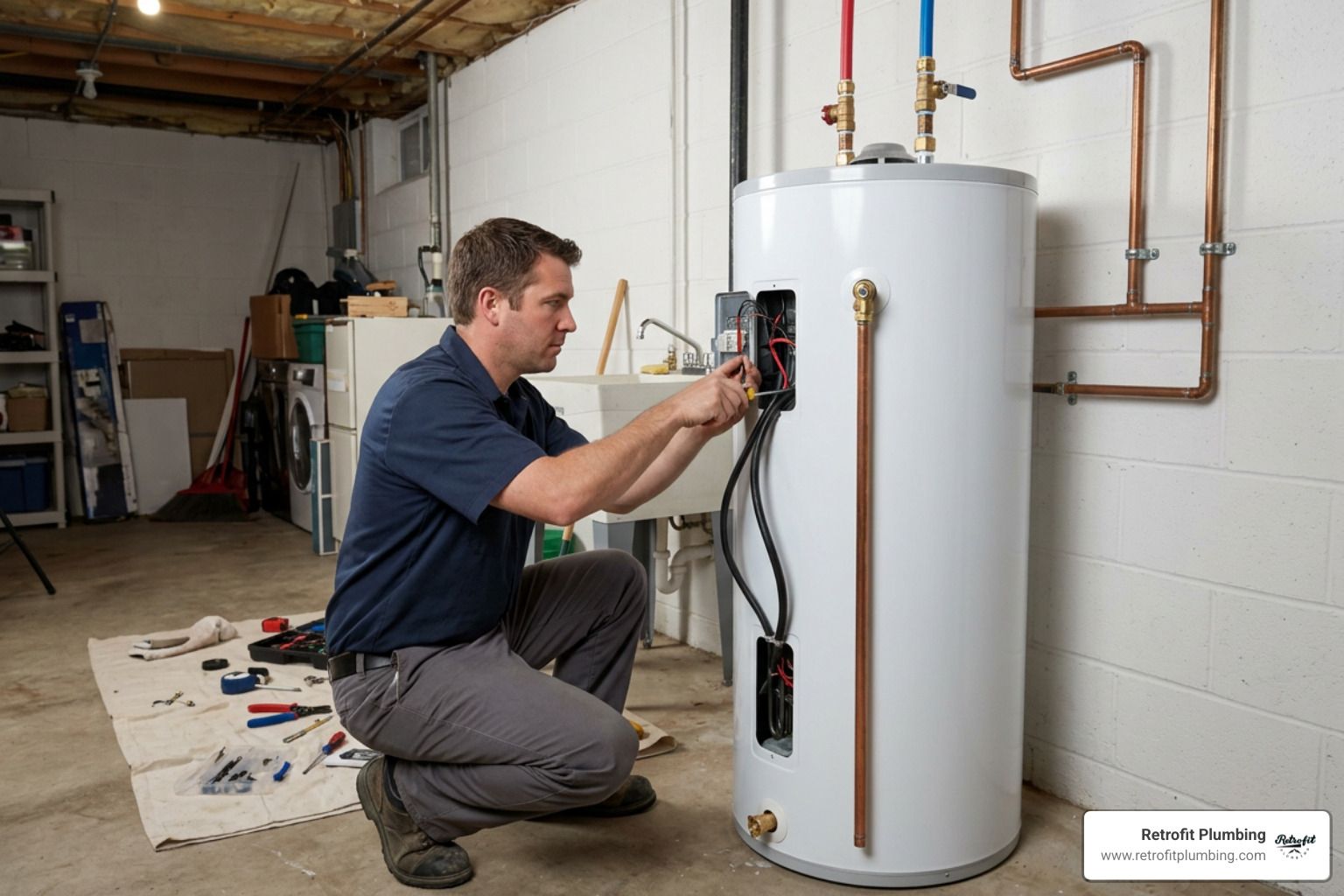
If you have absolutely no hot water, start by checking your home's main electrical panel. If the circuit breaker has tripped, flip it back on. If it immediately trips again, do not force it—this indicates a direct short circuit, likely caused by a burned-out heating element.
Next, shut off the power and remove the access panels on the side of your water heater. Push the red high-temperature reset button located on the upper thermostat. If you hear a click, your water heater may start heating again, but keep in mind that a tripped reset button usually indicates that one of your thermostats is malfunctioning and staying on too long.
If you need to replace the entire unit, our guide on Replacing an Electric Water Heater will guide you through the process of choosing and installing a modern, energy-efficient model.
Troubleshooting Gas and Tankless Systems
Gas water heaters rely on a continuous gas supply, a pilot light, and a thermocouple to heat your water safely. If you have a gas unit and find yourself with freezing cold water, check the pilot light first. If the pilot is out, follow the manufacturer's instructions on the side of the tank to relight it. If it refuses to stay lit after you release the control knob, your thermocouple is likely dirty or broken and needs to be replaced.
If you have upgraded to a modern tankless system, troubleshooting looks a bit different. Tankless units are highly sophisticated computer-controlled appliances. When something goes wrong, they will display a specific numerical error code on their digital screen.
Whether you are dealing with a standard unit or a specialized setup like those detailed in our Propane Tankless Hot Water Heater Guide, these codes will point you directly to the issue, whether it's a blocked exhaust vent, a failing flow sensor, or a scaled-up heat exchanger.
To learn more about how these systems operate and how to maintain them, check out our comprehensive service page on Tankless Water Heaters, or read through our Residential Tankless Water Heater Guide 2026 to see the latest technological advancements.
Repair vs. Replacement: When to Swap Your Tank
Deciding whether to invest in a broken water heater repair or replace the unit entirely usually comes down to three factors: age, cost, and frequency of repairs.
To help you make the right choice, we use a simple rule of thumb: The 50% Cost Threshold. If the cost of repairing your current water heater is more than 50% of the cost of a brand-new installation, replacement is almost always the smarter financial move. This is especially true if your tank is over 10 years old (the "10-year rule"), as standard tanks rarely last beyond 12 years without developing major, unfixable leaks.
| Factor | Repair | Replace |
|---|---|---|
| Age of Tank | Under 8 years old | Over 10–12 years old |
| Repair Cost | Less than 40% of new unit cost | More than 50% of new unit cost |
| System History | First major issue | Frequent breakdowns and constant repairs |
| Tank Condition | Dry exterior, minor component failure | Active rust, leaks from the tank body, or heavy sediment |
| Energy Bills | Normal | Rising energy costs due to system inefficiency |
If you decide that it's time to retire your old unit, our team at Retrofit Plumbing can help you transition smoothly. Explore our Plumber Water Heater Replacement services to find a durable, high-efficiency system that fits your household's daily hot water demands. If you want to eliminate standby heat loss entirely, we can also help you select the Best Residential Tankless Water Heater for your home.
Average Costs for a Broken Water Heater Repair in Washington
While national averages can give you a general idea, local labor rates and regional factors play a significant role in your final bill. In Washington state—particularly around high-demand areas like Bellevue, Kirkland, and Seattle—professional diagnostic fees typically range from $99 to $200.
For standard tank systems, minor repairs such as replacing a thermostat or a heating element usually run between $150 and $400. More complex repairs on gas control valves or tankless heat exchangers can easily range from $500 to $900 or more.
If you want to see what homeowners are saying about local service rates and find top-rated providers in your neighborhood, you can check out the Top 10 Best Water Heater Installation/Repair Near Bellevue ... - Yelp directory.
Additionally, if your home has a closed plumbing system, Washington building codes require a thermal expansion tank to absorb excess pressure. If yours is failing, you can read our guide on Replacing Water Heater Expansion Tank to understand the associated costs and installation steps.
Upgrading to Modern Tankless Technology
If you're tired of running out of hot water halfway through a winter morning, upgrading to a tankless water heater is a game-changer. Unlike traditional tanks that constantly heat and reheat 50 gallons of water—even when you're asleep or at work—tankless systems heat water on demand. This provides you with an endless supply of hot water while lowering your energy bills by up to 34%.
For those who love outdoor adventures, we’ve even created a Propane Tankless Water Heater RV Guide to help you bring the comforts of home on the road.
If you are ready to make the switch in your home, you can learn more about our local installation process by visiting Efficient Hot Water Tank Installation by Retrofit Plumbing in Covington. Plus, with modern high-efficiency units boasting Uniform Energy Factor (UEF) ratings of up to 0.98, you may qualify for substantial federal tax credits and local utility rebates.
Frequently Asked Questions About Water Heater Issues
How long does a typical water heater repair take?
For most standard repairs—such as swapping out a burned-out heating element, replacing a faulty thermostat, or installing a new thermocouple—a professional plumber can complete the job in 1 to 3 hours.
If you are replacing an entire traditional tank, the installation process typically takes 2 to 4 hours, assuming your home's piping is up to code. Complex tankless conversions or systems requiring extensive gas line modifications may take a full day.
What is the average lifespan of different water heaters?
The lifespan of your water heater depends heavily on the technology it uses and how well it is maintained:
- Traditional Tank Water Heaters: Typically last 8 to 12 years.
- Tankless Water Heaters: Can last 15 to 20 years or more because they aren't constantly holding water and corroding.
- Hybrid Heat Pump Water Heaters: Generally last 10 to 15 years and offer incredible energy savings by pulling heat from the surrounding air.
To ensure safe water temperatures and prevent accidental scalding, we also recommend checking your mixing valve. Read our guide on Replacing Mixing Valve on Hot Water Tank to see how this simple device keeps your family safe.
Why does my hot water smell like rotten eggs?
This foul smell is caused by sulfur bacteria reacting with your water heater's sacrificial anode rod (usually made of magnesium). The bacteria release hydrogen sulfide gas, which smells exactly like rotten eggs.
This issue is incredibly common for homes on private well water in rural parts of King and Pierce counties. To fix it, a plumber can replace your standard magnesium anode rod with an aluminum-zinc alloy rod, which does not react with the bacteria, or thoroughly flush and sanitize your tank with a mild chlorine solution.
Conclusion
At Retrofit Plumbing, we believe that no homeowner should have to freeze through a rainy Washington morning because of a broken water heater. From our home base in Covington, WA, we proudly serve communities across the South Sound and Eastside, including Renton, Kent, Tacoma, Seattle, Auburn, Bellevue, and Kirkland.
If you are currently facing a cold-water crisis, don't wait for things to get worse. Visit our Hot Water Heater Emergency page for immediate steps to protect your property, or consult our 24/7 Emergency Plumber Covington Guide to get in touch with our team.
Whether you are located in Kent, Tacoma, Seattle, Auburn, or Kirkland, having a reliable local plumber on speed dial is essential for protecting your home. From sudden leaks to complete system failures, getting professional help quickly ensures your plumbing system remains safe, efficient, and fully compliant with local Washington building codes.
When you choose us for your Water Heater Repair, you get honest pricing, fully stocked trucks, same-day service, and our 100% satisfaction guarantee. Let us handle the hard work so you can get back to enjoying warm, comfortable showers. Call us today!