What Does Electric Water Heater Installation Cost in 2026?
Electric water heater installation cost in 2026 typically falls in these ranges:
| Type | Installed Cost Range |
|---|---|
| Standard electric tank (40-gal) | $950 – $2,200 |
| Standard electric tank (50-gal) | $1,000 – $2,400 |
| Hybrid heat pump (50-gal) | $3,000 – $5,500 |
| Hybrid heat pump (80-gal) | $3,500 – $6,000 |
The national average for a standard electric tank install sits at $1,920 – $2,254 as of May 2026. That includes the unit, labor, a dedicated 240V/40A circuit, and basic plumbing connections — but not permits, disposal fees, or code upgrades.
Whether your water heater just gave out on a cold, rainy morning with Mount Si barely visible through the clouds, or you're planning ahead before the next wet South Sound winter hits, the cost question is almost always the first one. And it's a fair one — prices vary more than most homeowners expect, depending on tank size, whether you're switching fuel sources, what your local building department in Covington, Renton, or Bellevue requires, and whether your electrical panel can handle the load.
This guide breaks it all down so you know exactly what you're paying for — and why.
I'm Josh Klimp, owner of Retrofit Plumbing, with over 20 years of hands-on experience managing water heater installations across residential and commercial projects throughout the Pacific Northwest. I've pulled permits, coordinated inspections, and priced out hundreds of electric water heater installation jobs — so the numbers and advice here come straight from the field, not a spreadsheet.
Gas vs. Electric: The Financial Reality of Fuel Switching
For decades, natural gas was the default choice for water heating in many Puget Sound neighborhoods. However, as local municipal codes shift and home electrification becomes more popular from Seattle down to Tacoma, many homeowners are considering switching from a gas water heater to an electric model.
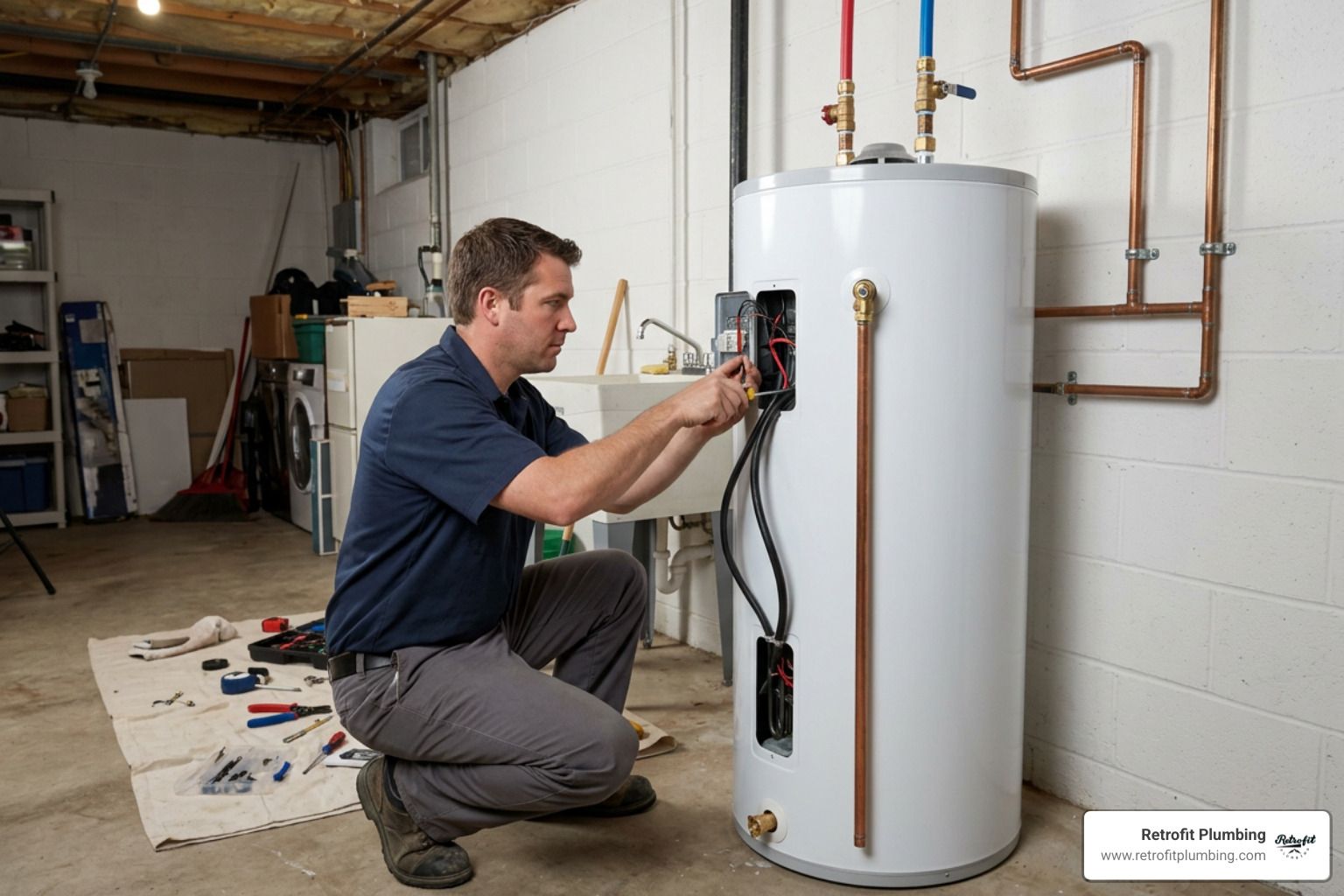
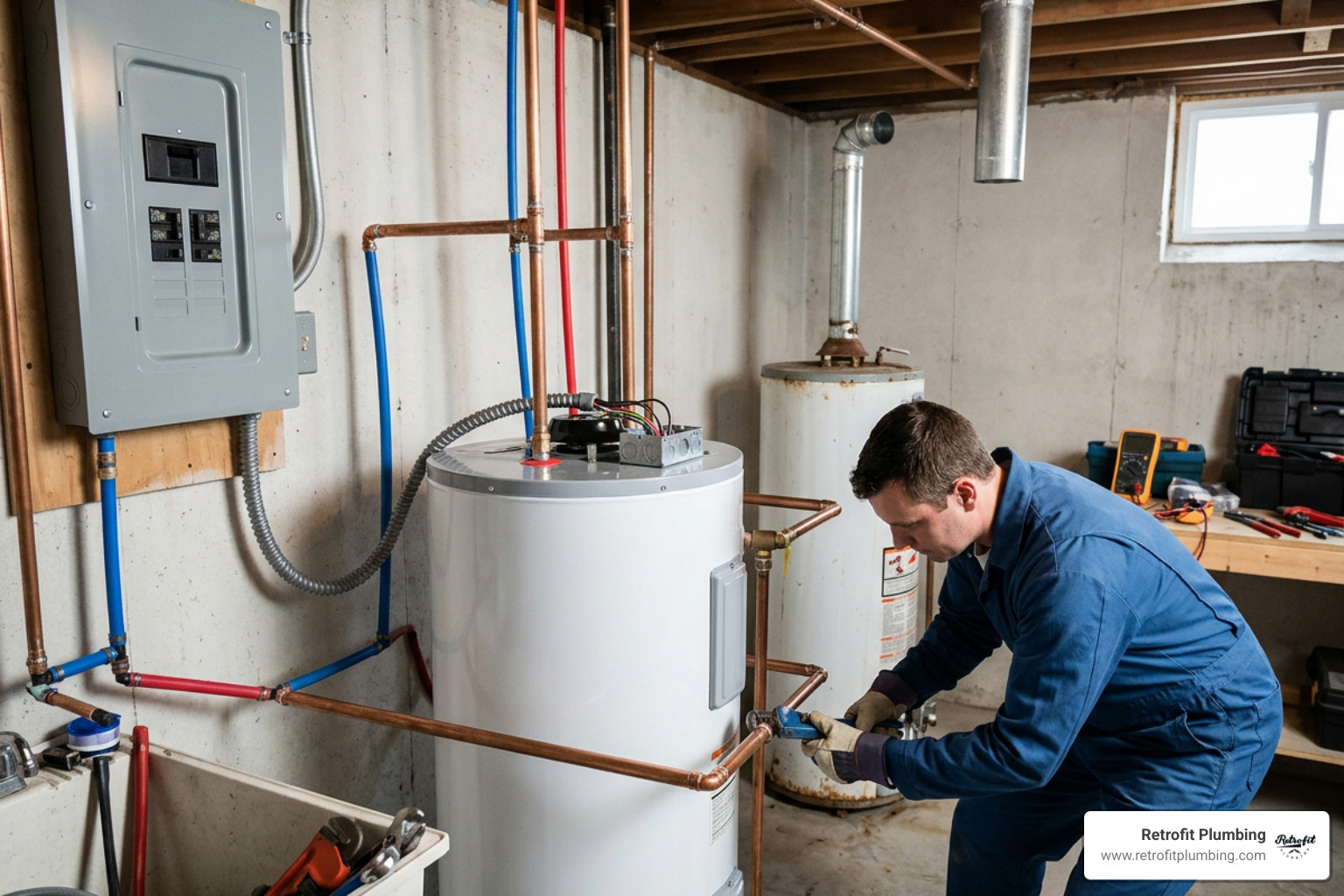
While making the switch can simplify your home utility lines and eliminate combustion hazards, it is rarely a simple "plug-and-play" swap. The biggest financial hurdle in fuel switching is the infrastructure. A gas water heater relies on a gas line and a venting flue (often routing out through the roof or a side wall). An electric water heater, on the other hand, requires a dedicated 240-volt, 30-amp or 40-amp electrical circuit.
If your utility closet doesn't already have this heavy-duty electrical line run from your main breaker panel, you will need to hire a licensed electrician. Depending on how far your panel is from the water heater — whether it's a straight run through an open garage or a complex path winding past the finished basement ceiling — this electrical rough-in can add anywhere from $500 to $1,500 to your total project budget.
Additionally, when you cap off a gas line, it must be done safely and in strict compliance with local fuel gas codes. The old venting flue must also be properly sealed to prevent rainwater or nesting pests from entering your home.
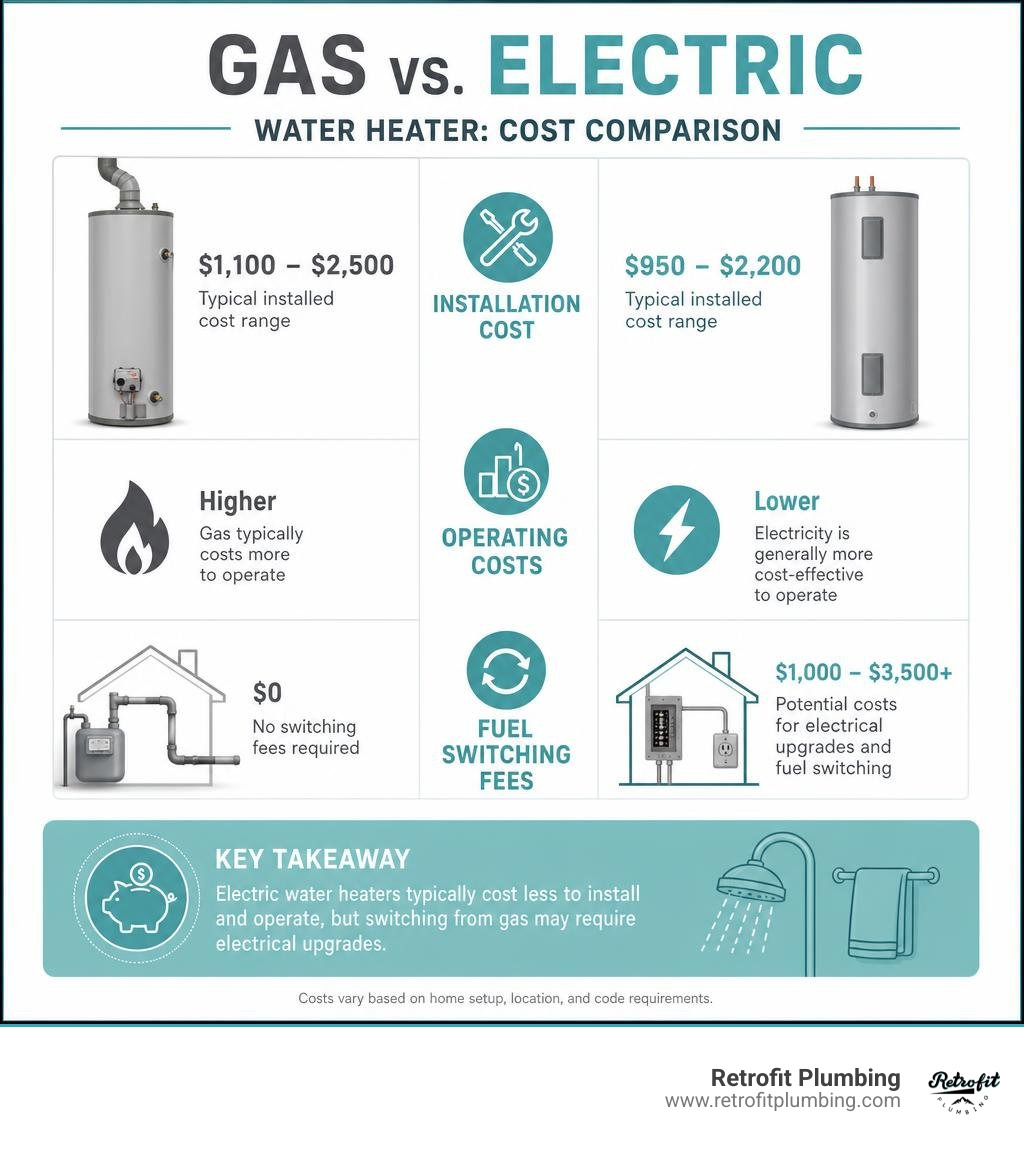
To help you visualize the upfront and long-term differences, let's look at the financial breakdown of standard gas vs. electric installations:
| Cost Component | Standard Gas Tank (50-Gal) | Standard Electric Tank (50-Gal) |
|---|---|---|
| Average Unit Cost | $800 – $1,600 | $600 – $1,200 |
| Upfront Installation Labor | $600 – $1,500 | $500 – $1,100 |
| Infrastructure Modifications | $150 – $500 (Venting/Gas lines) | $500 – $1,500 (New 240V circuit) |
| Average Permit & Inspection | $100 – $250 | $100 – $250 |
| Annual Operating Cost | $250 – $400 | $450 – $650 |
While a standard electric tank is cheaper to purchase upfront, fuel switching can quickly inflate the initial Hot Water Heater Installation Cost. However, if you are converting to a highly efficient hybrid heat pump electric model, the long-term energy savings and available rebates can quickly offset these infrastructure costs. For a deeper look at overall industry averages, you can explore this Water Heater Installation Cost 2026: $800-$4,500 Guide.
Understanding Your Electric Water Heater Installation Cost in 2026
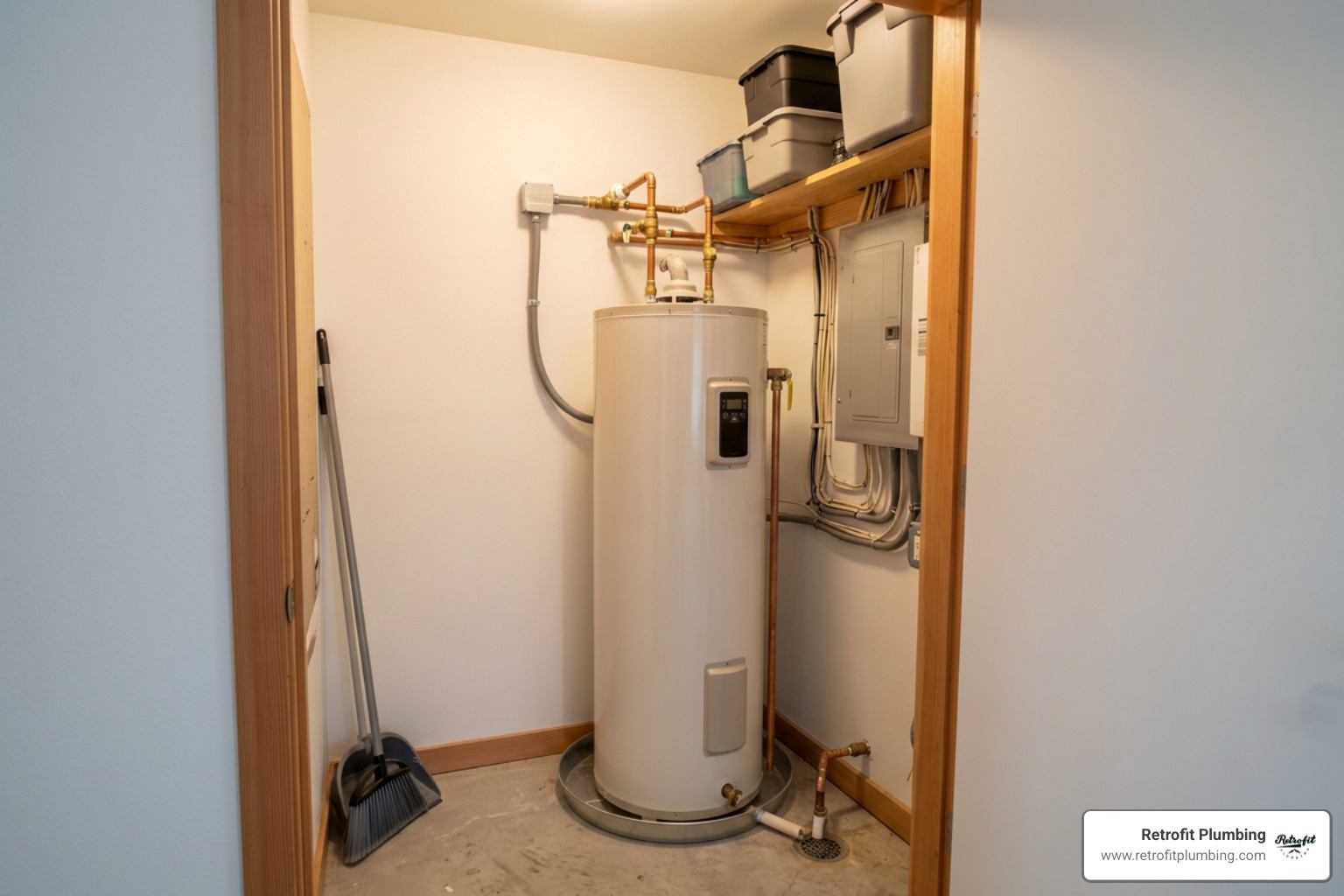
When budgeting for a new system, it helps to understand that the retail price of the water heater tank you see at a big-box store in Covington or Kent only represents about 30% to 40% of the total professional installation invoice. The rest of your electric water heater installation cost is comprised of specialized labor, code-compliance materials, regional permits, and the disposal of your heavy, sediment-filled old tank.
In the Pacific Northwest, labor rates reflect the high cost of living and the rigorous licensing standards required for tradespeople. Professional plumbing labor for a standard tank swap typically ranges from $150 to $200 per hour. When you hire a licensed team, you are paying for journeyman plumbers who know how to protect your home from water damage and ensure your electrical connections are completely water-tight. You can find more details on how these rates are structured in our guide on the Labor Cost to Install Water Heater.
Beyond basic hourly labor, several standard components make up the baseline cost:
- The Electric Water Heater Unit:$600 to $1,800 depending on the brand, warranty length (typically 6, 9, or 12 years), and recovery rate.
- Permit and Inspection Fees:$75 to $250. Most cities in King and Pierce counties require a permit to ensure the electrical and plumbing connections are inspected for safety.
- Disposal and Haul-Away:$50 to $150. Old water heaters are heavy, rusted, and full of mineral sediment. Environmental regulations require proper disposal and recycling of these units.
- Supplies and Fittings:$100 to $250. This includes new brass valves, flexible copper or PEX supply lines, electrical disconnect boxes, and pipe insulation.
For a highly detailed, line-item breakdown that you can customize to your specific project parameters, check out this Cost to Install Electric Water Heater - 2026 Cost Calculator (Customizable).
How Tank Size Affects Your Electric Water Heater Installation Cost
The physical size of your water heater tank is one of the primary drivers of both the equipment price and the labor required to maneuver it into place.
- 40-Gallon Tanks: Ideal for smaller households of 1 to 3 people. These units are relatively compact, making them easier to fit into tight utility closets under stairs or in small crawlspaces. The average installed cost ranges from $950 to $2,200.
- 50-Gallon Tanks: This is the standard size for the average American household of 3 to 5 people. It balances physical footprint with a solid "first-hour rating" (the amount of hot water the unit can deliver in one busy hour). Expect an installed cost of $1,000 to $2,400.
- 80-Gallon Tanks: Necessary for large families (5+ people), homes with high-flow multi-headed walk-in showers, or deep soaking tubs. Because of their immense size and weight, they often require two technicians to safely transport and install. The typical installed cost ranges from $1,500 to $3,500+.
If you are replacing an older, smaller unit with a larger tank, keep in mind that the physical space must be measured carefully. Modern water heaters have thicker insulation than models built fifteen years ago, meaning a new 50-gallon tank might be several inches wider than your old one. If you are preparing for this transition, read through our detailed breakdown on Replacing an Electric Water Heater.
Hidden Fees That Can Spike Your Electric Water Heater Installation Cost
Nothing is worse than receiving a quote that doubles by the time the job is finished because of "unexpected" code requirements. When we perform an installation, we look at the entire system to ensure it is safe and up to current building codes. Here are the most common additions that can affect your final bill:
- Thermal Expansion Tanks ($150 – $350): If your home has a closed plumbing system (which is common in Bellevue and Renton due to backflow preventers installed at the water meter), heating water causes it to expand. Without an expansion tank to absorb this extra pressure, your plumbing system experiences high-pressure spikes that can ruin faucets, loosen joints, and prematurely rupture your new water heater tank.
- Safety Drain Pans ($50 – $150): If your water heater is located on an upper floor, in an attic, or in a finished living space, local codes require a drain pan connected to a waste line or routed outside. This ensures that if the tank eventually leaks, it won't ruin your drywall or hardwood floors.
- Seismic Strapping ($100 – $200): Living in the Pacific Northwest means preparing for earthquakes. Washington State building code requires all water heaters to be anchored with heavy-duty metal straps secured to the wall studs to prevent them from tipping over during seismic activity.
- Electrical Disconnect Boxes ($150 – $300): If your main electrical panel is not within line-of-sight of the water heater, code requires a local electrical disconnect switch installed right next to the unit so technicians can safely cut power before servicing it.
Going Green: Standard Electric vs. Hybrid Heat Pump Water Heaters
If you want to drastically reduce your monthly energy bills, a hybrid heat pump water heater (HPWH) is the gold standard of modern home electrification. While a standard electric water heater relies on highly inefficient electrical resistance coils (similar to a giant toaster inside a tank of water), a hybrid heat pump operates like a refrigerator in reverse.
It pulls warmth from the surrounding air, concentrates it, and transfers that heat directly into your water. Because it moves heat rather than creating it, a hybrid water heater is up to four times more efficient than a standard electric tank. It boasts a Uniform Energy Factor (UEF) of 3.5 to 4.0, compared to a standard tank's UEF of around 0.95.
While the upfront cost to install a hybrid heat pump water heater is higher — typically ranging from $3,000 to $6,000 — the operational savings are massive. The average homeowner saves between $150 and $300 annually on their electric bill. Over the 10-to-15-year lifespan of the unit, the system completely pays for itself.
Furthermore, because of the federal Inflation Reduction Act (IRA), homeowners can claim a 30% federal tax credit up to $2,000 for installing an ENERGY STAR certified hybrid water heater. Local utility providers like Puget Sound Energy (PSE) also offer lucrative rebates, often ranging from $500 to $1,000, which can bring your net installation cost down significantly.
However, heat pump water heaters have unique installation requirements:
- Air Volume: They need at least 1,000 cubic feet of surrounding air space (roughly a 10' x 10' room) to pull heat effectively, or they must be vented to an adjacent room.
- Condensate Drainage: Because they pull moisture out of the air as they cool it, they produce condensation. They require a dedicated drain line or a small condensate pump to route this water away.
- Cool Air Output: They exhaust cool air into the room where they are installed, making garages, basements, or large utility rooms the ideal locations.
If you are interested in exploring other high-efficiency options, including on-demand systems, check out our Tankless Water Heaters Complete Guide. To estimate your potential savings based on your current utility rates, utilize this interactive Water Heater Cost Calculator (2026) | Tank & Tankless.
DIY vs. Professional Installation in the Pacific Northwest
With the abundance of online video tutorials, it can be tempting to treat an electric water heater installation cost as a weekend DIY project to save on labor. However, water heater installation is one of the few home improvement tasks that sits at the intersection of high-voltage electricity, high-pressure water, and strict municipal safety codes.
Here is why hiring a licensed professional is almost always the safer, more cost-effective choice in the long run:
- Electrical Hazards: Standard electric water heaters run on 240-volt electrical lines. Working with this level of voltage without proper training carries a severe risk of electrocution or electrical fires.
- Water Damage Risks: A minor mistake in soldering copper pipes or securing PEX fittings can result in slow, hidden leaks behind walls or a catastrophic tank failure that floods your crawlspace or basement.
- Warranty Protection: The vast majority of major water heater manufacturers (such as Bradford White and Rheem) explicitly state in their warranty agreements that the product warranty is voided if the unit is not installed by a licensed plumbing professional.
- Local Code Compliance: Cities like Kent, Renton, Issaquah, and Bellevue have strict enforcement of the Uniform Plumbing Code (UPC). A DIY installation often misses critical details like correct temperature and pressure (T&P) valve discharge routing, seismic strapping placement, or expansion tank sizing. If you sell your home, an unpermitted, non-compliant water heater will be flagged by home inspectors, forcing you to pay a professional to reinstall it anyway.
Frequently Asked Questions About Water Heater Replacement
How long does it take to replace a water heater?
A standard, like-for-like electric water heater replacement typically takes 2 to 3 hours for a professional crew. This includes draining the old tank, disconnecting the plumbing and electrical lines, hauling the old unit out, setting the new tank, installing code-compliant upgrades, and testing the system.
If you are switching from gas to electric, or if you are relocating the water heater to a different part of your home, the job can take 4 to 8 hours due to the extensive electrical rough-in and plumbing rerouting required.
When should I repair vs. replace my water heater?
As a general rule, we recommend using the 50% rule: if your water heater is over 8 years old and the cost of a single repair exceeds 50% of the price of a total replacement, it is time to replace the unit.
Additionally, look out for these critical warning signs:
- Rusty Water: If your hot water is coming out tea-colored or rusty, it indicates that the internal glass lining of your tank has worn away and the steel structure is actively corroding.
- Active Leaking: If you notice water pooling around the base of the tank itself, the inner tank has likely fractured. This cannot be repaired; the unit must be replaced immediately to prevent a flood.
- Rumbling Noises: Loud knocking or rumbling sounds coming from your tank indicate a heavy accumulation of mineral sediment at the bottom. This sediment bakes onto the heating elements, causing the tank to overheat and eventually crack.
Do I need a permit to replace a water heater in Washington State?
Yes. The Washington State Department of Labor & Industries, as well as individual municipal building departments across King and Pierce counties, require a permit and subsequent safety inspection for all water heater replacements. This ensures that the electrical wiring, plumbing connections, and seismic safety straps are fully compliant with local safety standards.
Conclusion
Replacing your water heater doesn't have to be an overwhelming or stressful experience. By understanding the components of your electric water heater installation cost, you can make an informed, budget-conscious decision that keeps your household comfortable for the next decade.
At Retrofit Plumbing, we are proud to serve our local communities in Covington, Bellevue, Renton, Kent, Issaquah, and the surrounding areas. We believe in honest pricing, fully stocked trucks to get the job done on the first visit, same-day service when you are facing an emergency, and a 100% satisfaction guarantee.
If your hot water is running cold, or you want to discuss upgrading to a high-efficiency hybrid heat pump system, don't wait for a flooded basement. Book an appointment today on our Services Water Heater Repair page, and let our licensed, local professionals handle the heavy lifting for you!