What Does It Cost to Install a 40 Gallon Gas Water Heater in the South Sound?
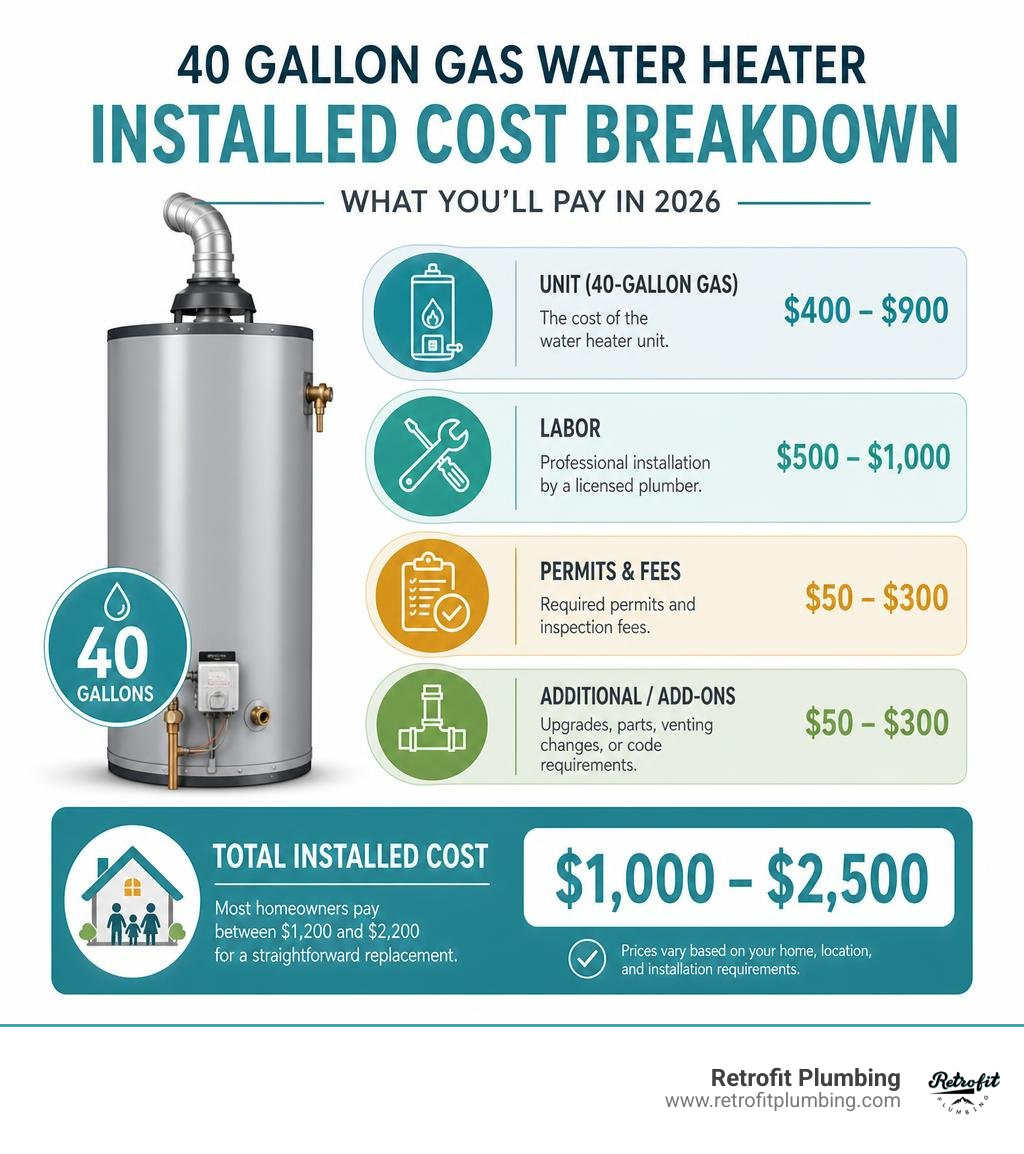
The cost to install a 40 gallon gas water heater in 2026 typically falls in this range:
| What You're Paying For | Typical Cost Range |
|---|---|
| Water heater unit (40-gallon gas) | $400 – $900 |
| Labor (professional installation) | $500 – $1,000 |
| Total installed cost | $1,000 – $2,500 |
Most homeowners in the Covington and Bellevue area land somewhere between $1,200 and $2,200 for a straightforward replacement. Code upgrades, venting changes, or permits can push that number higher.
Here in the Pacific Northwest, a failing water heater doesn't give you much warning — and when it goes, it goes fast. Whether you're dealing with a cold shower on a wet King County morning or a puddle spreading across your garage floor, you need real numbers before you call a plumber.
Rainy winters, hard water from the Cascade foothills, and Washington State's strict building codes all affect what you'll actually pay. This guide breaks it all down — no fluff, no surprises.
I'm Josh Klimp, owner of Retrofit Plumbing, with over 20 years of hands-on plumbing experience across residential and commercial projects throughout the South Sound — and I've priced and completed more water heater replacements than I can count, which is exactly what makes me confident giving you honest numbers on the cost to install a 40 gallon gas water heater. Let's walk through everything you need to know so you can budget with confidence.
Understanding the Cost to Install 40 Gallon Gas Water Heater Systems vs. 50 Gallon Units
When your old water heater starts acting up, the first decision is usually about size. For decades, the 40-gallon tank has been the workhorse of American homes. It is the perfect middle-ground size for couples, small families, or townhomes in neighborhoods like the Renton Highlands or downtown Kent.
The average cost to install a 40 gallon gas water heater in June 2026 ranges from $1,000 to $2,500. If you are comparing this to a larger 50-gallon unit, you might wonder if upgrading is worth the extra cash. According to the 40 vs 50 Gallon Water Heater Cost: Which Size Is Worth It? - Clear Cost Index, upgrading from a 40-gallon to a 50-gallon tank typically adds only $200 to $500 to your final bill.
However, a 40-gallon gas water heater has a secret weapon: its recovery rate. Gas models heat water much faster than electric ones. A 40-gallon gas tank can often supply as much hot water during a busy morning as a 50-gallon electric tank because it bounces back so quickly.
Let's look at how the costs compare between these two common tank sizes:
| Cost Component | 40-Gallon Gas Tank | 50-Gallon Gas Tank |
|---|---|---|
| Water Heater Unit Only | $400 – $900 | $600 – $1,200 |
| Standard Labor & Materials | $500 – $1,000 | $600 – $1,100 |
| Average Total Installed Cost | $1,200 – $2,200 | $1,500 – $2,800 |
If you have a household of 1 to 3 people, a 40-gallon gas tank is usually more than enough. If you have teenagers who take marathon showers or a giant soaking tub in your Bellevue home, upgrading to a 50-gallon unit might save you some morning arguments. To get a broader look at overall installation pricing across different styles, you can read our detailed guide on Hot Water Heater Installation Cost.
Key Factors Influencing Your Pacific Northwest Installation Price
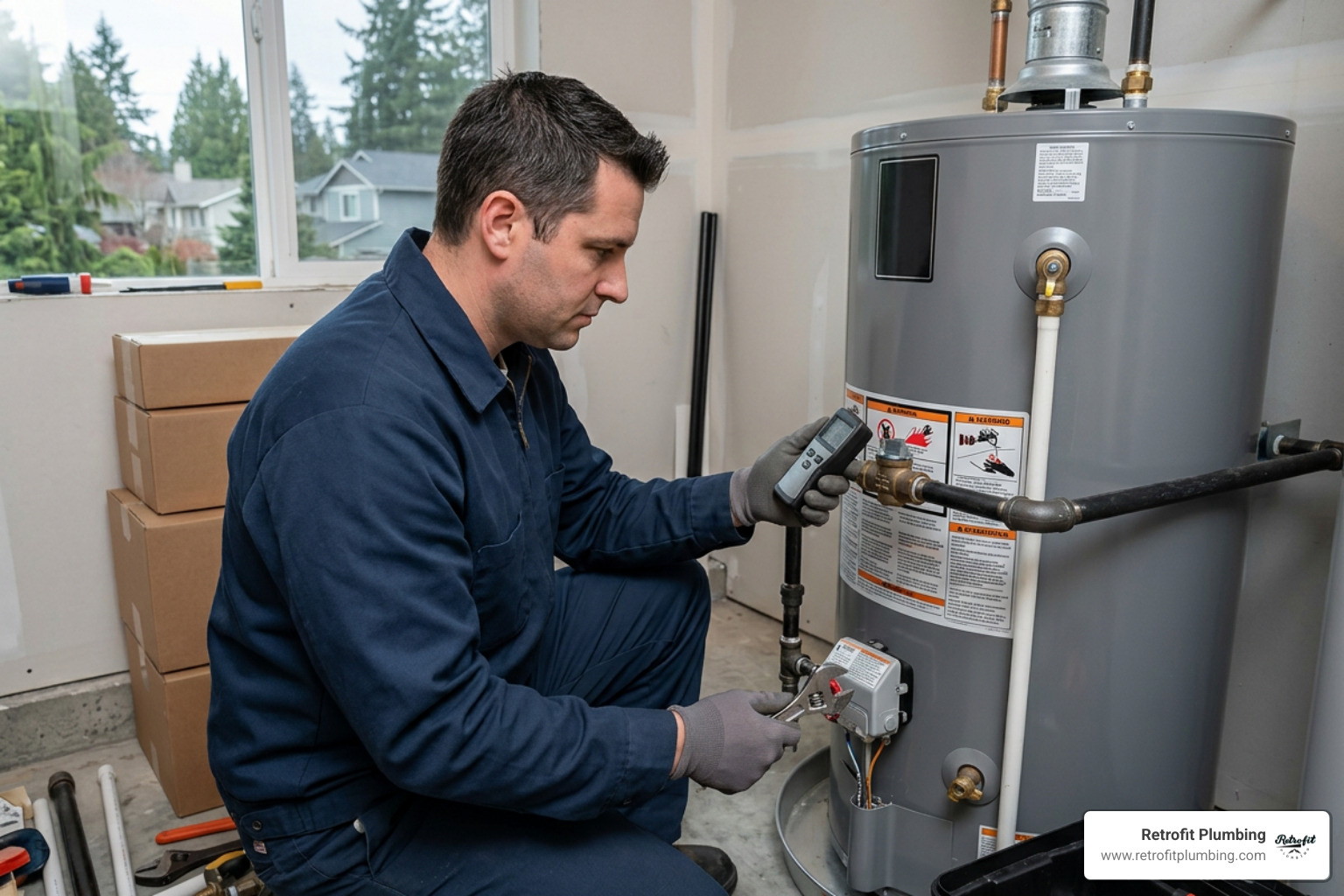
No two homes in the Puget Sound region are exactly alike. A water heater swap in a classic mid-century home in Tacoma will look very different from an installation in a brand-new Bellevue modern build. When we calculate the final cost to install a 40 gallon gas water heater, several local and technical factors come into play.
1. Venting Styles (Atmospheric vs. Power Vent)
Standard gas water heaters use "atmospheric venting," which relies on a vertical metal flue to send combustion gases up and out through your roof. If your home already has this setup, installation is straightforward.
However, if your water heater is located in a tight space or a basement without a direct chimney flue, you might need a power-vent model. These units use an electric blower fan to push exhaust gases horizontally through a side wall via PVC pipes. Power-vent units cost significantly more — often adding $1,000 or more to both the equipment purchase and the labor.
2. Strict Washington State Building Codes
Because we live in a seismically active zone, Washington state building codes are strict. When we perform a Plumber Water Heater Replacement, we must ensure your system is fully code-compliant. This includes:
- Seismic Strapping: Two heavy-duty metal straps anchored to the wall studs to prevent the tank from tipping over during an earthquake.
- Thermal Expansion Tanks: Required on closed water systems to absorb excess pressure. If yours is missing or ruptured, you will need to budget for Replacing Water Heater Expansion Tank systems, which typically adds $150 to $300.
- Safety Drain Pans: Required if the tank is located in a finished space or attic to prevent catastrophic water damage.
To estimate how these safety additions and venting styles change your bottom line, you can try out the Water Heater Cost Calculator (2026) | Tank & Tankless to run your own custom scenarios.
3. Hard Water and Sediment
If your water supply comes from wells near the Cascade foothills, you likely have higher mineral content. Over time, calcium and magnesium settle at the bottom of the tank, acting as an insulating blanket over the gas burner. This makes your system work harder, increases your gas bills, and shortens the tank's lifespan.
What to Expect During a Professional Water Heater Installation
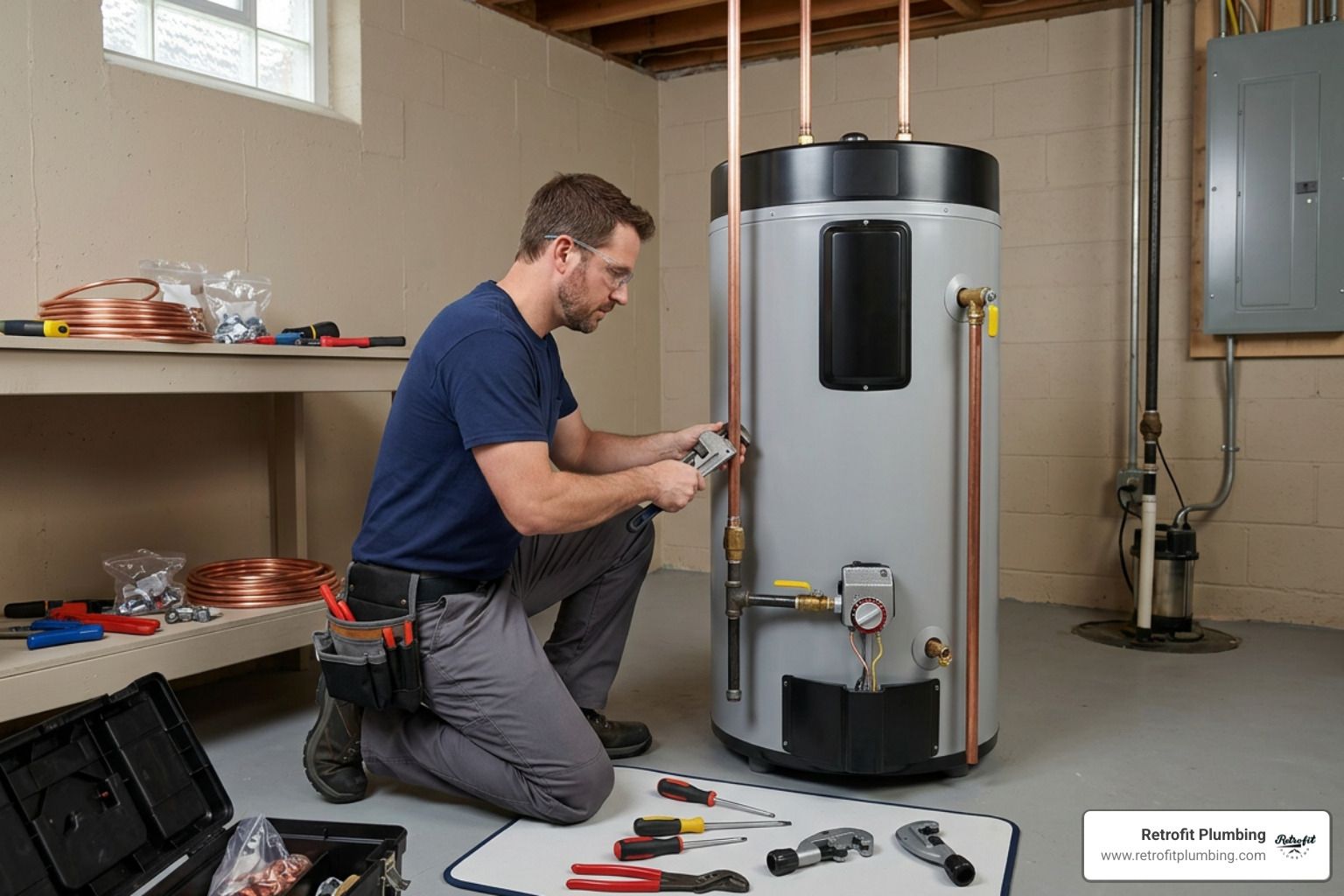
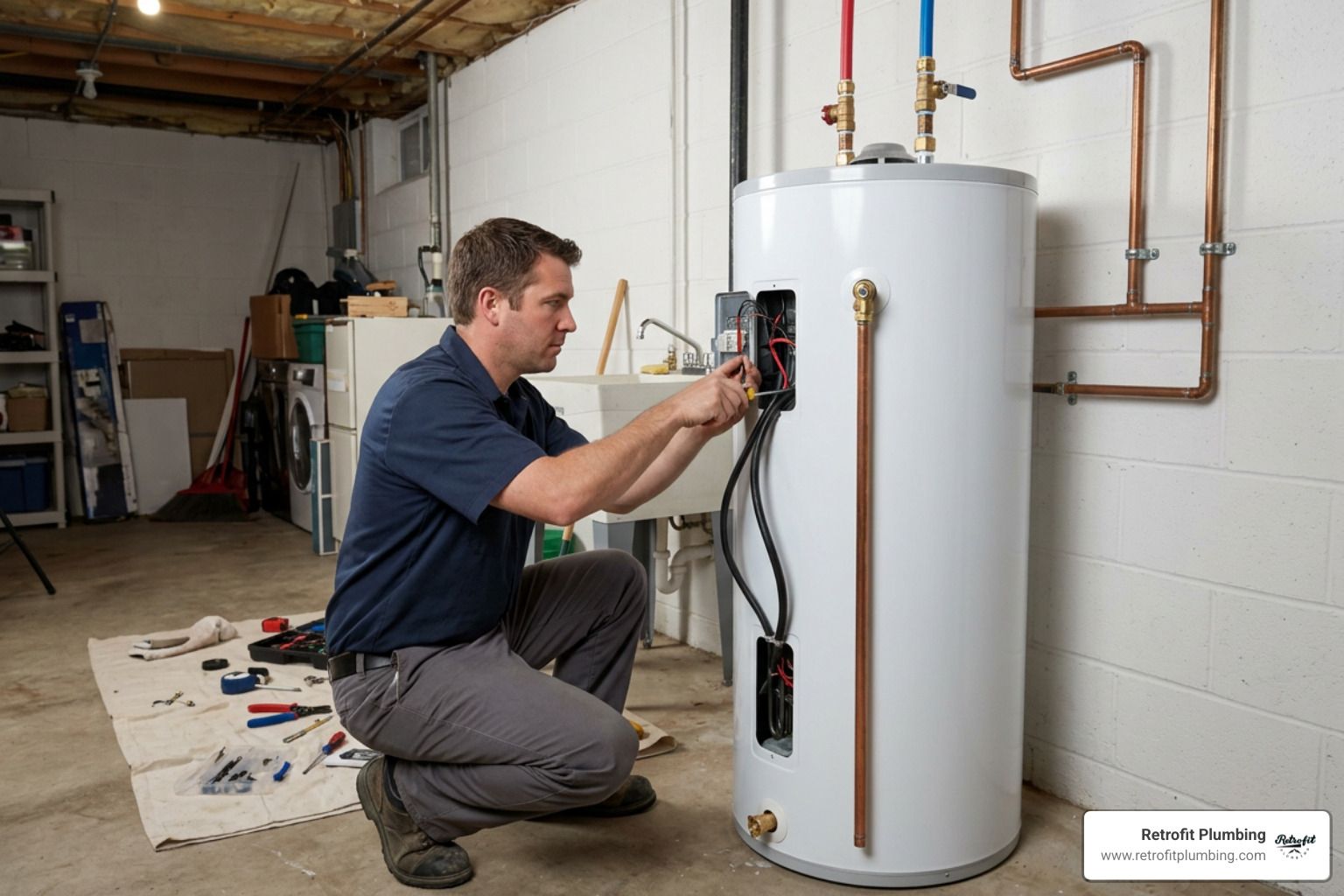
Many homeowners wonder how long their water will be shut off during a replacement. A standard, like-for-like water heater swap usually takes between 2 and 4 hours. If we need to modify gas lines, run new venting, or bring old plumbing up to modern code, the job can take 4 to 6 hours.
Here is what our step-by-step process looks like when we arrive at your home:
- Staging and Safety: We shut off the main water valve and the gas supply line. We lay down protective drop cloths to keep your floors clean.
- Draining the Old Tank: We hook up a hose to the drain valve at the bottom of your tank and run it to a nearby drain or outside.
- Disconnection: We carefully disconnect the gas line, water supply lines, and the exhaust flue.
- Removal: We haul away the old, heavy tank. (We always handle the disposal and recycling fee for you!).
- Positioning and Leveling: We position the new 40-gallon gas tank, ensuring it sits level on its stand or drain pan.
- Hookups and Code Upgrades: We install new flexible water connectors, a new gas shutoff valve, seismic straps, and the expansion tank.
- Testing: We fill the tank, turn the gas back on, light the pilot or electronic ignition, and use a specialized soap solution to test every single gas joint for leaks.
While some highly skilled DIYers attempt this work, we strongly advise against it. Working with natural gas and carbon monoxide venting carries serious safety risks. A single loose connection can lead to gas leaks or toxic fumes entering your home. If you want to see exactly how our local team handles this process safely, check out our guide on Efficient Hot Water Tank Installation by Retrofit Plumbing in Covington. You can also brush up on some basic maintenance with our Common Water Heater Repair Tips.
When to Repair vs. Replace Your Home's Water Heater
If your water heater is acting up on a chilly morning, you don't always need to buy a brand-new system. Sometimes, a simple part replacement can buy you several more years of hot showers.
We recommend using the 50% Rule: If your water heater is more than 8 years old, and the cost of the repair is more than 50% of the cost of a brand-new installation, it is time to replace it.
Here is a quick guide to help you decide whether to call for a repair or start shopping for a replacement:
- When to Repair: If your water heater is under 8 years old and has a easily replaceable bad part — like a faulty thermocouple, a bad gas control valve, or a clogged burner. Our team can quickly handle these issues; you can learn more about our local repair options on our Services Water Heater Repair page.
- When to Replace: If your tank is leaking from the main body, you must replace it immediately. There is no way to repair a corroded, leaking inner tank shell. Other signs of terminal failure include deep rumbling noises (caused by massive sediment buildup baking at the bottom of the tank) or rusty hot water.
If you are facing an active leak or a sudden flood, do not wait. Check out our Water Heater Emergency Repair Guide to learn how to shut off your water and gas valves to prevent major home damage, or read up on our specialized Services Water Heater Leaks solutions. If your system is completely down, our Broken Water Heater Repair Guide 2026 will walk you through your immediate next steps.
Frequently Asked Questions About Water Heater Costs
What is the average labor cost to install 40 gallon gas water heater units?
The labor portion of a standard 40-gallon gas water heater installation typically ranges from $500 to $1,000. This rate depends on the complexity of your home's setup, whether your plumbing lines need to be rerouted, and if your venting needs to be modernized to meet current safety codes. For a deeper look at national and regional labor rates, check out the 40 Gallon Water Heater Installation Cost Guide 2026 – LatestCost – Real-Time Price Insights. You can also find additional general pricing breakdowns in this guide on How much does it cost to install a 40-gallon water heater?.
Is the cost to install 40 gallon gas water heater systems lower than electric or tankless?
Yes, traditional tank installations are significantly cheaper upfront than tankless systems. While a 40-gallon gas tank costs between $1,000 and $2,500 installed, a gas tankless system usually runs between $2,500 and $4,500+ due to complex gas line resizing and specialized PVC venting.
However, electric tanks are often the cheapest to install initially ($900 to $1,800) because they do not require any gas lines or venting. If you are thinking about making a switch, check out our guides on Replacing an Electric Water Heater, explore our Tankless Water Heaters Complete Guide, or view our comprehensive Tankless Water Heater Cost Guide 2026.
Do I need a permit for a water heater replacement in Covington or Bellevue?
Yes. Both King County and individual cities like Bellevue, Renton, and Seattle require a plumbing permit for water heater replacements. This ensures that a local code inspector checks the gas connections, venting, and seismic strapping to verify they are perfectly safe. When you work with a licensed professional, we handle the entire permit pulling and scheduling process for you, giving you total peace of mind.
Conclusion
At Retrofit Plumbing, we believe in keeping things simple, honest, and stress-free. We know that dealing with a broken water heater is a major disruption to your day. That is why we provide upfront pricing, fully stocked trucks so we can get the job done in a single visit, and same-day service to get your hot water back on fast.
Whether you live in Covington, Bellevue, Renton, Kent, or Tacoma, our local team is ready to help. If you're ready to get an honest, professional quote on the cost to install a 40 gallon gas water heater, visit our Services Water Heater Repair page or give us a call today!