What Does a Tankless Water Heater Cost in 2026?
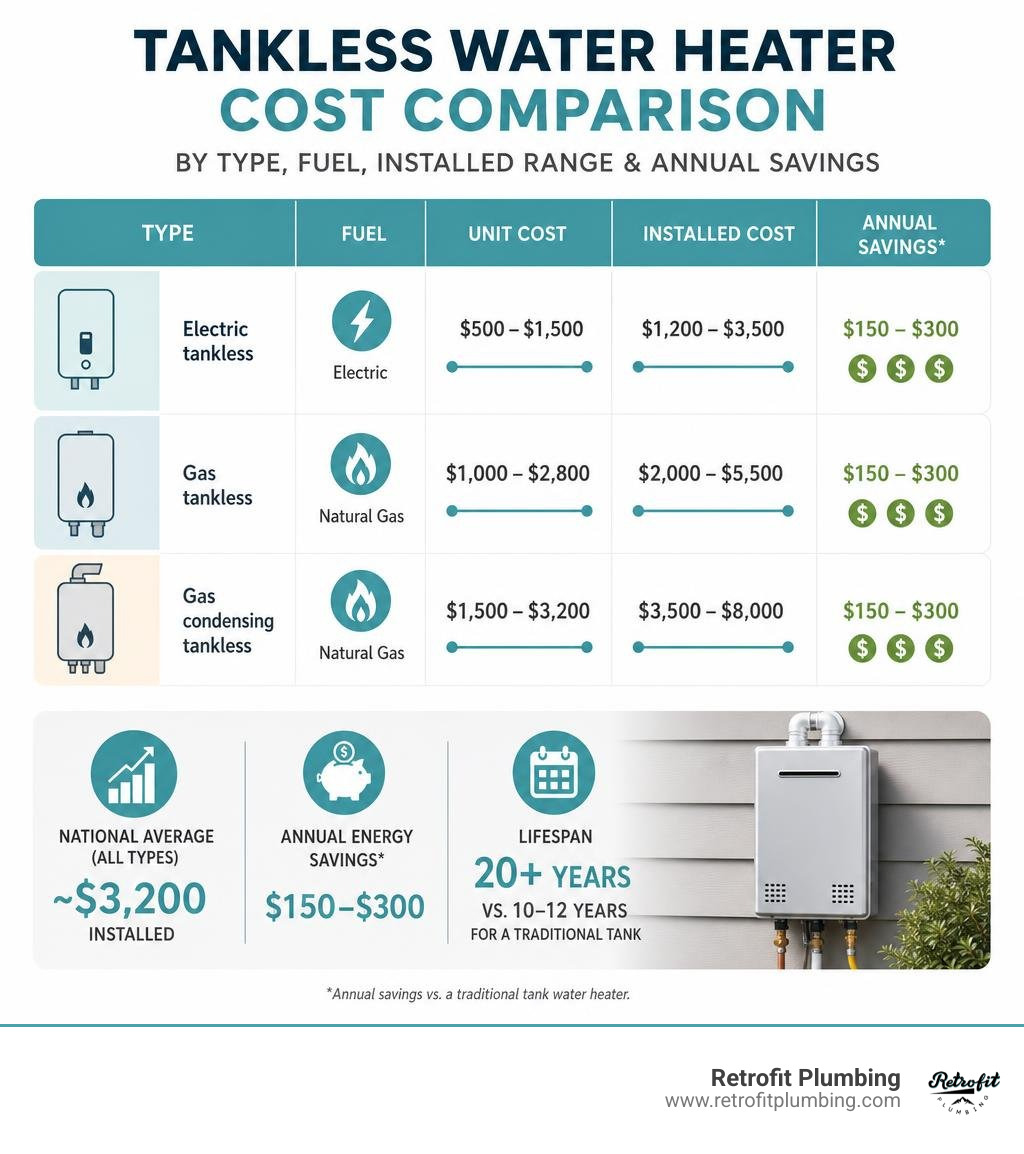
Tankless water heater cost typically falls between $1,800 and $5,500 installed, depending on fuel type, unit size, and how complex the installation is. Here's a quick breakdown:
| Type | Unit Cost | Installed Cost |
|---|---|---|
| Electric tankless | $500–$1,500 | $1,200–$3,500 |
| Gas tankless | $1,000–$2,800 | $2,000–$5,500 |
| Gas condensing tankless | $1,500–$3,200 | $3,500–$8,000 |
- National average(all types): ~$3,200 installed
- Annual energy savings vs. a tank heater: $150–$300
- Lifespan: 20+ years vs. 10–12 years for a traditional tank
Most South Sound homeowners — whether you're in Covington, Auburn, or out near Maple Valley — will land somewhere in the middle of that range. The real sticker shock usually comes from conversion costs : resizing a gas line, upgrading electrical, or adding venting can add $500–$1,500 on top of the unit price.
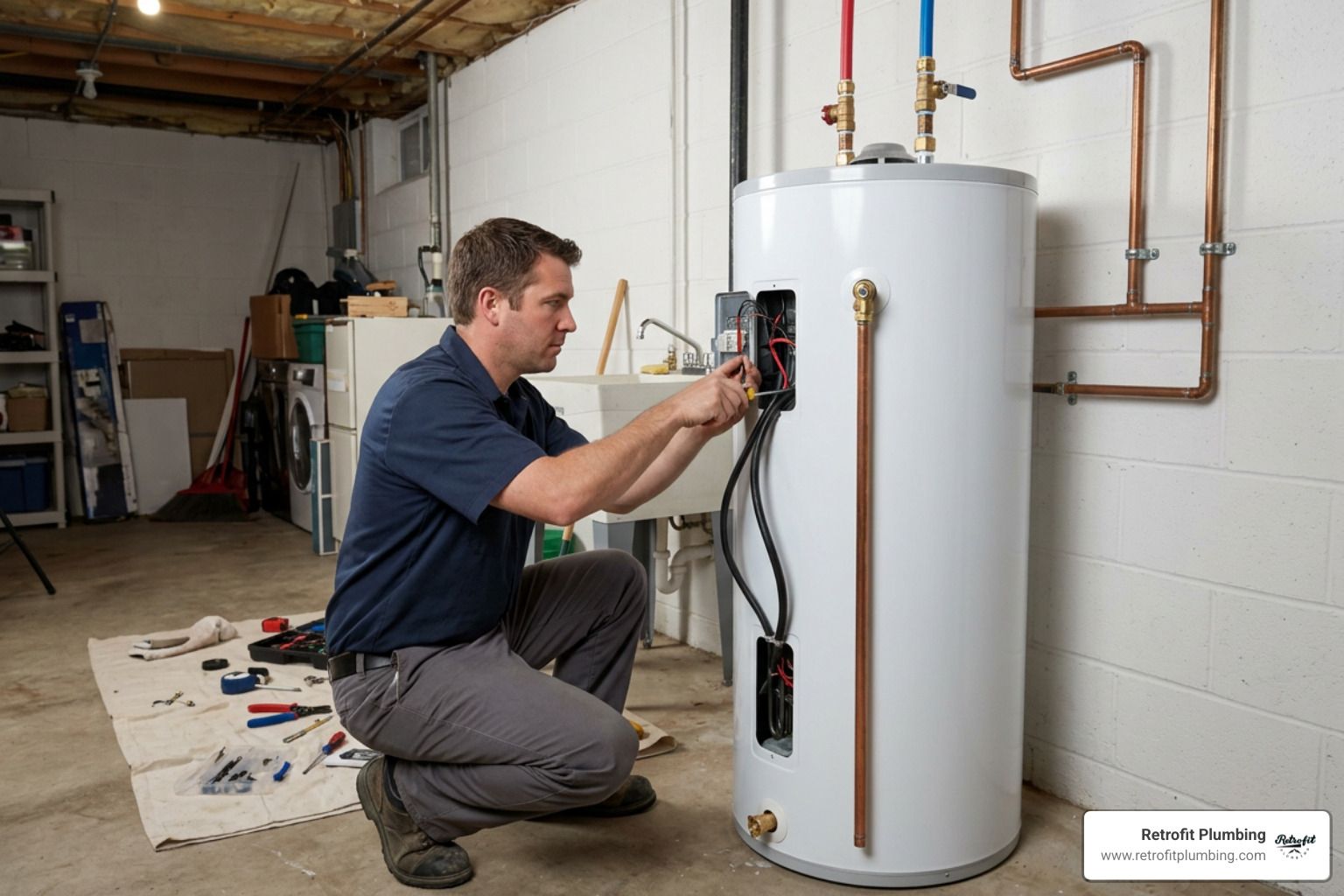
If you're dealing with a failed water heater right now and just need a fast answer — expect to budget $2,500–$5,000 for a full gas tankless installation in the greater King County area.
I'm Josh Klimp, owner of Retrofit Plumbing, and I've spent over 20 years installing and estimating tankless water heater cost across commercial and residential projects throughout the Pacific Northwest. In this guide, I'll walk you through exactly what drives the price so you can make a confident, informed decision.
Understanding Your Total Tankless Water Heater Cost for Outdoor Setups
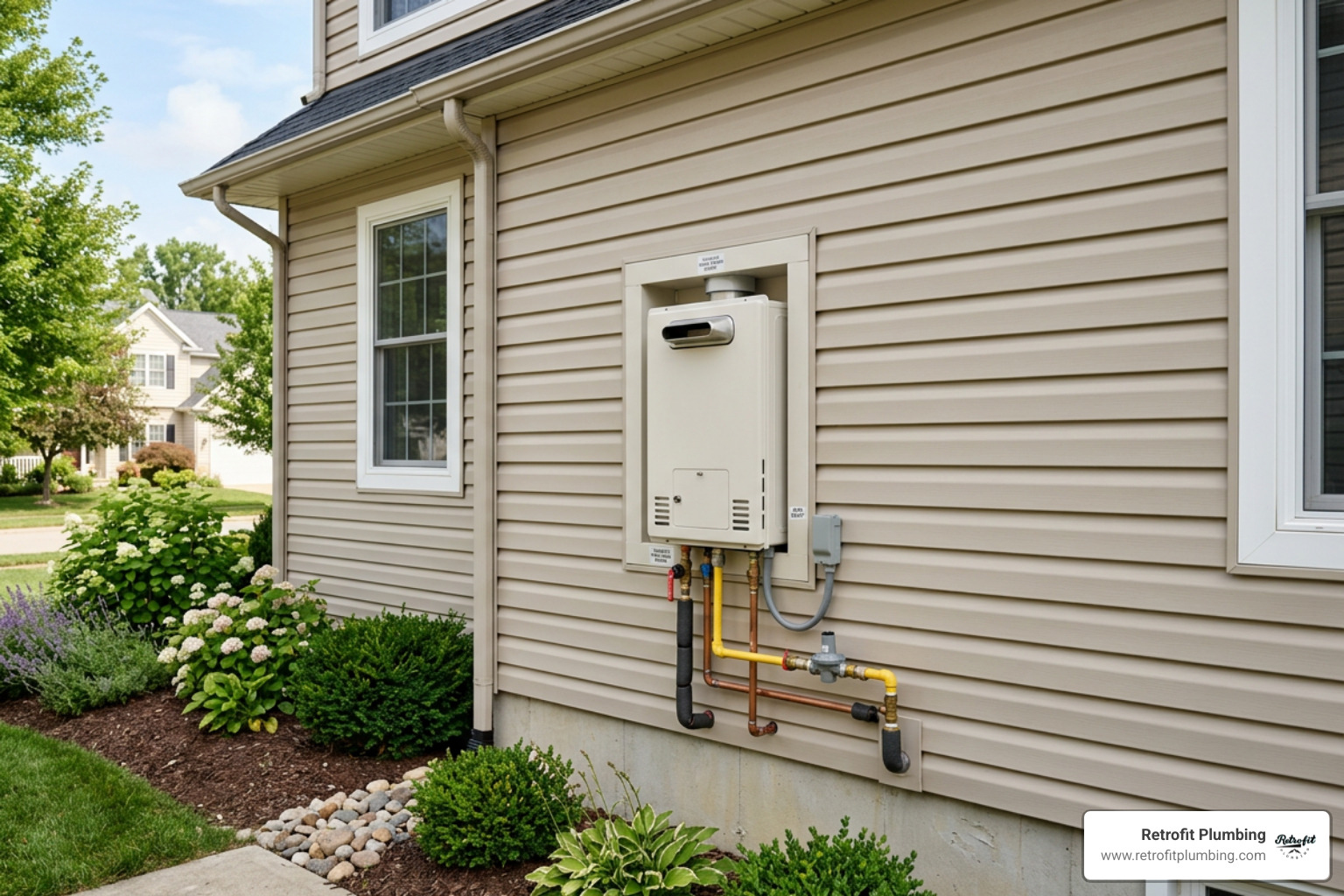
When homeowners in Bellevue, WA or Kent, WA start researching water heater replacements, they are often surprised to learn that you can actually hang these units right on the outside of your house. In the Pacific Northwest, where indoor square footage is at an absolute premium, moving your water heater to an exterior wall is an incredibly popular way to reclaim a hall closet or open up some valuable real estate in a tight utility room.
But how does moving the unit outside affect your overall tankless water heater cost?
At first glance, you might assume an outdoor installation is more expensive because the unit has to battle our notorious rainy seasons and chilly winter drafts. However, outdoor installations offer a massive financial advantage that often offsets the cost of weatherproofing: zero indoor venting costs.
When we install a gas tankless water heater indoors, we have to run dedicated, category III stainless steel or specialized PVC venting through your roof or out through an exterior wall. This venting alone can easily add $500 to $1,500 to your total bill, depending on how many bends and turns the pipe has to make to reach the outdoors safely.
With an outdoor unit, the system vents directly into the open air. There are no pipes to run through your attic, no drywall to cut, and no risk of carbon monoxide building up inside your living room. According to the Cost to Install a Tankless Water Heater 2026, skipping this complex venting step is one of the single best ways to keep your upfront labor expenses under control.
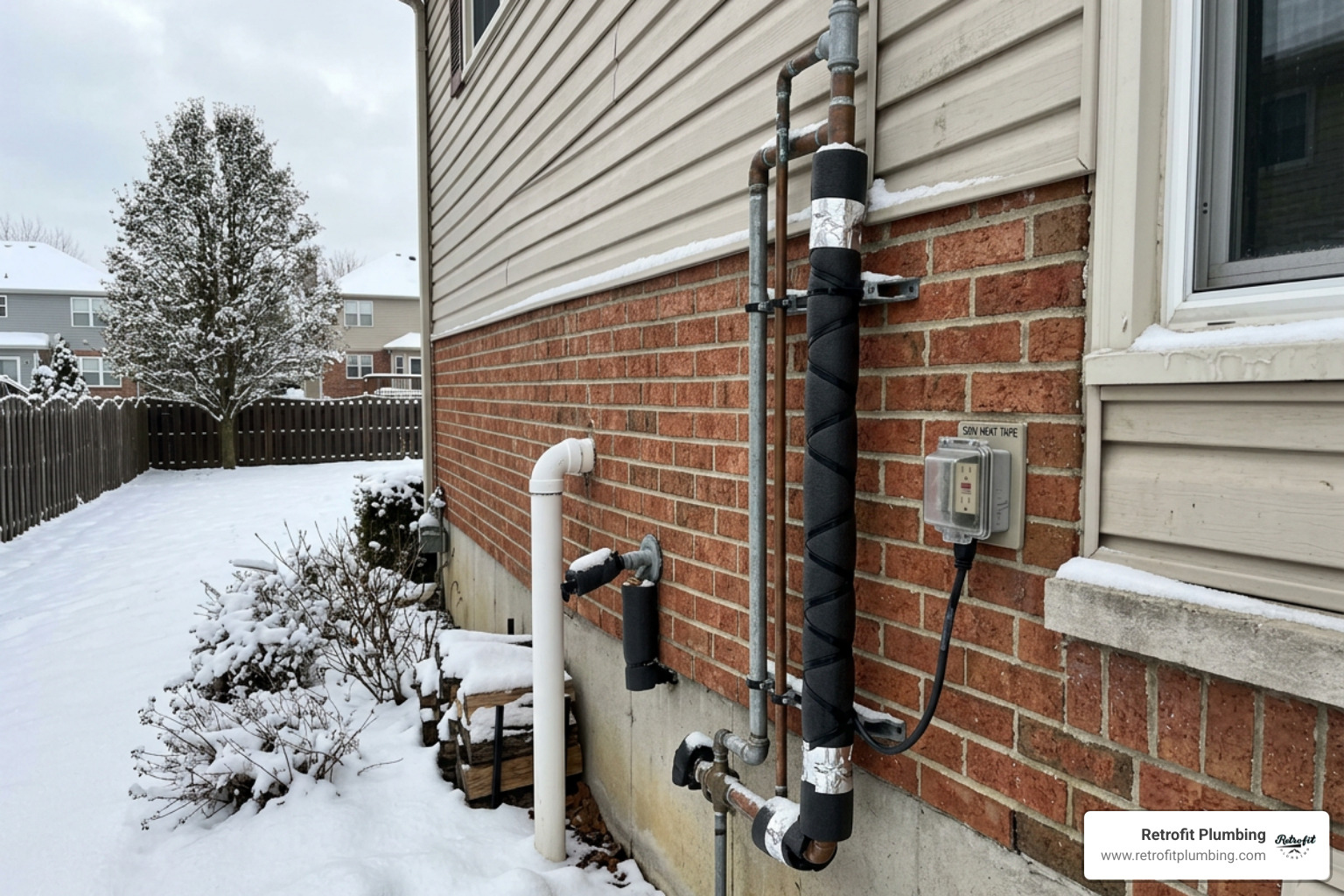
Of course, outdoor units aren't completely free of unique installation requirements. To protect your investment from Western Washington's freezing winter nights, we must install specialized freeze protection accessories. This includes wrapping all exposed water lines in heavy-duty pipe insulation and installing electric heat tape. If you want a clean, seamless look, we also house the system inside a weatherproof recess box that sits flush against your siding.
When you weigh the cost of a recess box and pipe insulation against the high price of indoor venting, the overall tankless water heater cost for an outdoor setup is often highly competitive with—and sometimes cheaper than—an indoor conversion. For a deeper dive into how these systems are configured, check out our Tankless Water Heaters Complete Guide.
Key Factors That Influence Outdoor Installation Pricing
No two homes in the South Sound are identical. A mid-century mid-rise in Renton WA will have vastly different plumbing needs than a brand-new craftsman home nestled in the hills of Issaquah, WA. When we calculate your custom estimate, several key variables come into play.
- Climate & Freeze Protection: In Western Washington, we don't get the extreme sub-zero temperatures of the Midwest, but we certainly get our fair share of freezing spells. Outdoor units require built-in electric warming elements to protect the internal heat exchanger, plus external heat trace tape on the incoming cold and outgoing hot water lines. If there is a power outage during a freeze, these electric heaters won't work, which is why we always recommend a battery backup or a manual drain valve system.
- Water Hardness & Mineral Scale: While the Seattle area generally enjoys relatively soft water, certain neighborhoods in Covington, WA and Auburn, WA draw from local wells or aquifers that carry higher mineral content. Hard water is the number-one enemy of tankless systems. Mineral scale builds up inside the copper heat exchanger, forcing the unit to work harder and eventually causing premature failure. If your home has hard water (above 7 grains per gallon), you will need to budget for a water softener or an inline scale-inhibitor filter, which can add $300 to $2,000 to your upfront costs.
- Gas Line Resizing: This is the most common "hidden cost" of converting from a traditional tank to a gas tankless system. A standard 40-gallon gas tank water heater uses about 36,000 to 40,000 BTUs of energy. A whole-home gas tankless water heater, however, needs between 150,000 and 199,000 BTUs to heat water instantly on demand. If your existing gas line is only 1/2-inch wide, we will likely need to run a new 3/4-inch line from your gas meter to the water heater. Depending on the distance, this gas line upgrade can add $500 to $1,500 to your project.
- Electrical Upgrades: Even if you choose a gas-powered outdoor unit, it still requires electrical power to run the digital control board, the ignition spark, and the internal freeze-protection heaters. This means we must install a dedicated, code-compliant outdoor GFCI outlet near the unit. If you choose an electric tankless unit, the electrical requirements are much more intense—often requiring a service panel upgrade to 150 or 200 amps, which can cost anywhere from $1,500 to $4,000.
To get a better sense of how these variables shift the financial needle for your specific home layout, you can play around with the Water Heater Cost Calculator (2026) | Tank & Tankless. It is an excellent planning tool to help you visualize the gap between basic equipment costs and fully permitted, code-compliant installations. If you're wondering which specific models perform best under these conditions, take a look at our guide on the Best Residential Tankless Water Heater.
How Fuel Type Affects Your Tankless Water Heater Cost
Choosing between natural gas, propane, and electricity is one of the biggest decisions you'll make when upgrading your water heating system. Your choice will dictate not only your initial tankless water heater cost but also your monthly utility bills for the next two decades.
In the Pacific Northwest, natural gas is highly popular due to its lower operating cost. However, if you live in a more rural pocket outside of Covington or Kent, you might not have a municipal natural gas hookup. In these areas, liquid propane (LP) is an outstanding alternative. Propane burns incredibly hot and clean, making it a highly efficient fuel source for outdoor tankless units. If you are considering this path, our Propane Tankless Hot Water Heater Guide breaks down everything you need to know about tank sizing and fuel delivery.
Electric tankless units have a much lower upfront equipment cost (often under $1,000 for the unit itself) and don't require any venting or gas lines. However, they demand a massive amount of electrical current. A whole-house electric tankless heater can require up to four separate 40-amp double-pole breakers. In cold climates like ours, electric models often struggle to keep up with whole-house demand unless your home has a very large electrical service.
To help you compare the long-term financial impact of these fuel types, we've put together a realistic comparison of average operating costs in Western Washington:
| Cost Factor | Natural Gas | Propane (LP) | Electric |
|---|---|---|---|
| Average Unit Cost | $1,200 – $2,500 | $1,300 – $2,600 | $500 – $1,200 |
| Average Installation Labor | $1,500 – $3,500 | $1,500 – $3,500 | $1,000 – $2,500 |
| Est. Monthly Operating Cost | $15 – $30 | $30 – $50 | $40 – $70 |
| Venting Required? | No (for outdoor setups) | No (for outdoor setups) | No |
| Electrical Panel Upgrade? | Rarely (needs standard outlet) | Rarely (needs standard outlet) | Almost always (needs 150-200A) |
As you can see, while electric units are cheaper to buy upfront, their monthly operating costs and potential panel upgrade requirements can quickly close the price gap. For a broader look at how these numbers stack up against traditional storage tanks, check out the Tank vs Tankless Water Heater Cost (2026) | CostFigure.
Sizing and Flow Rate Impact on Tankless Water Heater Cost
When it comes to tankless water heaters, size isn't measured in gallons—it's measured in Gallons Per Minute (GPM). This represents how much hot water the unit can produce at any given second.
Sizing a tankless unit in Covington, WA is very different from sizing one in sunny Southern California. Why? Because of our groundwater temperature. In the middle of a chilly January, the water entering your home from the municipal main or your private well can drop to a freezing 40°F to 45°F.
To get that water up to a comfortable shower temperature of 120°F, your water heater has to achieve a temperature rise of 75°F to 80°F.
Because the heating elements have to work so much harder to warm up this icy incoming water, the actual GPM output of the unit drops. A tankless heater rated for 9 GPM in Florida might only deliver 4.5 GPM in Bellevue or Renton during the winter.
If you have a busy household where someone might be running the washing machine, the dishwasher, and taking a shower at the exact same time, you will need a larger, high-output unit (typically 9.0 to 11.0 GPM) to prevent the dreaded "cold water sandwich" effect. Larger units naturally cost more upfront, but undersizing your system to save a few hundred dollars is a recipe for daily frustration. We outline exactly how to calculate your household's peak demand in our Residential Tankless Water Heater Guide 2026.
Local PNW Requirements: Permits, Weatherproofing, and Hard Water
Installing an outdoor tankless water heater in King County or Pierce County requires strict adherence to local building codes and environmental realities. You can't simply hang a unit on the wall and call it a day; our unique climate and municipal rules dictate exactly how the job must be done.
First, let's talk about permits. Whether you are in Covington, Renton, or Bellevue, replacing or converting a water heater requires a plumbing and electrical permit. For example, if you live in Kirkland, you must follow the guidelines outlined by the Water Heater Replacement - City of Kirkland. Getting a permit ensures that a local inspector verifies the safety of your gas lines, electrical grounding, and structural mounting. Skipping this step can lead to hefty fines, issues when you try to sell your home, or even denied insurance claims if a DIY installation fails and causes property damage.
Second, we have to account for our local flora. The Pacific Northwest is famous for its towering Douglas firs, Western hemlocks, and cedar trees. While they make our neighborhoods beautiful, they also shed a massive amount of needles, sap, and debris.
If you install an outdoor tankless unit near a overhanging tree canopy, those tiny needles can easily find their way into the unit's air intake vents. Over time, this restricts airflow, causing the burner to run inefficiently or shut down entirely with an error code. To prevent this, we carefully choose the installation location—away from low-hanging branches—and often install protective screens or use a recessed box that shields the intake from falling debris.
Long-Term Savings, Rebates, and Maintenance Costs
While the upfront tankless water heater cost is higher than a traditional tank, the long-term financial picture is incredibly bright.
Because tankless water heaters only heat water when you turn on a tap, they completely eliminate "standby heat loss." Traditional tanks hold 40 to 50 gallons of water hot 24 hours a day, constantly cycling on and off to maintain temperature even when you're asleep or at work. By eliminating this wasted energy, tankless systems are 24% to 34% more energy-efficient for homes that use under 41 gallons of hot water daily.
Additionally, local utility companies want to help you make the switch to energy-efficient appliances. For instance, if you are located in Tacoma or parts of Pierce County, you can take advantage of programs like the Electric Hybrid Water Heater - Tacoma Public Utilities to offset your upgrade costs. Federal tax credits under the Energy Efficient Home Improvement Credit can also shave up to 30% (up to $600) off the cost of qualifying high-efficiency gas tankless installations.
To keep your system running efficiently for its entire 20+ year lifespan, regular maintenance is non-negotiable. We recommend an annual professional flush to clear out calcium and mineral scale from the heat exchanger. A professional maintenance visit typically costs between $150 and $350, or you can purchase a DIY descaling kit for $20 to $50 if you are comfortable handling the pumps and vinegar solution yourself. For homeowners who prefer the peace of mind of professional care, we offer comprehensive maintenance plans through our Services Tankless Water Heaters page.
Frequently Asked Questions About Outdoor Tank Systems
Can an outdoor tankless water heater freeze in Western Washington winters?
Yes, if it is not installed correctly. However, modern outdoor tankless units are equipped with advanced internal freeze protection heaters that automatically turn on when temperatures drop near freezing. The real danger occurs during a winter power outage when these electric heaters lose power. To prevent freezing during a storm, we recommend installing a battery backup system or adding manual drain valves so you can quickly empty the water from the unit if the power goes out.
How does the cost of an outdoor tankless unit compare to an indoor one?
While outdoor units require a weatherproof recess box ($200–$400) and extra pipe insulation, they do not require any indoor venting materials. Indoor venting can cost anywhere from $500 to $1,500 due to the expensive double-walled stainless steel or specialized PVC piping required to run through walls or roofs. Consequently, outdoor installations are often comparable in price, or even slightly cheaper, than indoor conversions.
What maintenance does an outdoor tankless water heater require?
Outdoor systems require the same annual descaling flush as indoor models to remove mineral buildup. Additionally, because they are exposed to the elements, you should regularly check the exterior cabinet to ensure that falling leaves, Douglas fir needles, or spider webs aren't blocking the air intake or exhaust vents.
Conclusion
Upgrading to an outdoor tankless water heater is a fantastic way to save indoor space, slash your monthly energy bills, and enjoy an endless supply of hot water. While the initial tankless water heater cost represents a significant investment, the combination of lower operating costs, local utility rebates, and a 20-year operational lifespan makes it a highly smart financial move for King County homeowners.
At Retrofit Plumbing, we are proud to serve our local communities across Covington, Bellevue, Renton, Kent, and the surrounding areas. We stand by our honest pricing, fully stocked trucks, same-day service, and our 100% satisfaction guarantee.
If you are ready to explore your water heating options or need immediate assistance with a failing system, visit our water heater repair and installation services page to schedule a professional, in-home estimate today!