Is a Residential Tankless Water Heater Right for Your Home?
A residential tankless water heater heats water on demand — no storage tank, no standby energy waste, and no cold showers when the tank runs dry. Here's a quick snapshot to answer the most common questions upfront:
| Question | Quick Answer |
|---|---|
| How does it work? | Heats water instantly as it flows through a heat exchanger |
| How efficient is it? | Up to 24%–34% more efficient than a traditional tank |
| How long does it last? | 20+ years vs. 10–15 years for storage tanks |
| What flow rate can I expect? | Typically 2–5 GPM for gas models |
| What does installation cost? | Varies by fuel type, venting needs, and home setup |
If your storage tank just failed on a rainy Tuesday — and if you're anywhere in the South Sound, you know every Tuesday from October through March is a rainy Tuesday — you're probably wondering whether to replace it with the same thing or finally make the switch. Many Covington homeowners are asking that exact question right now.
The good news: going tankless isn't as complicated or stressful as it sounds. But it does require understanding a few key details before you buy.
I'm Josh Klimp , and over my 20+ years running a plumbing business I've installed and serviced countless residential tankless water heaters across Western Washington — from remodels in Covington to new construction in Bellevue. In this guide, I'll walk you through everything you need to know to make a confident, informed decision.
How Tankless Technology Works and Its Key Benefits
To understand why so many homeowners in Renton, Kent, and Bellevue are ditching their old, bulky tanks, we have to look at how a residential tankless water heater operates.
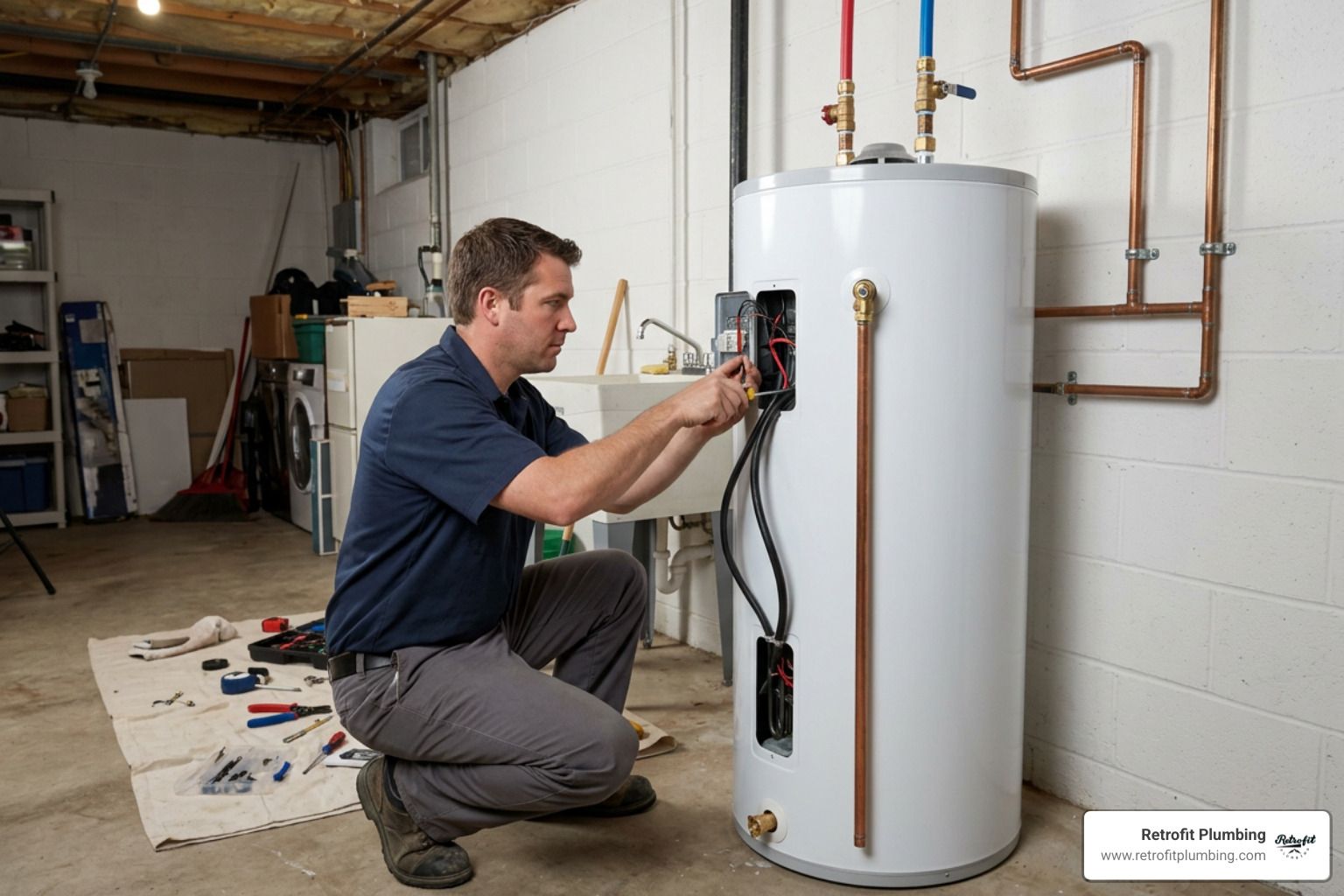
Traditional water heaters are giant, insulated drums that hold 40 to 80 gallons of water. They use a burner or an electric element to keep that massive volume of water hot 24 hours a day, 325 days a year. Whether you are sleeping, working at your office in downtown Seattle, or taking a weekend trip to hike near Mount Rainier, your tank is burning energy to keep that water hot. This continuous heating cycle is known as standby energy loss.
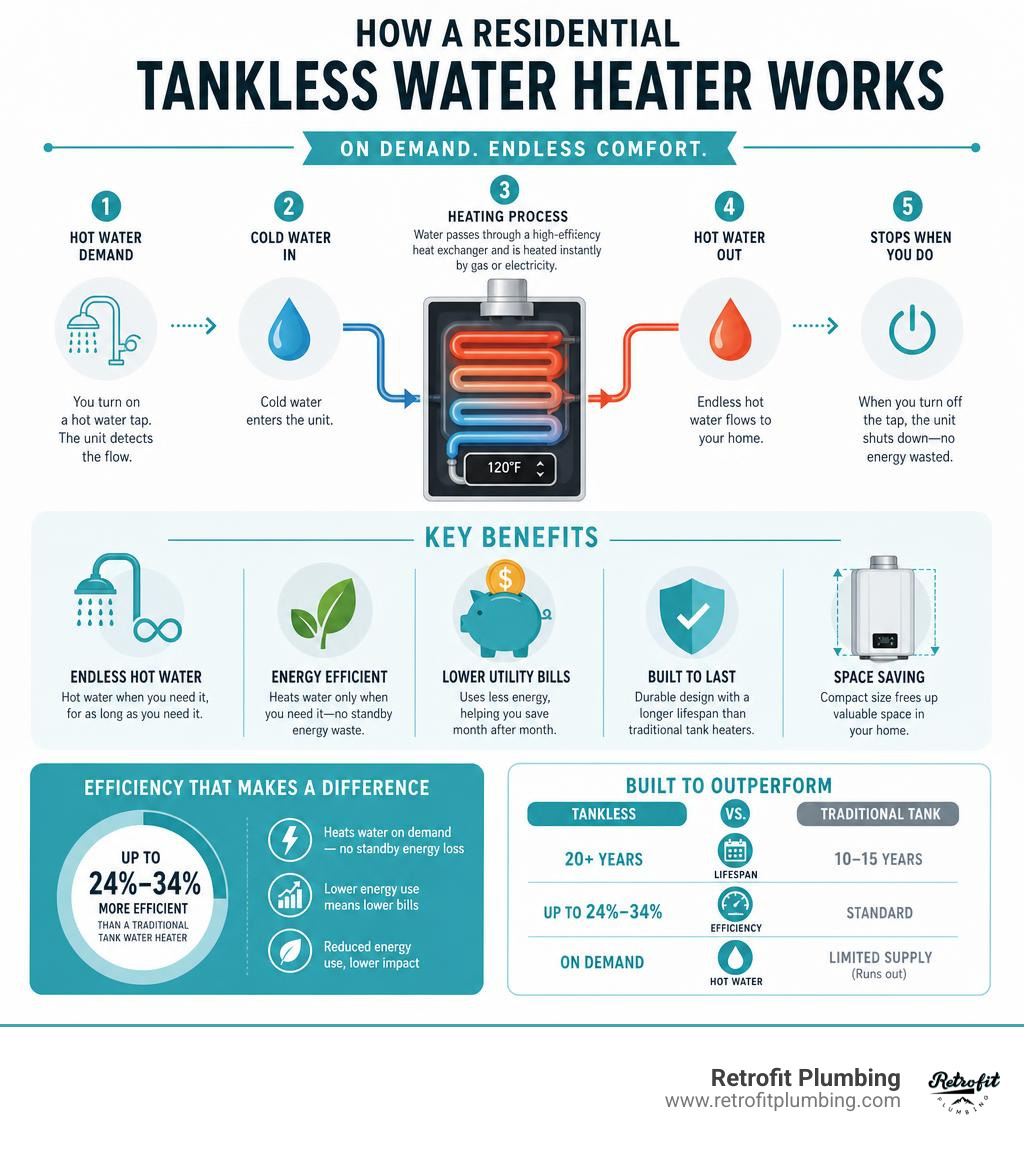
Tankless systems completely eliminate standby loss by operating on a simple "on-demand" principle:
- Flow Sensor Activation: When you turn on a hot water faucet—say, your shower or the kitchen sink—cold water flows into the tankless unit. A sensor detects this movement immediately.
- Rapid Heating: The sensor tells the gas burner or electric heating element to fire up.
- The Heat Exchanger: The cold water passes through a high-efficiency heat exchanger. This component acts like a radiator in reverse, rapidly transferring heat from the burner or element directly to the water flowing through the copper or stainless steel pipes.
- Endless Delivery: The water exits the unit at your precise desired temperature (usually set between 120°F and 140°F) and travels straight to your faucet.
Because there is no tank to empty, you will never run out of hot water. If you want to research the top-performing models on the market today, check out our guide on the Best Residential Tankless Water Heater.
Endless Hot Water vs. Traditional Storage Tanks
The most obvious limitation of a traditional tank is its finite capacity. Once those 50 gallons of hot water are gone, you have to wait 45 minutes to an hour for the tank to recover. If you have a large family in Auburn or Kirkland getting ready for school and work in the morning, someone is inevitably getting stuck with a freezing cold shower.
With a residential tankless water heater, the flow of hot water is continuous. You can run back-to-back showers, start a load of laundry, and run the dishwasher without worrying about the water turning ice-cold halfway through.
Beyond the endless hot water, tankless units offer two massive physical advantages:
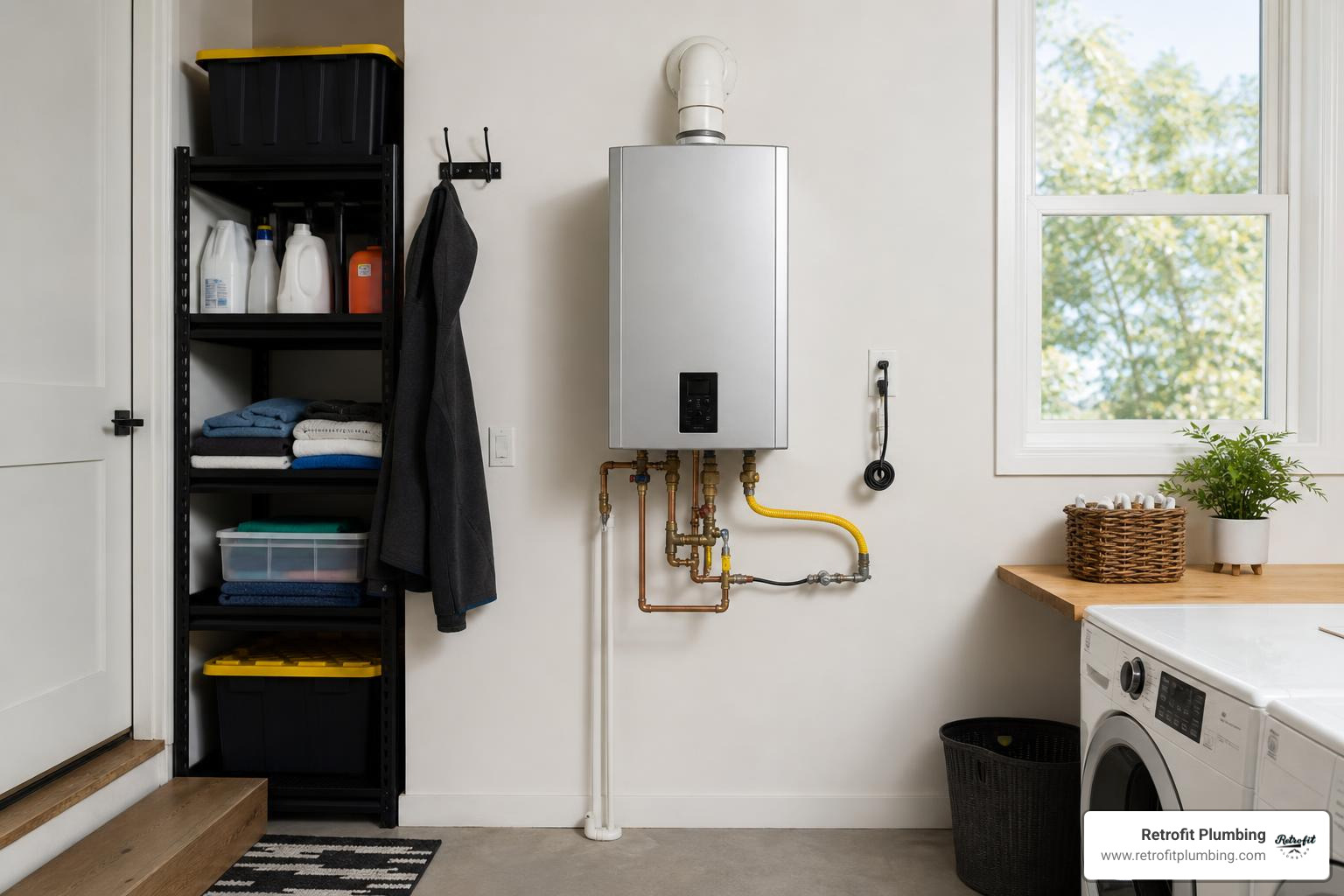
- Incredible Space Savings: Traditional tanks are bulky eyesores that take up valuable floor space in your basement, garage, or utility closet. A tankless unit is about the size of a carry-on suitcase and mounts directly to the wall. This frees up floor space for extra storage, a water softener, or just a cleaner look.
- Double the Lifespan: While a standard storage tank typically lasts 10 to 15 years before the tank corrodes and begins to leak, a well-maintained tankless unit has a life expectancy of more than 20 years. Because they are built with individual, replaceable parts, you rarely have to scrap the entire system if a single component fails.
If your current system is showing signs of age, read more about your options with our guide to Plumber Water Heater Replacement.
Energy Efficiency and Utility Bill Savings
Let’s talk numbers, because the energy savings of tankless technology are highly documented. According to the U.S. Department of Energy:
- For homes that use 41 gallons or less of hot water daily, tankless water heaters can be 24% to 34% more energy efficient than conventional storage tanks.
- For busier households using around 86 gallons of hot water per day, they are still 8% to 14% more energy efficient.
By only heating water when you actually need it, you stop paying to heat water while you sleep or while you're out enjoying a sunny afternoon at Lake Washington. Over the 20-year lifespan of the unit, these monthly utility savings accumulate significantly, helping to offset the higher upfront installation costs.
Choosing the Right Residential Tankless Water Heater for Your Home
Selecting the right unit isn't just about picking a brand; it’s about matching the technology to your household's daily habits and the specific climate of the Pacific Northwest. First, let’s look at the two primary design styles: condensing and non-condensing.
| Feature | Condensing Tankless Heaters | Non-Condensing Tankless Heaters |
|---|---|---|
| Energy Efficiency (UEF) | Extremely High (Typically 0.90 – 0.98) | Standard High (Typically 0.80 – 0.82) |
| Heat Exchangers | Dual (Primary copper + Secondary stainless steel) | Single (Usually copper) |
| Venting Material | Inexpensive PVC, CPVC, or Polypropylene | Category III Stainless Steel (More expensive) |
| Condensate Drain | Required (Produces acidic runoff) | Not Required |
| Upfront Unit Cost | Higher | Lower |
Gas vs. Electric Residential Tankless Water Heater Options
One of the first decisions you'll need to make is choosing your fuel source.
Gas-Fired Tankless Heaters (Natural Gas or Liquid Propane): Gas-fired models are the most popular choice for whole-house systems in Western Washington. They pack a massive heating punch, typically providing hot water at a rate of 2 to 5 gallons per minute (GPM) in colder climates, and up to 9.5 GPM in warmer areas.
- Pros: Higher flow rates, excellent performance in cold winters, easily handles multiple simultaneous showers.
- Cons: Requires venting through an exterior wall or roof, and may require upgrading your home's gas line to accommodate the high BTU demand.
- Useful Resource: If you live in a rural area around Covington or Renton without access to a natural gas line, our Propane Tankless Hot Water Heater Guide explains how LP-powered units can keep your home supplied with endless hot water.
Electric Tankless Heaters: Electric units are highly efficient (often boasting UEF ratings up to 0.96) and require no venting whatsoever, making them incredibly simple to place in tight closets or under sinks.
- Pros: Lower initial unit cost, zero venting requirements, silent operation.
- Cons: Massive electrical demand. A whole-house electric tankless unit can draw 120 to 150 amps of power. This almost always requires upgrading your home’s electrical panel to 300 or 400 amps, which can add thousands of dollars to the installation cost.
Sizing Your Residential Tankless Water Heater
Sizing a tankless water heater is completely different from sizing a tank. You don’t look at gallons; instead, you look at flow rate (GPM) and temperature rise.
- Calculate Your Peak Flow Rate:
Add up the GPM of the fixtures you expect to run at the exact same time. For example:
- One low-flow showerhead: 2.0 GPM
- One kitchen faucet: 1.5 GPM
- Peak Demand: 3.5 GPM
- Determine Temperature Rise:
This is the difference between your desired hot water temperature (usually 120°F) and the temperature of the cold groundwater entering your home.
- In Western Washington, our groundwater is fed by Cascade mountain runoff. In the winter, our incoming water temperature can drop to a chilly 40°F to 45°F.
- To reach 120°F, your unit must achieve a 75°F to 80°F temperature rise.
When shopping for a unit, always look at the manufacturer’s flow rate chart at a 75°F rise rather than the maximum GPM listed on the box (which is usually calculated for warm Southern states with 70°F groundwater). A unit rated for 9.0 GPM in Florida might only deliver 4.5 GPM during a cold, rainy January in Kent or Tacoma.
Installation Requirements and Local Considerations in Western Washington
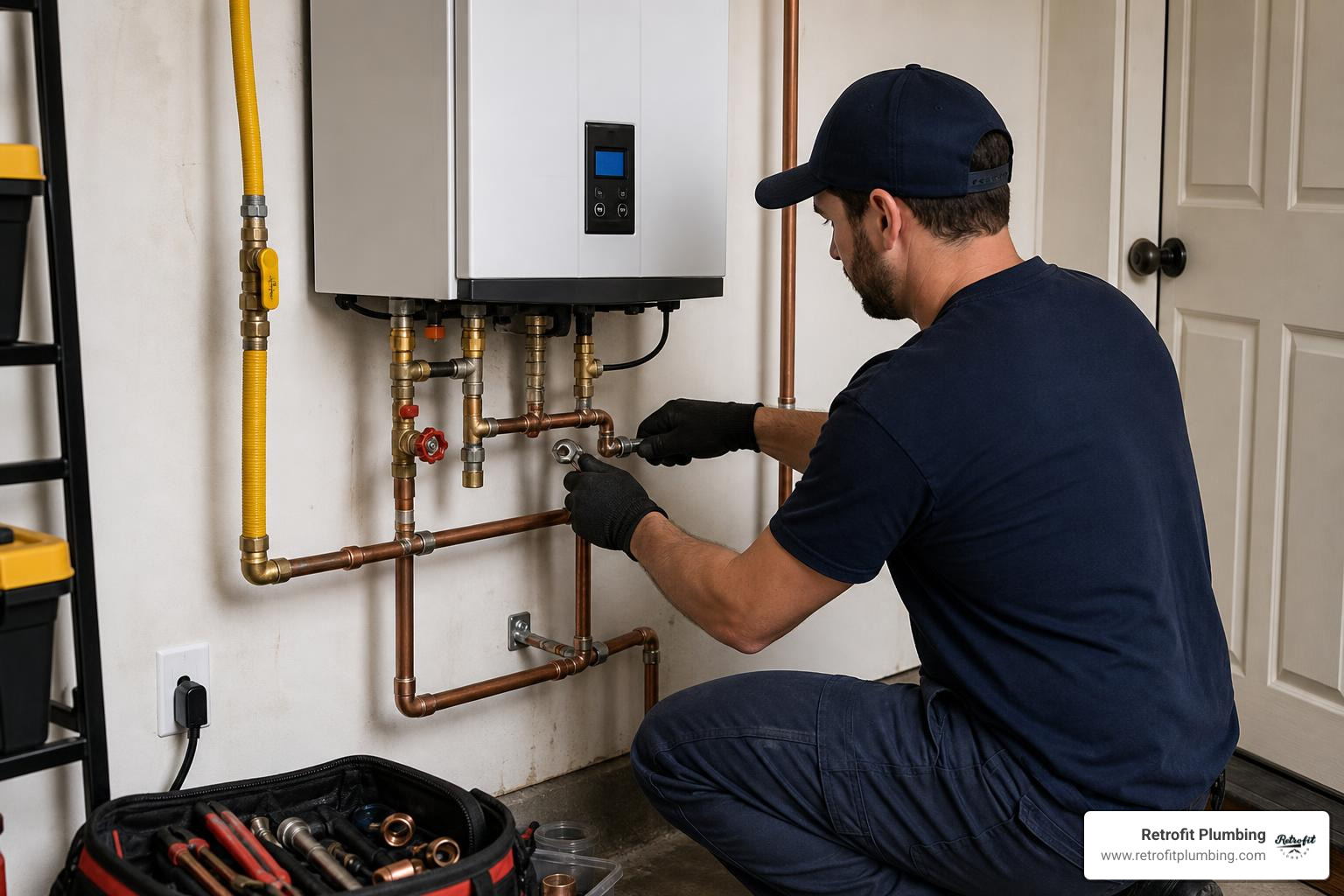
Installing a residential tankless water heater is not a weekend DIY project. Because these systems draw a large amount of fuel or power in a short period, they require precise plumbing, electrical, and gas-fitting work that must comply with local building codes in King and Pierce counties.
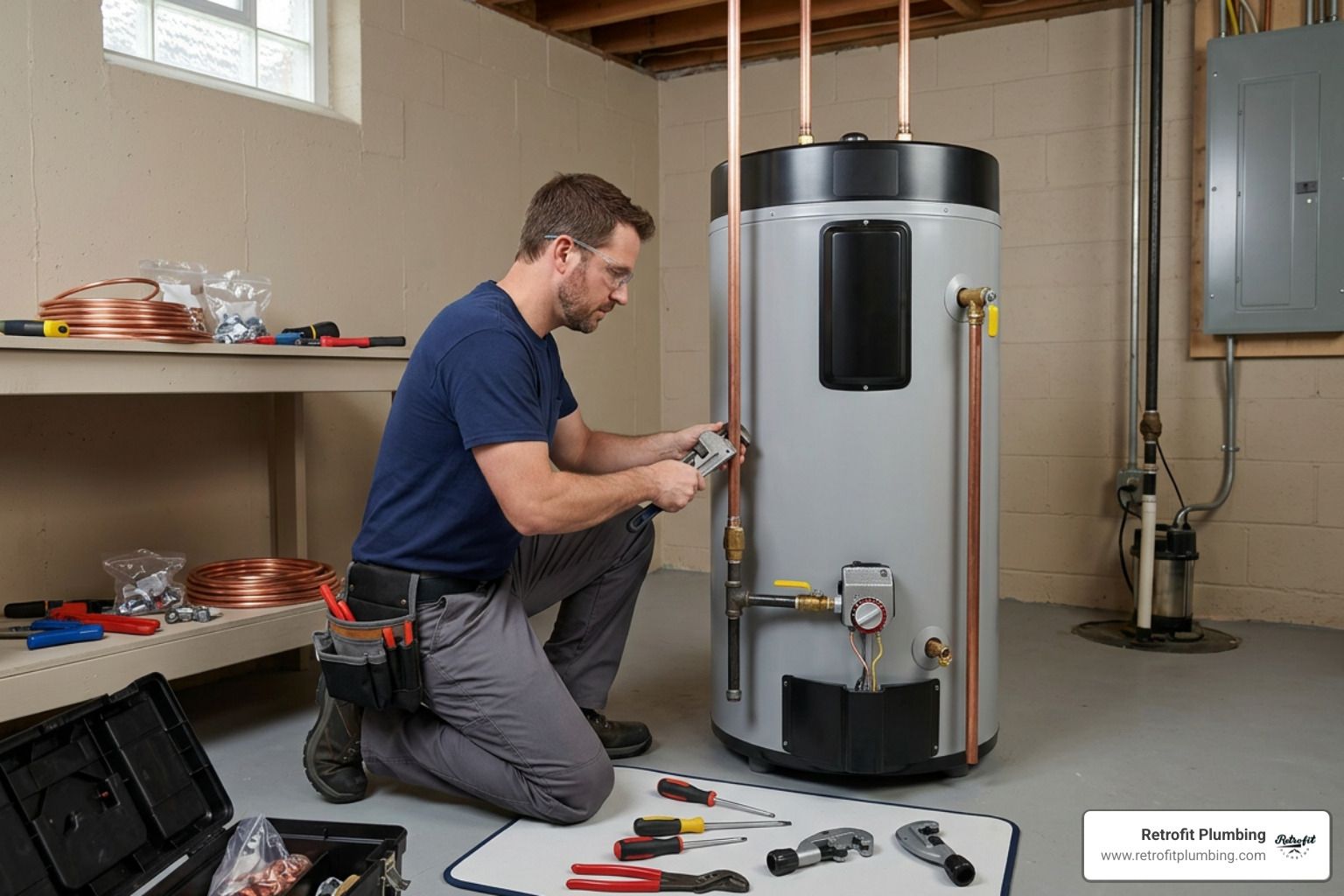
For a reliable, code-compliant setup in Covington, Renton, Kent, Bellevue, or the surrounding South Sound, schedule professional tankless water heater installation with Retrofit Plumbing. We regularly work in local homes where tight utility closets, older gas lines, and chilly winter groundwater all matter during sizing and installation.
Here are the primary installation challenges we address during a retrofit:
- Gas Line Upgrades: A standard 50-gallon tank water heater uses about 40,000 BTUs of gas. A whole-house tankless unit can require anywhere from 140,000 to 199,000 BTUs. If your home has standard 1/2-inch gas piping, we often have to run a dedicated 3/4-inch line from the gas meter to the new unit to ensure it gets enough fuel.
- Venting Clearances: Gas units produce hot exhaust containing carbon monoxide. Local codes dictate exactly how far the vent termination must be from windows, doors, soffits, and fresh air intakes.
Condensing vs. Non-Condensing Venting Needs
The type of tankless heater you choose dictates how it must be vented:
Non-Condensing Units: These systems vent exhaust gases at extremely high temperatures (often over 300°F). Because the exhaust is so hot, you cannot use plastic venting. You must install specialized, double-walled Category III stainless steel venting. This material is highly durable but expensive, and it must be run directly to the outside of your home.
Condensing Units: These high-efficiency systems use a secondary heat exchanger to capture extra heat from the exhaust gases before they leave the unit. This cools the exhaust down significantly (often below 140°F). Because the exhaust is relatively cool, you can vent a condensing unit using inexpensive, lightweight Schedule 40 PVC, CPVC, or polypropylene pipes.
High-quality condensing units like the ProLine® XE Indoor 180,000 BTU Condensing Natural Gas Tankless Water Heater GTS-340-NIH 100 | State Water Heaters utilize this technology to deliver an incredible 0.95 UEF, saving you money on both monthly fuel costs and installation materials.
However, because condensing units cool the exhaust so much, the moisture in the exhaust condenses into a highly acidic liquid. This condensate cannot simply drip onto your garage floor or into your yard. It must be routed through an acidic condensate neutralizer cartridge before being safely discharged into a drain.
Dealing with Pacific Northwest Hard Water and Scale
While the Pacific Northwest is famous for its clean, soft mountain water, many areas in Covington, Maple Valley, and rural Renton rely on private wells or local aquifers that contain high levels of dissolved minerals like calcium and magnesium.
When hard water is heated inside a tankless unit, these minerals precipitate out of the water and cling to the hot walls of the heat exchanger. This creates a hard, chalky barrier known as scale. Scale acts as an insulator, forcing your burner to run hotter and longer to heat the same amount of water. Over time, scale buildup can reduce efficiency by 10% or more, trigger system error codes, and eventually cause the heat exchanger to overheat and crack.
To combat this, manufacturers have developed innovative scale-prevention technologies. For example, the Ultra-Low NOx Indoor Liquid Propane Tankless Water Heater with X3® Technology | Model LTI-240X3-P | Lochinvar features built-in scale prevention that keeps the heat exchanger running like new without requiring annual descaling in most water conditions.
Maintenance, Lifespan, and Troubleshooting
To protect your investment and keep your 15-year heat exchanger warranty valid, regular maintenance is absolutely essential. Unless your unit has built-in scale-prevention technology, you should have your tankless water heater flushed once a year.
The Descaling Process:
- Isolation: Turn off the gas, electrical power, and water valves to the unit.
- Accessing the Valves: We connect a pair of hoses to the dedicated service isolation valves (which must be installed during the initial setup).
- Circulation: Using a small submersible pump in a bucket of food-grade white vinegar or a specialized descaling solution, we circulate the liquid through the heat exchanger for about 45 to 60 minutes. The mild acid safely dissolves the calcium deposits.
- Flushing and Cleaning: We flush the system with clean water, clean out the inline cold-water inlet filter screen, and restore power.
If your system is overdue for service or is flashing an unfamiliar error code on its digital screen, don't ignore it. Our team is always ready to assist with expert Services Water Heater Repair.
Preventing Water Heater Leaks and Failures
While tankless units don't store 50 gallons of pressurized water that can suddenly flood your basement, they can still experience leaks if connections loosen or if internal components corrode.
Modern high-end units feature built-in leak detection systems that immediately shut down the water inlet valve if moisture is detected inside the cabinet, protecting your home from water damage. It is also vital to ensure your system is equipped with a properly rated pressure relief valve to prevent damage from unexpected pressure spikes.
If you suspect your system has a slow drip or a broken seal, check out our guide on Services Water Heater Leaks to learn how to identify and address the issue before it causes major damage.
Frequently Asked Questions About Tankless Water Heaters
How long does a tankless water heater last compared to a tank?
A high-quality residential tankless water heater has a typical life expectancy of 20+ years when properly maintained. In contrast, standard storage tank heaters generally last only 10 to 15 years. Because tankless units are engineered with individual, modular components, we can easily replace a single valve, sensor, or heat exchanger without needing to replace the entire appliance.
Are there energy rebates available for Washington homeowners in 2026?
Yes! In May 2026, there are several fantastic local and federal financial incentives available to help offset the cost of transitioning to an energy-efficient system:
- Puget Sound Energy (PSE): Offers substantial rebates for homeowners replacing older, inefficient water heaters with high-efficiency ENERGY STAR® certified natural gas tankless models.
- Cascade Natural Gas: Provides similar cash-back rebates for qualifying residential customers.
- Federal Tax Credits (Energy Efficient Home Improvement Credit): Under Section 25C, you may qualify for a federal tax credit of up to 30% of the total installation cost (up to $600) for qualifying highly efficient gas tankless units.
- Local installation support: Retrofit Plumbing can help homeowners in Covington, Bellevue, Renton, Kent, Auburn, and nearby communities understand which system types typically qualify before installation begins.
Can a tankless water heater freeze during cold Western WA winters?
While our winters are generally mild compared to the Midwest, we still experience freezing temperatures that can threaten outdoor units or units installed in unconditioned garages. Fortunately, modern indoor and outdoor tankless water heaters come equipped with sophisticated, built-in electric freeze protection heaters that automatically warm the internal piping when temperatures drop near freezing.
To keep this protection active, the unit must remain plugged into an active electrical outlet. If a major winter storm causes a power outage, we recommend manually draining the water from the unit using the drain plugs to prevent the heat exchanger from splitting.
Conclusion
Upgrading to a residential tankless water heater is one of the smartest investments you can make for your home. It delivers endless hot water, slashes your monthly energy bills, and frees up valuable space in your garage or utility closet.
At Retrofit Plumbing, we are dedicated to providing our neighbors in Covington, Bellevue, Renton, Kent, Tacoma, Seattle, Auburn, and Kirkland with top-tier plumbing services. We stand by our core values: honest pricing, fully stocked trucks, same-day service, and a 100% satisfaction guarantee.
Whether you are ready to make the switch to tankless or need a reliable repair on your existing system, we are here to help. Schedule your tankless water heater installation with Retrofit Plumbing today, and enjoy endless hot water without the stress!