Key Materials Used for Commercial Plumbing Pipes
Commercial plumbing pipes are the backbone of every office building, medical facility, restaurant, and retail space in the South Sound — and choosing the wrong material can mean costly leaks, failed inspections, or a system that needs replacing far too soon.
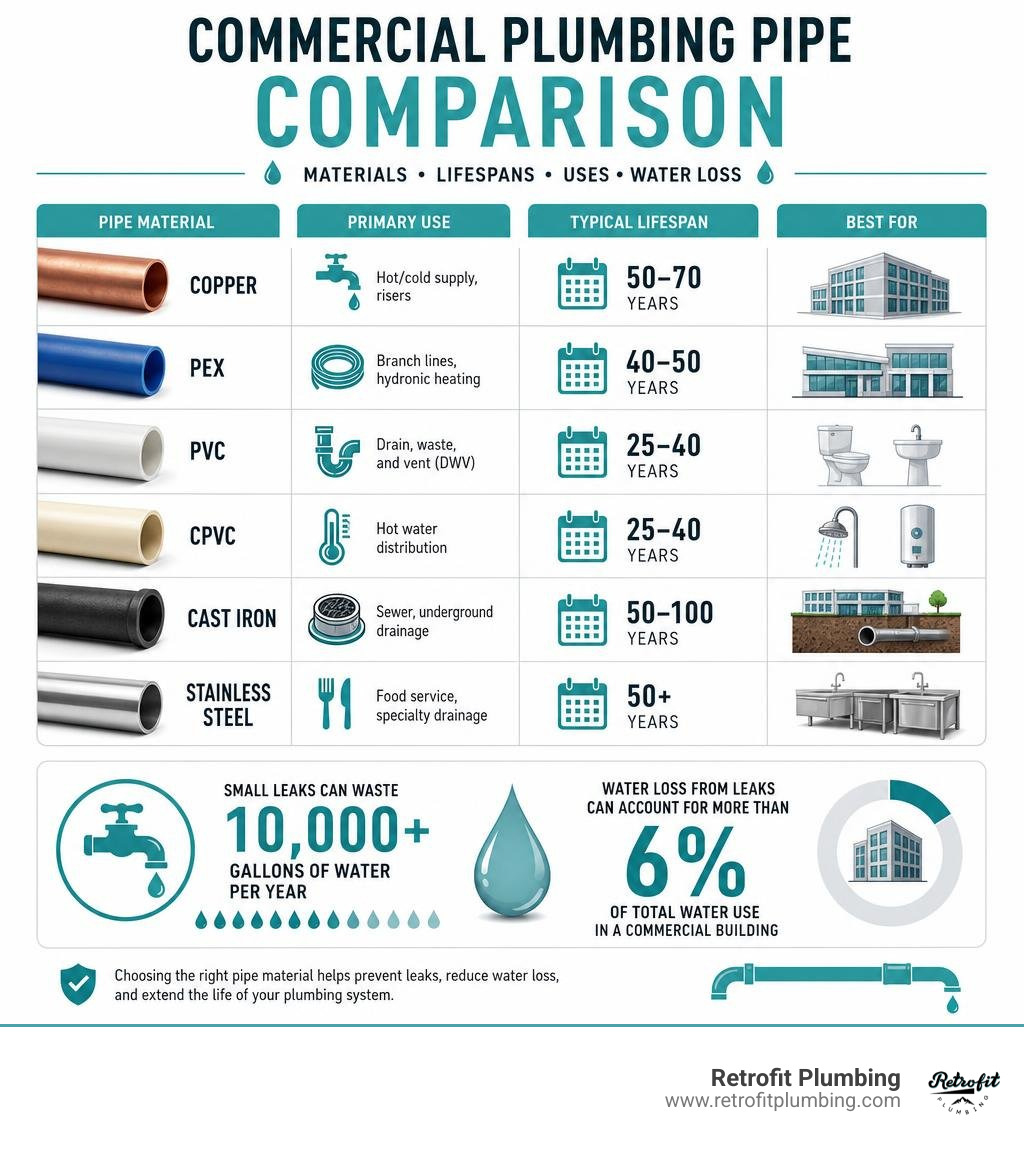
Here's a quick look at the most common pipe materials used in commercial buildings today:
| Pipe Material | Primary Use | Typical Lifespan |
|---|---|---|
| Copper | Hot/cold supply, risers | 50–70 years |
| PEX | Branch lines, hydronic heating | 40–50 years |
| PVC | Drain, waste, and vent (DWV) | 25–40 years |
| CPVC | Hot water distribution | 25–40 years |
| Cast Iron | Sewer, underground drainage | 50–100 years |
| Stainless Steel | Food service, specialty drainage | 50+ years |
No single material wins every application. Walk through any commercial building under construction and you'll almost always see multiple pipe types — each chosen for what it does best.
That matters more than most people realize. Small leaks in commercial plumbing systems can waste over 10,000 gallons of water per year, and water loss from leaks can account for more than 6% of total water use in a commercial building — driving up both utility bills and long-term repair costs.
I'm Josh Klimp, and over the past 20+ years I've designed, permitted, and installed commercial plumbing pipes for medical offices, tenant improvements, and new construction projects throughout the Pacific Northwest. In this guide, I'll break down every major pipe material, what it's best suited for, and how to choose the right one for your project.
Selecting the right pipe material is a balancing act between material cost, installation labor, durability, and code requirements. In the commercial world, we categorize piping into pressurized supply lines and gravity-fed drainage lines. Pressurized supply lines must handle constant high pressure and temperature fluctuations, while drainage lines must withstand corrosive chemicals, grease, and structural shifts.
In our work across Covington, Renton, and Bellevue, we analyze the lifecycle cost of each system. While a cheaper plastic pipe might save money on the initial invoice, a premium material like copper or stainless steel can easily outlast it by decades, saving commercial property owners from devastating business disruptions down the road.
Copper: The Traditional Gold Standard
Copper has been the undisputed king of commercial water supply lines since the 1960s, and for good reason. It is incredibly durable, naturally biostatic (meaning it actively inhibits the growth of bacteria and legionella), and highly resistant to corrosion under normal water conditions.
Commercial copper tubing is manufactured from UNS C12200 grade copper and is categorized into three primary types, each color-coded for easy identification:
- Type K (Green): The thickest wall option, primarily used for underground water mains and heavy-duty industrial applications.
- Type L (Blue): Medium wall thickness, the industry standard for commercial interior domestic water and mechanical systems.
- Type M (Red): The thinnest wall, typically reserved for low-pressure heating systems or residential branches, though rarely permitted for main commercial water lines.
According to the technical data in the COPPER TUBE FOR PLUMBING AND MECHANICAL APPLICATIONS guide, copper's pressure rating is highly dependent on operating temperatures. For example, a 3/4" Type L copper tube can handle up to 495 PSIG at 150°F, but that rating drops to 291 PSIG if the temperature climbs to 400°F.
While copper offers an impressive lifespan of 50 to 70 years, it does have vulnerabilities. In areas with highly acidic water (a pH below 6.5), copper pipes can experience internal scale buildup and pinhole leaks. The upfront material cost of copper is also significantly higher than plastic alternatives, and installing it requires skilled labor for soldering or pressing.
PEX: The Flexible Modern Marvel
Cross-linked polyethylene, or PEX, has completely revolutionized the commercial plumbing industry over the last twenty years. PEX-A, produced via the Engel method, offers the highest level of cross-linking, giving it incredible flexibility and thermal "memory" — if the pipe gets kinked, a quick application of heat from a heat gun shrinks it back to its original shape.
For commercial supply lines, PEX is an outstanding choice. Because it is flexible, we can run continuous lines with minimal fittings, drastically reducing the number of joint connections (which are always the most common failure points in any plumbing system). When we perform a Services Main Water Lines installation, PEX's ability to bend around structural obstacles saves hours of labor.
PEX also boasts exceptional freeze resistance. Unlike rigid copper, PEX can expand slightly under the pressure of freezing water and then return to its normal size when thawed. However, PEX has one major enemy: ultraviolet (UV) light. Direct exposure to sunlight during storage or installation can break down the polymer chains, causing the pipe to become brittle and fail. Additionally, for closed hydronic heating loops, you must use an oxygen-barrier PEX to prevent oxygen from permeating the pipe wall and rusting the system's ferrous components.
PVC and CPVC: High-Performance Plastics
Polyvinyl Chloride (PVC) and Chlorinated Polyvinyl Chloride (CPVC) are two of the most widely used rigid plastic pipes in commercial construction, but they serve very different purposes.
Standard PVC is the undisputed champion of Drain, Waste, and Vent (DWV) systems. It is lightweight, immune to electrochemical corrosion, and incredibly cost-effective. In commercial settings, we use Schedule 40 PVC for standard gravity drainage and Schedule 80 PVC for higher-pressure municipal or industrial applications. As detailed in the SUBMITTAL FOR CHARLOTTE PIPE PVC SCHEDULE 40 SOLID WALL PIPE AND PVC DWV FITTING SYSTEM, standard PVC has a strict maximum operating temperature of 140°F. Exceeding this limit — such as dumping boiling water from a commercial dishwasher down a PVC drain — will cause the plastic to warp, sag, and eventually split.
For hot water distribution, we turn to CPVC. The extra chlorination in CPVC gives it enhanced chemical resistance and allows it to handle operating temperatures up to 200°F. Products like Uponor ChlorFIT® Schedule 80 Corzan® CPVC | Uponor are specifically engineered to withstand the harsh chlorine and chloramine chemicals used in municipal water treatment, preventing the pipe degradation that can plague older systems.
Crucial Tip: Never mix PVC and CPVC pipes or fittings, and never use PVC solvent cement on CPVC (or vice versa). They require entirely different chemical bonding compounds to achieve a proper solvent weld.
Cast Iron and Stainless Steel: Heavy-Duty Drainage
When it comes to high-demand commercial drainage, plastic isn't always the best choice. For major sewer mains and multi-story drainage stacks, cast iron and stainless steel remain the premier options.
Cast iron is incredibly heavy-duty and has been a staple of commercial sewer systems for over a century. When we perform Services Sewer Lines work, we often recommend cast iron for its unparalleled sound-dampening qualities. In multi-story office buildings, hotels, and luxury apartments in Bellevue, the sound of rushing water inside plastic drainage pipes can be highly disruptive. Cast iron's dense walls absorb this vibration, making the system virtually silent. Furthermore, cast iron is completely non-combustible, offering excellent natural fire resistance.
For specialized commercial applications — such as commercial kitchens, breweries, pharmaceutical plants, and food processing facilities — stainless steel is the gold standard. Products like the push-fit systems from ACO Pipe - ACO USA provide a highly hygienic, corrosion-resistant drainage solution. Made from 316L stainless steel, these pipes feature a low coefficient of thermal expansion, are completely non-toxic, and can handle extreme chemical cleaning agents without degrading. The push-fit connection method eliminates the need for hot-work permits and on-site welding, saving hundreds of labor hours during installation.
Critical Factors Influencing Pipe Selection in the Pacific Northwest
Designing a commercial plumbing system in Western Washington requires a deep understanding of our unique local environment. From the steep slopes of the Issaquah Alps to the dense urban centers of Bellevue and Seattle, our regional conditions play a massive role in how we select commercial plumbing pipes.
For example, our local soils can be highly demanding. Many areas around Covington and Renton contain heavy, wet glacial till and clay soils that shift during our rainy winters. If you install a brittle drainage pipe without proper bedding, soil settlement can easily crack the line, leading to a premature Sewer Line Replacement. Additionally, our iconic native trees, like the giant Douglas firs and bigleaf maples, have aggressive root systems that actively seek out moisture, making joint integrity a top priority for any underground line.
Temperature and Pressure Ratings for Commercial Plumbing Pipes
Commercial buildings place immense thermal and mechanical stress on piping systems. A high-rise office building in Seattle requires high-pressure booster pumps to deliver water to the upper floors, while a commercial kitchen in Tacoma demands constant high-temperature water for sanitization.
To ensure safety, every piping material must meet strict ASTM and ANSI standards. When designing these systems, we look at the interaction between pressure and temperature. As temperatures rise, the maximum allowable pressure of plastic pipes drops significantly. Modern press-connect systems, such as those featured in Commercial Plumbing Systems - Building Piping, utilize advanced double-lip seals and cold-press technology to maintain high pressure ratings (up to 600 psi for potable water) across wide temperature ranges, making them ideal for complex hydronic heating and domestic water systems.
Code Compliance and Fire Ratings for Commercial Plumbing Pipes
In commercial construction, building codes are incredibly strict regarding fire safety, especially when pipes pass through fire-rated walls or run through plenum spaces (the open areas above drop ceilings used for heating and air circulation).
Under the International Building Code (IBC) and local Washington State amendments, any material installed in a plenum space must have a flame-spread index of no more than 25 and a smoke-developed index of no more than 50 when tested in accordance with ASTM E84. While metal pipes like copper and cast iron are naturally compliant, plastic pipes must be specifically rated. High-end CPVC and certain engineered PEX-A lines carry these plenum ratings, but standard PVC does not. Installing non-rated PVC in a plenum space is a major code violation that will fail inspection every time. For a deeper look at these requirements, check out our Complete Guide Commercial Bathroom Plumbing.
Best Practices for Transitioning and Installing Commercial Systems
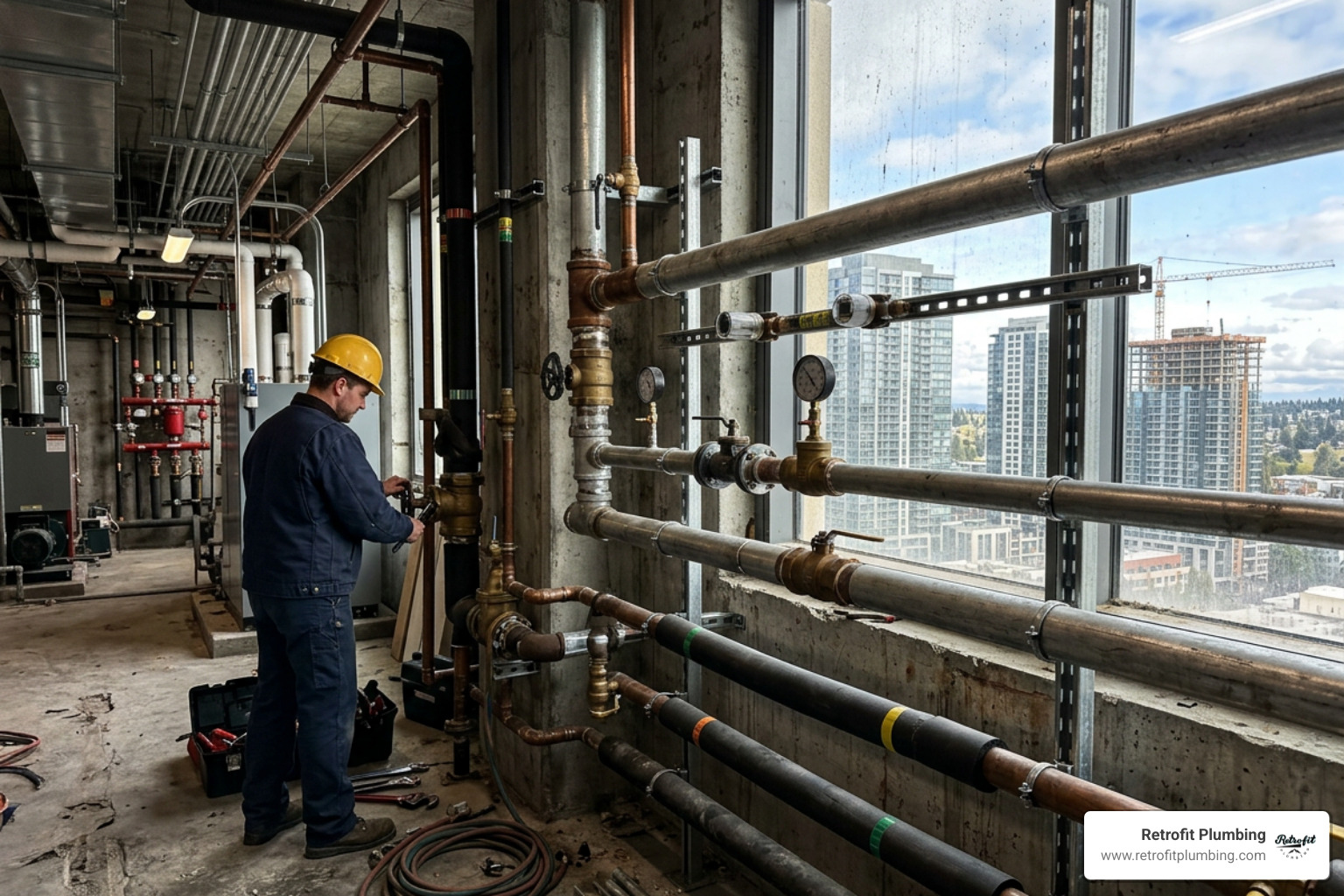
Modern commercial plumbing systems are rarely made of just one material. A typical project might use a copper main riser to handle high pressure, transition to PEX-A for the horizontal branch lines feeding the restrooms, and use PVC or cast iron for the waste drains. The magic (and the potential mess) happens at the transition points.
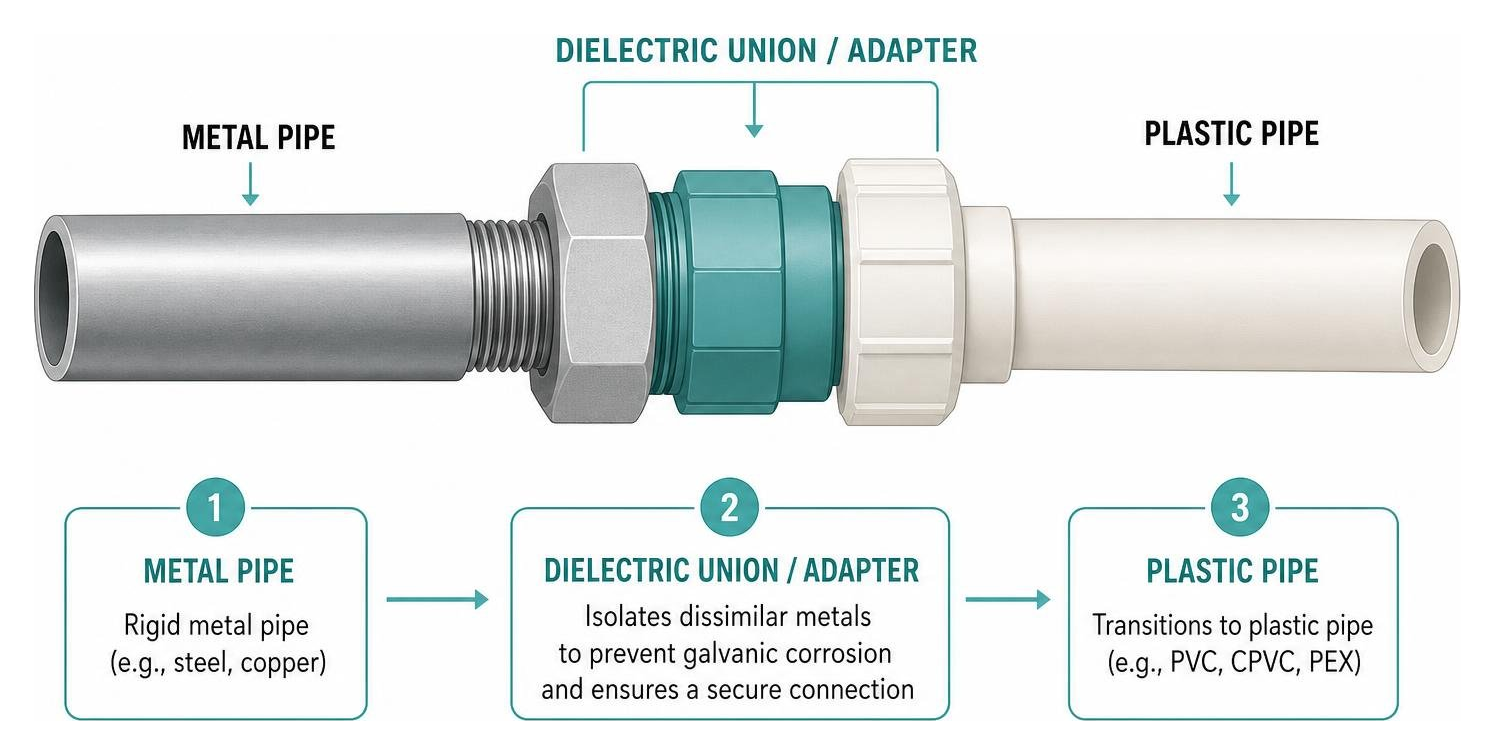
When connecting dissimilar metals — such as copper to galvanized steel — you must use a dielectric union. Without it, a chemical reaction called galvanic corrosion will occur, rapidly eating away the steel and causing a major leak. When we install intricate setups like Commercial Kitchen Sink Plumbing, we pay close attention to these connections to ensure the system stands the test of time.
Transitioning Between Metal and Plastic Pipes
Transitioning from rigid metal pipes to flexible plastics requires specialized fittings engineered to handle the differing rates of thermal expansion. Plastics expand and contract at a much higher rate than metals when exposed to temperature changes.
To solve this, manufacturers have developed highly reliable hybrid transition adapters. For example, Uponor's ProPEX lead-free brass adapters allow plumbers to transition directly from PEX-A to Schedule 80 CPVC without needing multiple intermediate fittings. This reduces the installation steps by up to 50% and eliminates potential leak points. During Commercial Plumbing Construction, utilizing these engineered adapters ensures joint integrity and keeps the project moving on schedule.
Mitigating Root Intrusion and Soil Settlement in Covington and Renton
In our local service areas like Covington, Kent, and Renton, underground plumbing faces constant threats from heavy clay soils and aggressive tree roots. During dry summer months, the roots of bigleaf maples and Douglas firs will travel long distances to find water, easily penetrating tiny cracks in old concrete or clay sewer pipes.
To prevent this, we utilize modern trenchless technology and seamless piping materials. When we perform sewer installations, we recommend heavy-duty gasketed PVC or fused HDPE pipes that offer zero joint play for roots to exploit. If you are dealing with failing lines under established landscaping, we can often execute a seamless pipe bursting or lining process. This protects your property and prevents future issues, allowing you to enjoy local community events like the annual Covington Days festival without worrying about your sewer lines. For more information on how we handle these local soil challenges, read about our Expert Sewer Installation and Repair Services by Retrofit Plumbing in Covington.
Frequently Asked Questions about Commercial Plumbing Pipes
What is the longest-lasting pipe material for commercial buildings?
For supply lines, copper remains the longest-lasting traditional material, frequently serving for 50 to 70 years under proper water conditions. For gravity drainage and sewer lines, high-quality cast iron can easily last 50 to 100 years. If your commercial property is dealing with aging, corroded lines, a professional Main Water Replacement using modern copper or PEX-A is the best way to secure your building's infrastructure for the next half-century.
Can PEX completely replace copper in commercial projects?
While PEX-A is an incredible material for branch lines, in-slab distribution, and hydronic heating, it cannot completely replace copper. Copper is still preferred for main vertical risers in high-rise buildings because of its structural rigidity — PEX is highly flexible and requires extensive support brackets to prevent sagging over long vertical runs. Most modern commercial projects utilize a hybrid system: copper for the main high-pressure risers and PEX for the horizontal runouts to individual fixtures. For advice on upgrading your current system, check out our Commercial Plumbing Repair Guide 2026.
Why is cast iron still used for commercial drainage?
Cast iron is still widely specified in commercial construction for two main reasons: fire safety and acoustic performance. Cast iron is non-combustible and will not emit toxic fumes during a fire, making it much easier to pass strict commercial building inspections. Acoustically, cast iron is incredibly quiet. In high-end commercial spaces, hotels, and multi-family residential buildings, the heavy walls of cast iron absorb the sound of rushing wastewater, preventing it from echoing through the walls. If you need a team that understands how to work with these heavy-duty materials, search for Commercial Plumbing Companies Near Me and look for our experienced crew.
Conclusion
Whether you are managing a bustling retail center in Bellevue, renovating a historic commercial space in Renton, or breaking ground on new construction in Covington, selecting the right commercial plumbing pipes is one of the most critical decisions you will make.
At Retrofit Plumbing, we bring decades of hands-on Pacific Northwest experience to every commercial job. We pride ourselves on honest pricing, fully stocked trucks, same-day service, and our 100% satisfaction guarantee. From minor commercial repairs to complete system design and installation, our team is ready to deliver the reliable, high-performing plumbing your business deserves.
Ready to discuss your next commercial project? Contact us today to experience the best in local commercial plumbing support: Plumbing Services Commercial Plumbing.