Navigating Main Sewer Line Replacement
Facing a sewer line replacement can be daunting, but understanding the basics can ease your stress. Here's a quick look at what you need to know:
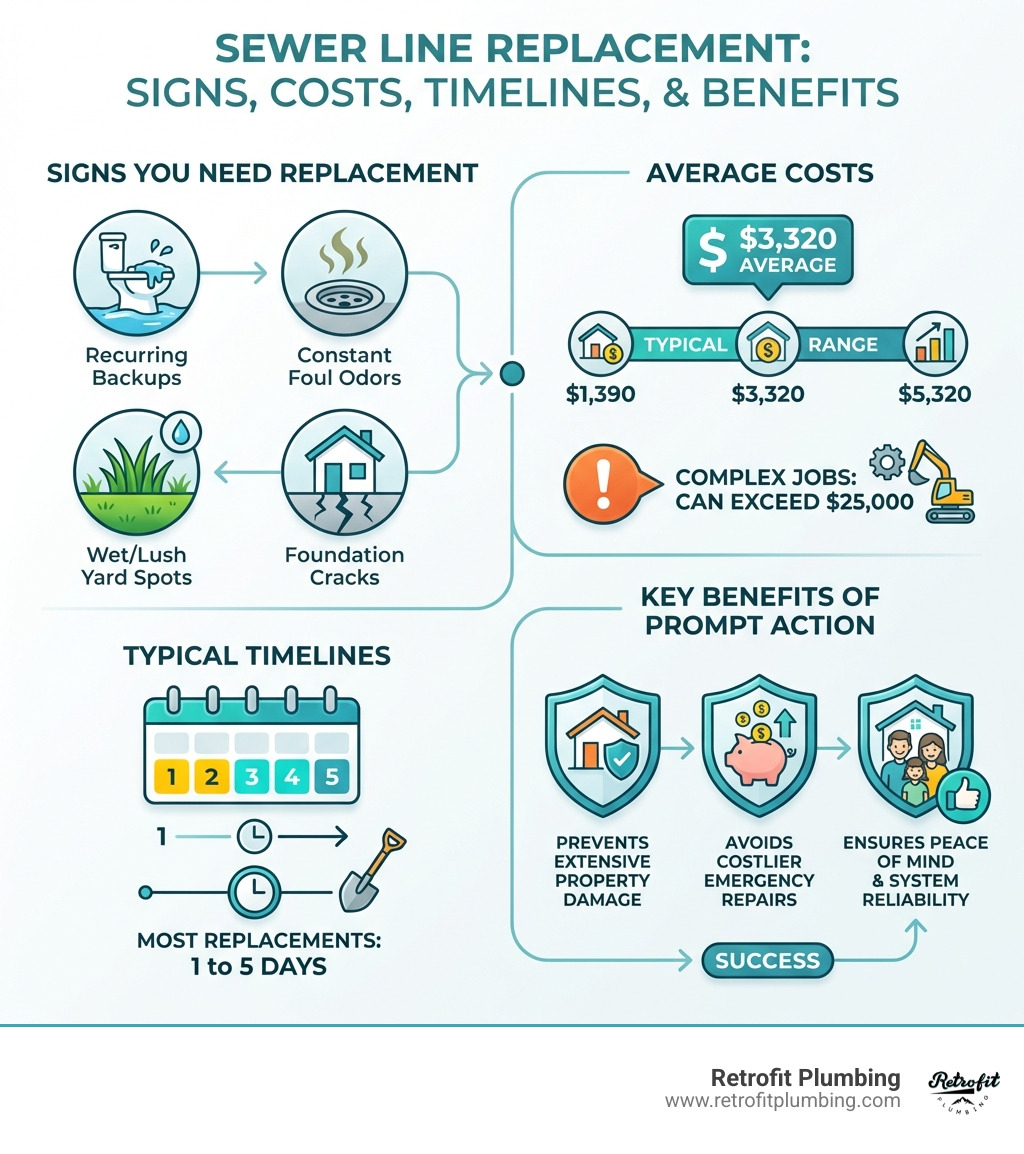
- Signs you might need replacement: Recurring backups, constant foul odors, wet or unusually lush spots in your yard, or cracks in your home's foundation.
- Average Cost: Homeowners typically pay between $1,390 and $5,320, with an average of $3,320. Complex jobs can exceed $25,000.
- Timeframe: Most replacements are completed in 1 to 5 days.
- Urgency: Delaying can lead to severe sewage backups, extensive property damage, and much costlier emergency repairs.
Let's be honest, no one wants to think about their sewer line. It’s out of sight, out of mind—until it's forced onto your to-do list. When issues arise, they can lead to stressful situations and expensive fixes. This guide will help you understand your options and make informed decisions.
With over 20 years of professional plumbing experience, I, Josh Klimp, specialize in resolving critical issues like sewer line replacement to keep your home's systems running smoothly. My goal is to provide clear, actionable information so you can make the best decisions for your property.
Recognizing the Signs and Causes of Sewer Damage
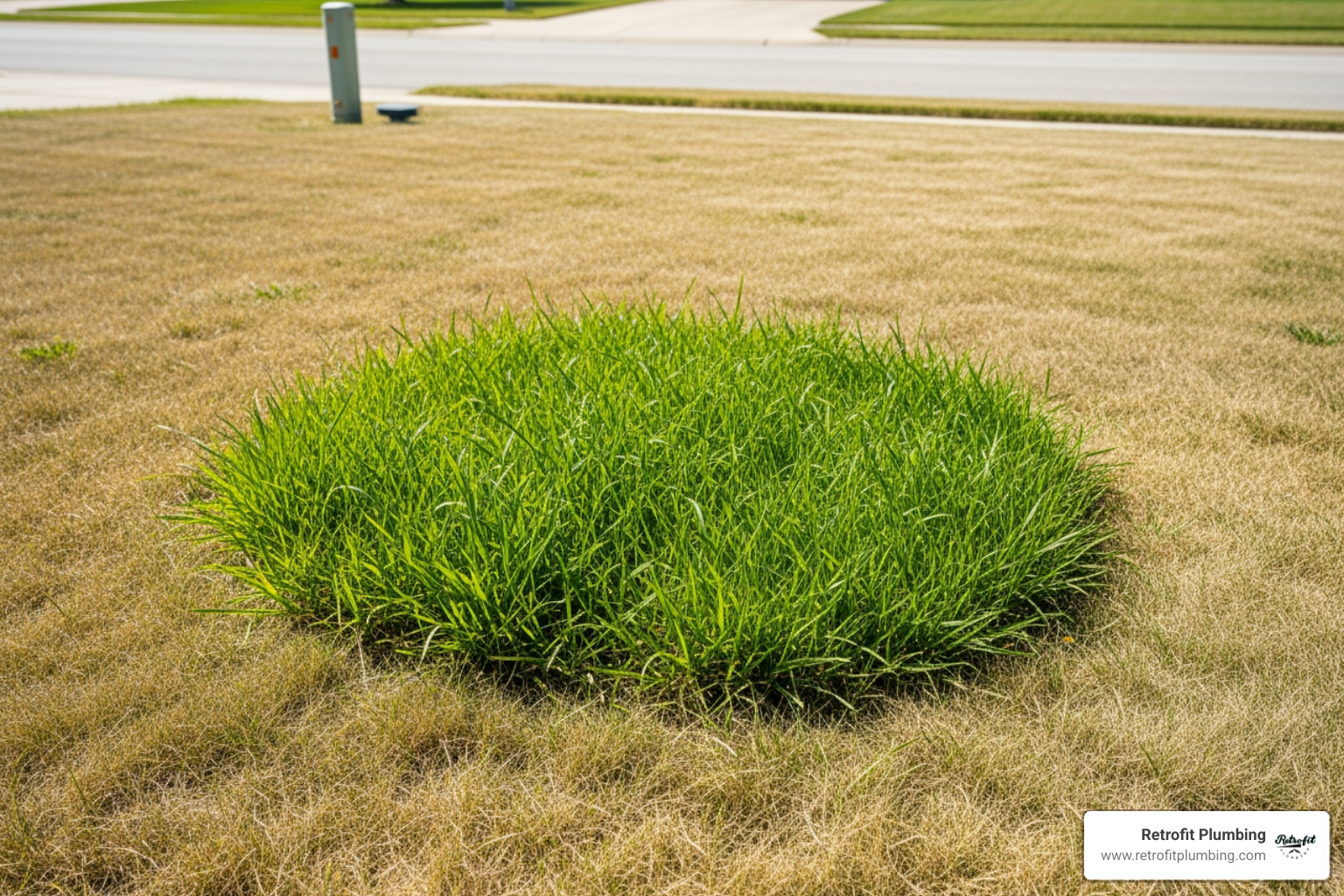
In our experience serving the Puget Sound area, we’ve found that the sewer line often tries to tell you it's failing long before a total collapse occurs. One of the most ironic signs is a patch of grass that looks too good. If you notice a specific area of your lawn is significantly greener and lusher than the rest, it might be receiving "super nutrition" from a leaking sewer pipe. While it looks nice, it’s a major red flag.
Other symptoms are less pleasant. If you are dealing with recurring clogs in multiple fixtures or frequent sewage backups in your basement or lower-level tubs, the problem is likely deeper than a simple hair clog. You might also notice foul odors—specifically the smell of rotten eggs. This is caused by sewer gases like hydrogen sulfide, ammonia, and methane, which are not just stinky but can be harmful to your health.
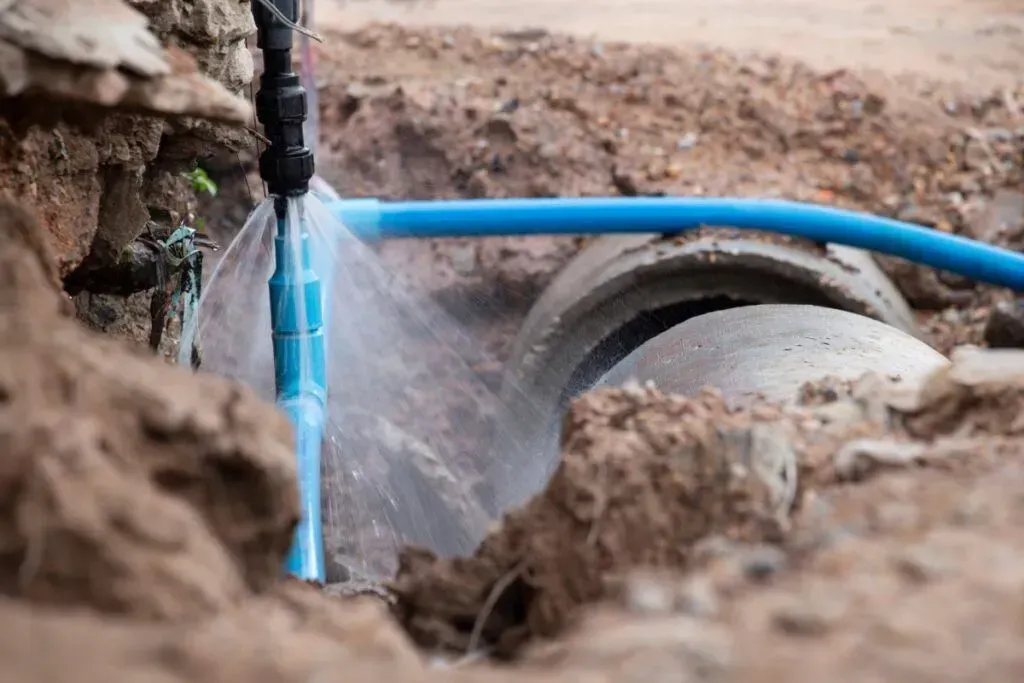
Keep an ear out for gurgling or bubbling sounds coming from your drains when you flush the toilet. In extreme cases, a broken line can even lead to cracks in your home’s foundation or the appearance of sinkholes in the yard. If you’re seeing these symptoms, it’s time to look into professional sewer line replacement to prevent further property damage.
Common Causes of Pipe Failure
Why do these sturdy underground pipes fail? In Covington and surrounding cities like Renton and Kent, the most common culprit is tree roots. Roots are naturally drawn to the moisture and nutrients inside sewer lines. They can find even the smallest crack or loose joint, growing inside until they create a "Velcro-like tentacle maze" that catches debris and eventually shatters the pipe. This is why we often recommend de-rooting services as a preventative measure.
Other common issues include:
- Pipe Bellies: This happens when a section of the pipe sinks due to soil erosion or poor installation, creating a low spot where waste settles and causes constant clogs.
- Corrosion: Older metal pipes naturally deteriorate over time, especially when exposed to harsh soil chemicals.
- Ground Shifting: In the Pacific Northwest, our soil moves. This shifting can cause pipes to offset at the joints or snap entirely.
- Aging Materials: Every material has an expiration date. If your home was built before the 1970s, your pipes may simply be at the end of their natural lifespan.
Understanding Pipe Materials
Knowing what your pipes are made of helps us determine the best approach for sewer line replacement.
- Clay Pipes: Common in homes built from the 1900s through the 1950s. They are surprisingly durable against corrosion but very susceptible to root intrusion and cracking. Their lifespan is typically 50–60 years.
- Cast Iron: Found in many mid-century homes. These are incredibly strong but corrode from the inside out over 75–100 years, eventually becoming so thin they collapse.
- Orangeburg: Made of wood fiber and coal tar, these pipes were popular from the 1940s to the 1970s. Unfortunately, they tend to flatten like a wet cardboard tube over time and rarely last more than 50 years.
- PVC and HDPE: The modern gold standard. These plastic pipes are resistant to corrosion, chemicals, and roots. They are designed to last 100+ years and are our preferred choice for new installations.
Comparing Methods for Sewer Line Replacement
When we talk to homeowners in Federal Way or Auburn about sewer line replacement, the first question is usually: "Are you going to dig up my whole yard?" The answer depends on the method we use.
| Feature | Traditional Excavation | Trenchless (Lining/Bursting) |
|---|---|---|
| Digging Required | Full trench along the pipe | Two small access points |
| Property Impact | High (landscaping, driveways) | Minimal |
| Restoration Cost | Can be up to $40,000 | Very low |
| Duration | 3 to 5 days | 1 to 2 days |
| Best For | Collapsed or back-pitched pipes | Most repairs and replacements |
Before deciding on a method, we always recommend a professional rooter and drain service to clear the line and get a clear view of the damage.
Traditional vs. Trenchless Sewer Line Replacement
Traditional sewer line replacement involves "dig and replace." We use heavy equipment to excavate a trench from your house to the city main. While this is sometimes necessary—especially if the pipe has completely collapsed or has a severe "belly"—it is invasive. You’ll need to factor in the cost of replacing your grass, shrubs, or even sections of your driveway.
Trenchless technology is the modern alternative. The most common form is CIPP (cured-in-place pipes), which involves pulling an epoxy-saturated liner through your existing pipe. Once the resin cures, it creates a brand-new, seamless pipe inside the old one. It requires almost no digging and eliminates joints where roots usually enter.
The Pipe Bursting Technique
Another trenchless favorite is pipe bursting. We use a pneumatic bursting head to shatter the old, damaged pipe while simultaneously pulling a brand-new, high-density polyethylene (HDPE) pipe into its place.
This method is fantastic because it allows us to install a pipe with the same (or even larger) diameter as the original. Because HDPE is flexible and jointless, it offers superior structural integrity and is virtually immune to future root intrusion. It’s a "win-win-win" for homeowners who want a permanent fix without the destruction of traditional trenching.
Understanding the Cost of Sewer Line Replacement
We know that a sewer line replacement is no small expense. On average, homeowners pay around $3,320, but the range is wide. A simple spot repair might cost $3,000 to $6,000, while a full, complex replacement on a long line can exceed $25,000.
The cost per linear foot for trenchless methods typically ranges from $60 to $250. While this might seem higher than the $50 to $200 per foot for traditional digging, you have to look at the "total bill." Traditional methods often result in thousands of dollars in restoration costs for your yard and driveway, whereas trenchless leaves your property virtually untouched.
Factors Influencing the Final Quote
Several variables can shift your final estimate:
- Pipe Depth: Digging 2 feet down is much cheaper than digging 8 feet down. In colder parts of the South Sound, pipes are often buried deeper to prevent freezing.
- Accessibility: Is the pipe under your pristine rose garden or a concrete patio? If we have to remove and replace concrete, the price goes up.
- Soil Conditions: Rocky or unstable soil requires more labor and safety precautions.
- Permit Fees: Local municipalities in Covington, Seattle, and Tacoma all have different requirements and fees for sewer work.
- Utility Marking: We must safely navigate around gas, water, and electrical lines.
If you're dealing with a backup right now, it's worth checking if a clog repair can buy you some time, though a failing pipe will eventually need more than just a cleaning.
Insurance and Warranty Coverage
Does insurance cover sewer line replacement? Generally, a standard homeowners policy does not cover the cost of replacing a line that failed due to age or wear and tear. However, they may cover the "resultant damage," such as cleaning up a sewage backup in your basement.
We recommend checking if you have a "Service Line Endorsement" on your policy. This is an add-on that specifically covers underground utility lines. Some home warranties also offer limited coverage for sewer line repairs. At Retrofit Plumbing, we provide manufacturer guarantees on our materials and a 100% satisfaction guarantee on our labor to give you extra peace of mind.
Choosing a Professional in Covington and Surrounding Areas
When you’re looking for a partner to handle your sewer line replacement, you need someone who knows the local landscape. We’ve been serving Covington, Renton, Kent, and Auburn for years, and we understand the specific soil conditions and municipal codes of the Puget Sound.
At Retrofit Plumbing, we pride ourselves on honest pricing and same-day service. Our trucks are fully stocked, meaning we don't waste your time running back and forth to a supply house. We believe in doing the job right the first time, which is why we offer expert sewer installation and repair tailored to your home's specific needs.
Planning Your Sewer Line Replacement Project
A successful project starts with a plan. Here is what you can expect when you work with us:
- Camera Inspection: We start by sending a high-definition camera down your line to see exactly what’s going on. We’ll even show you the footage so you can see the damage for yourself.
- Utility Marking (811): Before any digging or bursting happens, we call 811 to have all underground utility lines marked.
- Permit Acquisition: We handle the paperwork and coordinate with local inspectors to ensure everything is up to code.
- Timeline: Most of our projects take between 1 and 5 days. We’ll coordinate with you on water shutoff times to minimize the disruption to your family's routine.
Frequently Asked Questions about Sewer Replacement
Should I repair or replace my main sewer line?
If the damage is localized to one small area (like a single root intrusion) and the rest of the pipe is in good shape, a spot repair is a great, cost-effective choice. However, if more than 50% of the pipe is damaged, or if it’s made of an outdated material like Orangeburg, a full sewer line replacement is the better long-term value.
What is the best pipe material for a new sewer line?
For most residential applications, PVC (Schedule 40) or HDPE are the best choices. They are incredibly durable, resistant to the acidic nature of sewage, and have a lifespan that can exceed 100 years.
How long does a sewer line replacement typically take?
The active work usually takes 1 to 3 days. However, the total process—including inspections, permitting, and property restoration—typically spans 1 to 5 days.
Conclusion
Your sewer line is the most important part of your plumbing system that you never see. Protecting that investment starts with preventative maintenance. We recommend scheduling a camera inspection every 2–3 years to catch small issues before they become five-figure disasters.
Practice smart flushing habits—only toilet paper should go down the drain. No "flushable" wipes, no grease, and no feminine hygiene products. By treating your system with care and acting quickly at the first sign of a gurgle or a smell, you can avoid the stress of an emergency.
If you suspect your pipes are failing, don't wait for a backup. Contact us today for an honest assessment and professional service you can trust. We’re here to help our neighbors in Covington and the surrounding South Sound area keep their homes safe and clean.