Understanding and Fixing Air in Your Hydronic Heating System
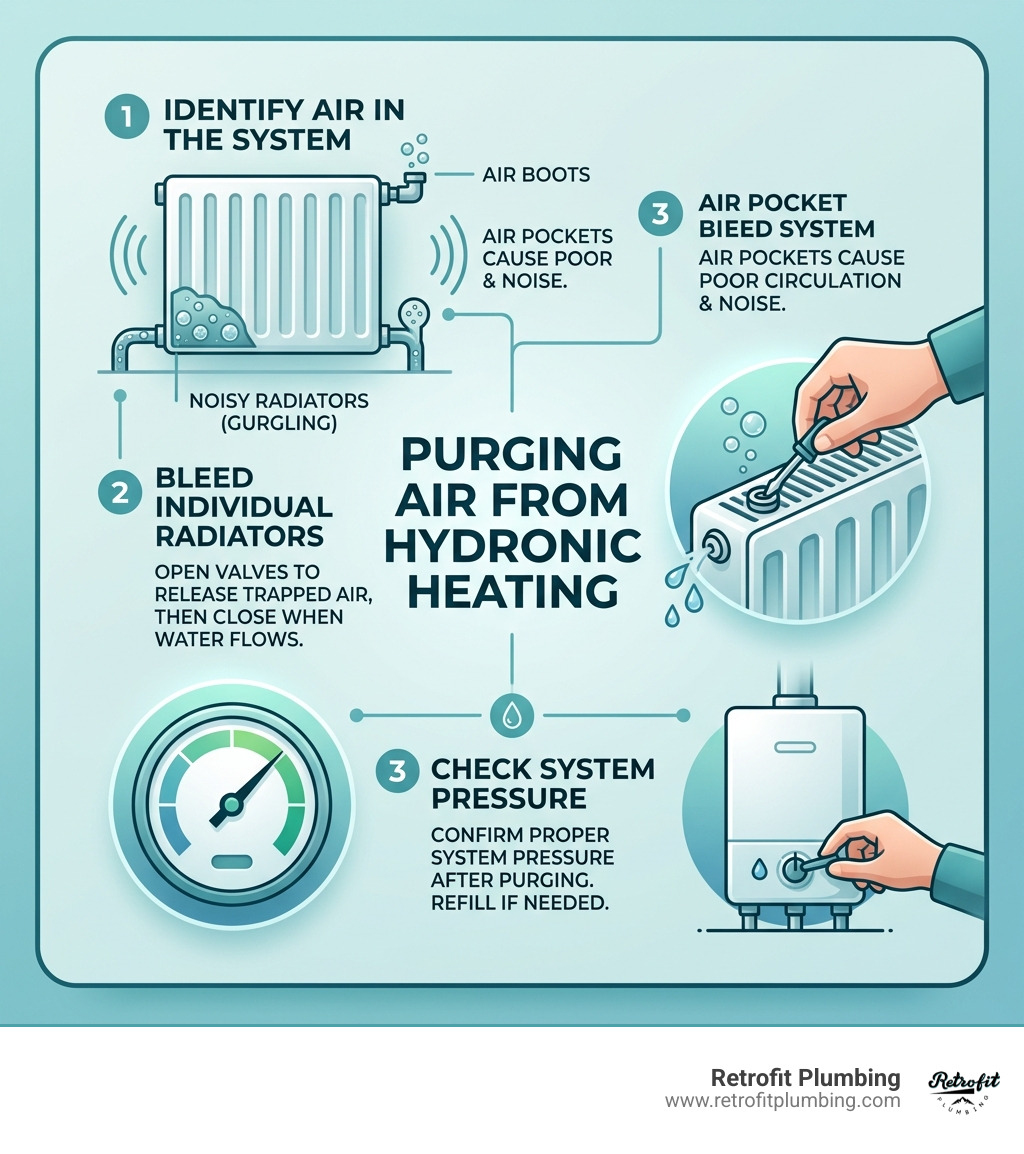
Dealing with air in hydronic heating system lines can be a real headache, leading to cold rooms and frustrating noises. If you're looking for a quick way to get that air out, here's how to typically purge your heating lines:
- Turn Off System: Shut down your boiler and let the water cool completely. This is important to prevent thermal shock.
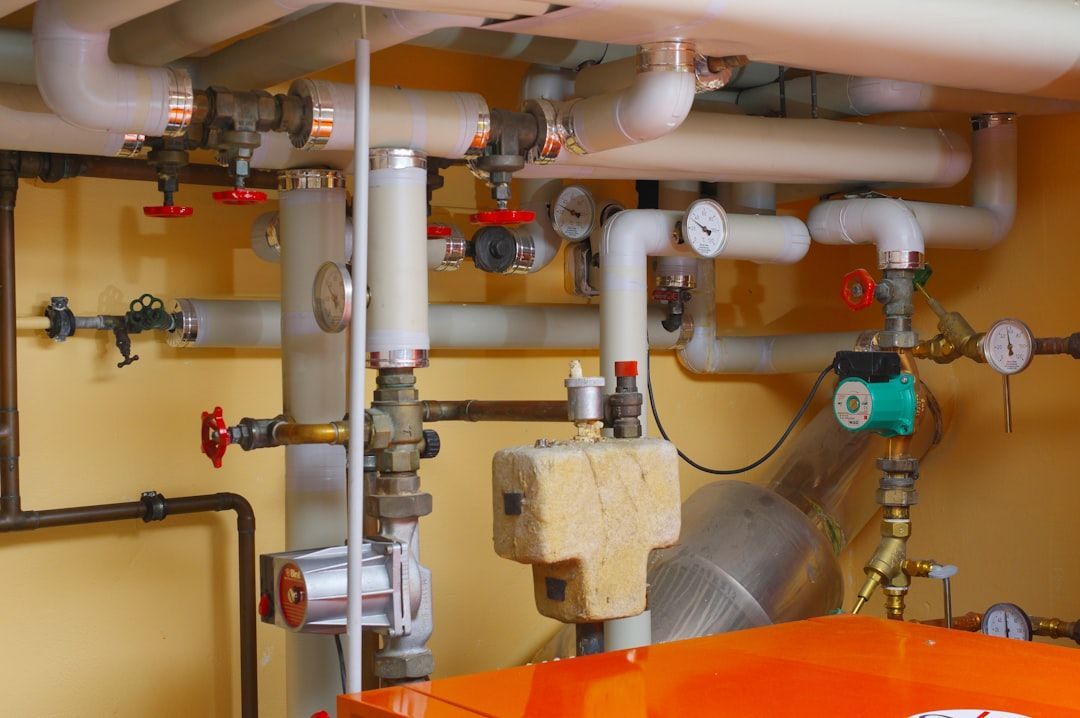
- Locate Vents: Find manual bleeder valves on your radiators or baseboards. Also, check for automatic air vents, usually located near the boiler or at high points in your piping.
- Bleed Air: Use a radiator key or a hose (for boiler service valves) to open the vents. Listen for hissing air, then close the vent once a steady stream of water comes out (no spitting or sputtering).
- Monitor Pressure: Keep an eye on your system's pressure gauge. After bleeding, if the pressure is too low (below 12-15 PSI when cold), add water using your system's fill valve until it reaches the recommended level.
- Repeat & Recheck: Bleed all zones or radiators. Then, restart your system and listen for any remaining air. You may need to repeat the process.
Hydronic heating systems are fantastic for their efficiency and consistent warmth. They circulate heated water through pipes to radiators, baseboards, or radiant floor systems, silently warming your home. But when air gets trapped inside these closed loops, it can cause all sorts of problems. Imagine trying to pump blood through a vein with air bubbles—it just doesn't work as well. Air acts like a blockage, reducing heat transfer, causing annoying gurgling sounds, and even making your system less efficient.
My name is Josh Klimp, and with over 20 years of experience running a plumbing company specializing in commercial and residential systems, I've seen the headaches caused by air in hydronic heating system installations. I've designed, installed, and serviced countless systems, ensuring they operate efficiently and reliably.
Why Air in a Hydronic Heating System is Your Worst Enemy
If we think of your hydronic system as the "circulatory system" of your home, then air in hydronic heating system lines is essentially a blood clot. It stops the flow of life-giving warmth. But the problems go much deeper than just a cold toe in the morning.

When air enters a closed-loop system, it brings two unwelcome guests: oxygen and nitrogen. According to expert research on tackling air and dirt in hydronic systems, oxygen is highly reactive and the primary driver of internal corrosion. It eats away at steel pipes, cast iron boiler heat exchangers, and expansion tanks. Nitrogen, on the other hand, is the "noise maker." It doesn't cause rust, but it gathers in high spots, creating air locks that stop water flow entirely.
The presence of air leads to several critical issues:
- System Noise: That annoying gurgling or "waterfall" sound in your walls is actually air bubbles impinging on metal components.
- Efficiency Loss: Air is a terrible conductor of heat compared to water. Trapped air in coils or radiators can reduce energy efficiency by up to 10%.
- Pump Damage: Circulator pumps are designed to move liquid, not gas. When air bubbles hit the pump impeller (cavitation), it can cause pitting, vibration, and premature motor failure.
- Cold Spots: If a radiator is half-full of air, only the bottom half will get warm.
| Material | Relative Heat Conductivity |
|---|---|
| Water | High (Excellent Conductor) |
| Air | Very Low (Insulator) |
Whether you have a modern boiler or older gas heat equipment, managing air is the key to longevity.
Signs and Symptoms of Trapped Air
How do you know if your system is gasping for breath? Look for these tell-tale signs:
- Gurgling or Clanking: Sounds like a small creek running through your baseboards.
- No-Heat Zones: One room is toasty while the next is freezing, even though the thermostat is calling for heat.
- Frequent Bleeding: If you find yourself bleeding the radiators every week, you don't just have air—you have an intrusion problem.
- Pressure Fluctuations: Seeing the needle on your boiler gauge jump erratically when the pump kicks on.
The Hidden Cost of Oxygen and Corrosion
Corrosion isn't just about pipes leaking; it’s about the "sludge" that forms as a byproduct. As oxygen reacts with ferrous metals, it creates magnetite (black iron oxide). This grit can clog narrow passages in high-efficiency boilers and seize up zone valves. If you suspect your system is losing water—which introduces fresh, oxygen-rich water—you might need professional leak detection to stop the cycle of damage.
How Air Sneaks Into Your Closed-Loop System
You might wonder: "It’s a closed system, so where is the air coming from?" The answer lies in physics, specifically Henry's Law. This law states that the amount of dissolved gas in a liquid is proportional to the pressure and temperature of that liquid.
Understanding how air gets into a hydronic heating system requires looking at several entry points. When we fill a system with cold mains water, that water is often 95% saturated with dissolved air. As soon as the boiler heats that water, the air loses its solubility and forms microbubbles.
Other common entry points include:
- Initial Fill: Pockets of air trapped during installation that weren't properly purged.
- Micro-Leaks: Even a tiny leak that doesn't leave a puddle can allow air to be sucked in via a "vacuum effect" when the system cools down.
- Automatic Makeup Water: If your system has a slow leak, the auto-fill valve introduces fresh, air-saturated water constantly.
The Physics of Solubility and Temperature
Water is like a sponge for air, but its "absorbency" changes. Cold water under high pressure holds the most air. As we heat the water toward 200 degrees Fahrenheit, the "sponge" is wrung out, and the air is released. This is why air often appears right after a broken pipe repair or a seasonal restart.
Improper Installation and Design Flaws
Sometimes, the system is its own worst enemy due to poor design. A fundamental rule in hydronics is "pumping away" from the expansion tank. If the circulator pump is positioned incorrectly, it can actually create a sub-atmospheric pressure (a vacuum) that sucks air in through valve stems or air vents. Furthermore, if water velocity is too high (above 4.0 feet per second), air bubbles stay entrained in the flow rather than rising to an air separator.
Step-by-Step Guide to Removing Air in a Hydronic Heating System
If your system is sounding like a percussion ensemble, it's time to purge. "Power purging" is the most effective way to clear large air pockets from complex zones.
Follow this guide on how to remove air from hydronic heating system lines for a professional result:
- Cool Down: Always shut off the boiler and let the water cool. Pumping cold water into a hot cast iron boiler can cause "thermal shock," leading to a cracked heat exchanger.
- Isolate Zones: Close all zone valves except the one you are currently purging. This ensures the full force of the water goes through one loop at a time.
- Connect a Hose: Attach a garden hose to the service/drain valve on the return side of the zone.
- Flush: Open the service valve and the manual override on your pressure-reducing (fill) valve. Let the water run into a bucket until you see a steady stream without bubbles.
- Maintain Pressure: Keep the system between 12-15 PSI. If you hit 30 PSI, the relief valve will blow, creating a mess!
If this feels overwhelming, our emergency plumbing team in Covington is always ready to help.
Preparing Your System for a Successful Purge
Before you start, turn your thermostats to the highest setting to ensure all zone valves are wide open. Then, cut the power to the boiler and the fuel source (gas or oil). We recommend letting the circulator pumps run for about an hour with cold water before the final purge; this helps move stubborn bubbles toward the vents.
Manually Bleeding Radiators and Baseboards
For localized air, you don't always need a full power purge. Many radiators have a small "coin vent" or bleeder valve at the top.
- Hold a small cup or rag under the valve.
- Use a radiator key to turn the valve counter-clockwise.
- Wait for the "hiss" to stop and water to start dripping.
- Tighten the valve immediately.
This is a staple of residential plumbing maintenance that every homeowner should know.
Advanced Air Management: Separators and Expansion Tanks
In a perfect world, your system would remove air automatically. Modern technology like microbubble separators and coalescing media make this possible. Unlike a simple "air scoop," which only catches large bubbles, a coalescing separator uses a mesh-like internal structure to create tiny vortices. This forces microscopic bubbles to merge (coalesce) until they are large enough to float to the top and be expelled.
Research on how to rid complex piping systems of air highlights that these devices are most effective when placed at the "Point of No Pressure Change" (PONPC). This is where the expansion tank connects to the system.
Strategic Placement of Air in Hydronic Heating System Components
To maximize effectiveness, air removal components must be placed where air is most likely to "fall out" of the water. This is at the hottest point(just as water leaves the boiler) and the lowest pressure point.
- High Points: Manual or automatic vents should be at the top of every vertical riser.
- Velocity Control: Water entering a separator should move no faster than 4.0 FPS to allow bubbles time to rise.
The Role of Proper System Pressure
Your expansion tank isn't just a "surge tank"; it manages the air-water interface. If you are replacing a water heater expansion tank or a boiler tank, ensure it is pre-charged to the correct static pressure.
A good rule of thumb for cold system pressure is:
- 12 PSI for a one-story home.
- Add 3 PSI for every additional floor.
Proper pressure keeps air in "solution" until it reaches the separator, preventing it from forming pockets in your radiators. For efficient hot water tank installation or boiler setups, getting this balance right is critical.
Frequently Asked Questions about Air in Hydronic Heating System Issues
Why does air keep returning to my system every 3 to 5 days?
If air returns quickly after a purge, you likely have a "suction-side" leak or a waterlogged expansion tank. When the pump turns on, it may be creating a vacuum that pulls air in through an automatic vent or a loose valve packing.
What is the correct cold water pressure for a three-story home?
Using our formula (12 PSI base + 3 PSI per floor above the furnace), a three-story home should have a cold start pressure of approximately 18 PSI.
Can I purge my system with hot water to improve effectiveness?
Actually, air releases more readily from hot water. However, for safety reasons (to avoid burns and thermal shock to the boiler), we recommend purging with lukewarm or cool water. Professionals sometimes use "heated" water in a controlled environment to "scrub" the system, but DIYers should stick to the "cool-down" method.
Conclusion
Managing air in hydronic heating system lines is the difference between a system that lasts 30 years and one that fails in 10. By understanding the physics of solubility and ensuring your expansion tank and separators are correctly placed, you can enjoy a silent, efficient home all winter long.
At Retrofit Plumbing, we pride ourselves on being the Covington experts in hydronic heating. Whether you're in Renton, Kent, or Auburn, our team offers honest pricing, fully stocked trucks, and same-day service to get your heat back on track. We stand behind our work with a 100% satisfaction guarantee.
Don't let air bubbles bubble away your comfort. If your radiators are gurgling or your boiler is acting up, schedule a professional hydronic heating service with us today!