The Best Propane Tankless Hot Water Heaters You Can Buy Right Now
A propane tankless hot water heater is one of the smartest upgrades you can make to your home's plumbing system — delivering endless hot water on demand, cutting energy waste, and freeing up valuable space.
Here are the top-rated propane tankless water heaters for most homeowners:
| Model | GPM | BTU | Best For |
|---|---|---|---|
| Rinnai RE199iP | 9.8 GPM | 199,000 | 5+ person homes |
| A.O. Smith Signature Premier | 10 GPM | 199,000 | Large households |
| Rheem Performance Platinum | 9.5 GPM | 199,000 | Multiple showers |
| Eccotemp Builder Series | 7.0 GPM | 145,000 | Mid-size homes |
| Camplux Whole Home | 6.86 GPM | 170,000 | Budget-friendly option |
| Camplux Portable | 2.64 GPM | 68,000 | RV/camping/off-grid |
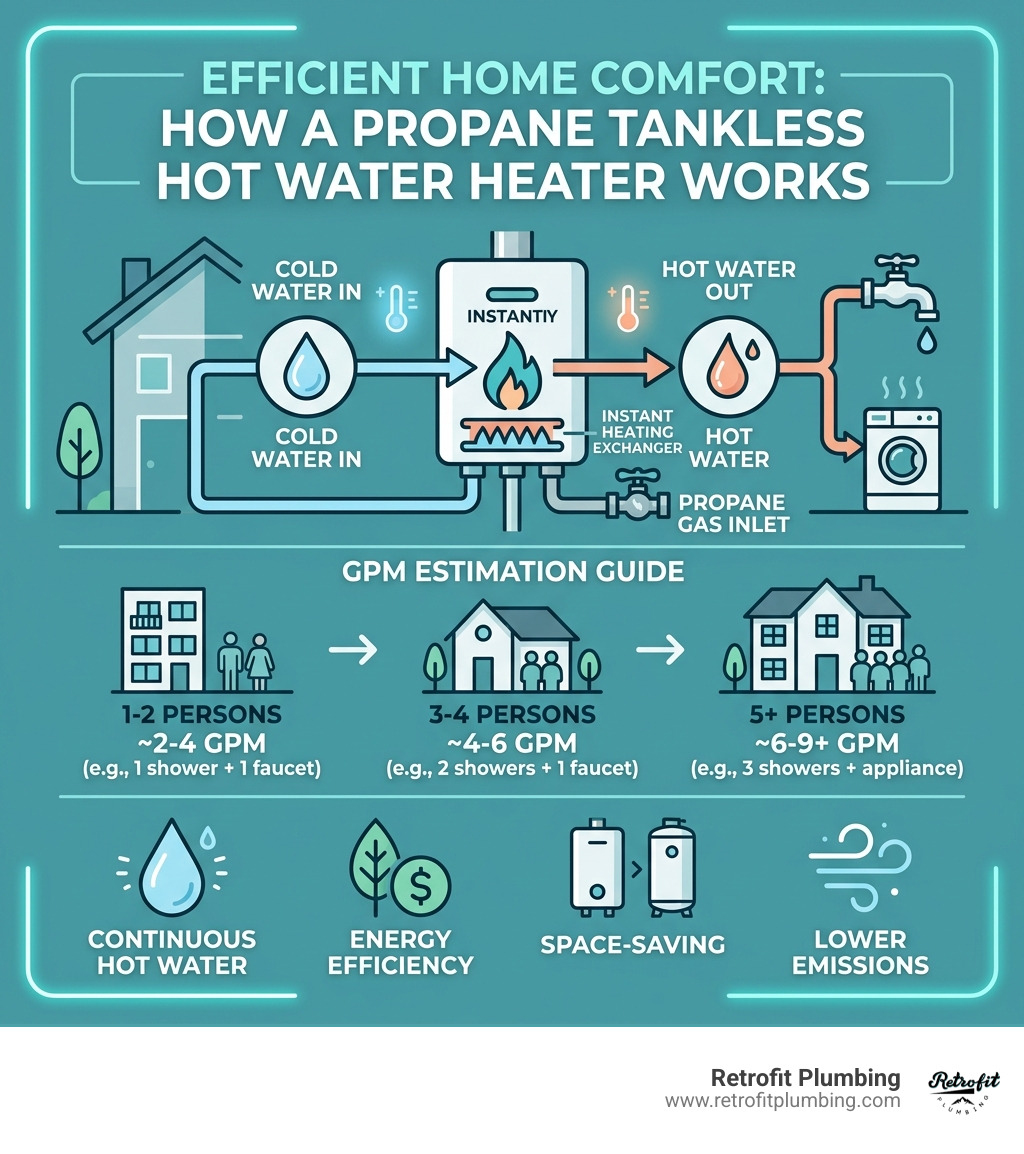
Unlike a traditional tank heater, a propane tankless unit only fires up when you turn on a tap. No tank sitting there losing heat all day. Models like the A.O. Smith Signature Premier can power three simultaneous showers and a sink — all at once — with a 0.93 UEF efficiency rating. That's a meaningful upgrade over the old-school tank sitting in your utility room.
Propane is especially valuable if you're in a rural area without natural gas service. You get the same on-demand performance — just from a propane tank on your property.
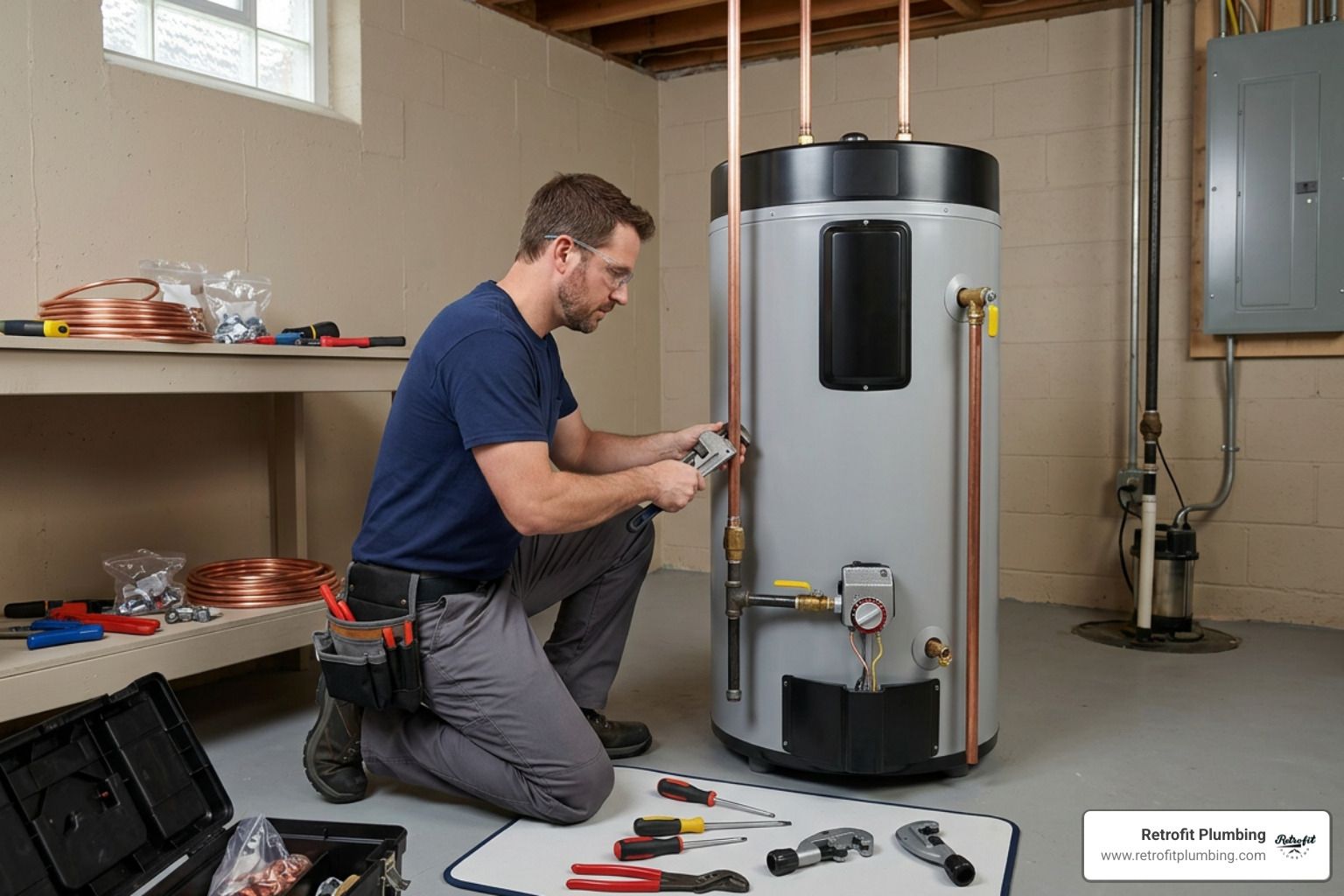
I'm Josh Klimp, a licensed plumber with 20+ years of experience installing and servicing propane tankless hot water heaters in residential and commercial settings across the South Sound. Below, I'll walk you through the best models, how to size them correctly, and what installation really involves — so you can make a confident decision.
Key Benefits of a Propane Tankless Hot Water Heater
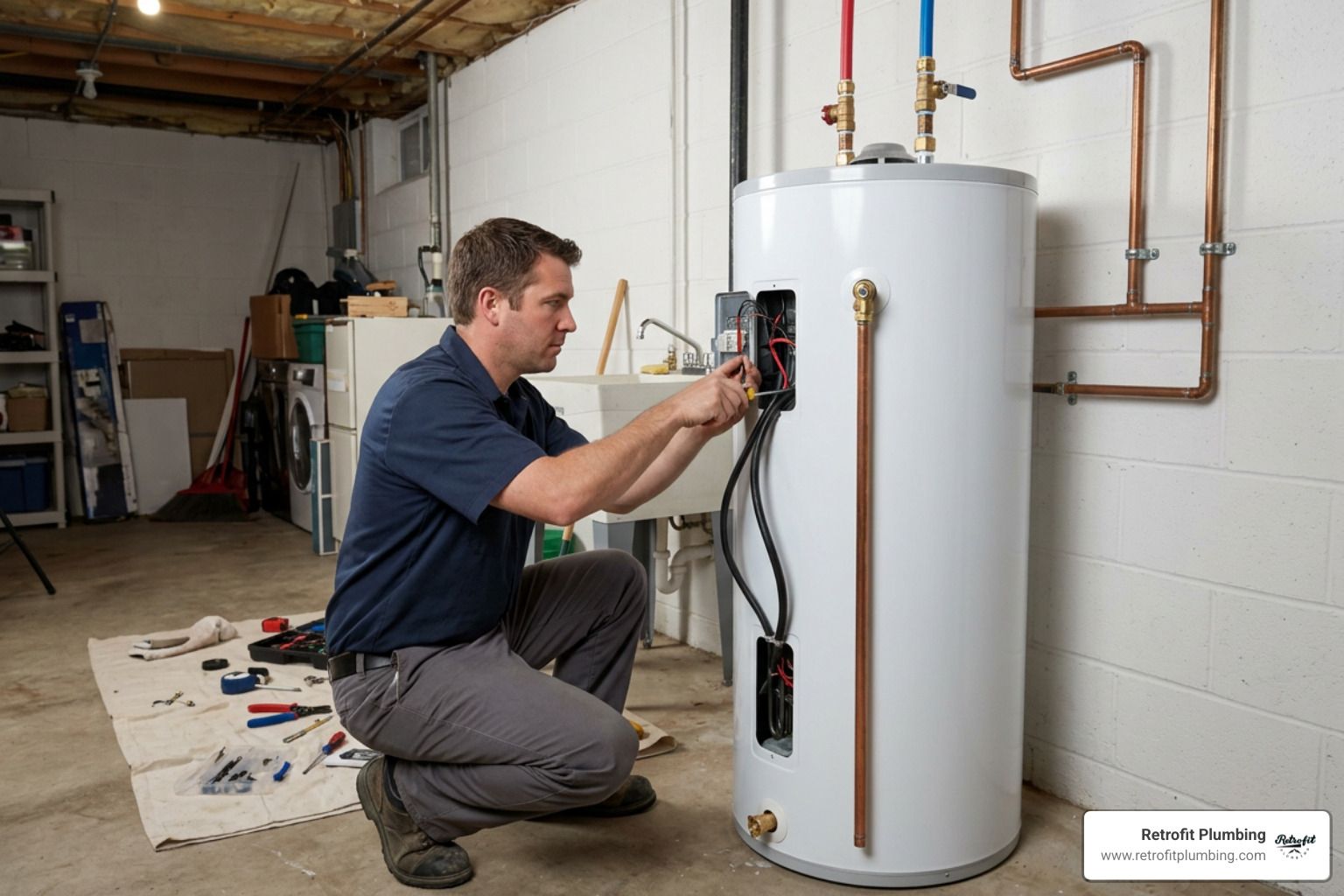
When we talk to homeowners in Covington or Renton about switching to a propane tankless hot water heater, the first thing they usually notice is the size. These units are roughly the size of a small suitcase and mount directly to the wall, reclaiming several square feet of floor space. But the benefits go far deeper than just aesthetics.

One of the most impressive technical specs is the energy efficiency. High-end condensing models, such as the A.O. Smith Signature Premier, boast a Uniform Energy Factor (UEF) of up to 0.93. This means 93% of the fuel you pay for is converted directly into hot water. Traditional tanks often struggle to reach 0.60 to 0.70 because they suffer from "standby heat loss"—constantly reheating 50 gallons of water even while you sleep.
Here is why our team at Retrofit Plumbing recommends them:
- Longevity: While a standard tank lasts 6 to 12 years, a tankless unit can last 20 years or more with proper care.
- Endless Supply: Since there is no tank to empty, you can run back-to-back showers without the water turning cold.
- Lower Emissions: Many modern propane units are "Ultra-Low NOx" certified, meaning they produce fewer nitrogen oxide emissions, which is better for our Pacific Northwest air quality.
- Commercial Grade Components: Brands like Rinnai and A.O. Smith use copper primary heat exchangers, which transfer heat 25 times more efficiently than stainless steel.
If you are curious about how these fit into your specific home layout, you can find more info about tankless water heater services on our dedicated service page.
Top Brands and Models for Residential Use
Navigating water heaters can feel like an alphabet soup of brands. However, a few names consistently rise to the top for reliability and performance.
- Rinnai: The "Sensei" and "RE" series are industry gold standards. They offer massive flow rates (up to 11 GPM) and are known for having some of the best warranties in the business—often 15 years on the heat exchanger.
- Rheem: Their Performance Platinum models are packed with tech, including LeakGuard (auto-shutoff if a leak is detected) and EcoNet Wi-Fi for remote temperature adjustments.
- A.O. Smith: Their Signature Premier line is a beast, offering 199,000 BTUs and enough power for three simultaneous showers. You can dive into the product manuals and technical data to see the commercial-grade engineering they put into residential units.
- Eccotemp: Known for the "Builder Series," these offer great value for mid-size homes, often providing around 7.0 GPM at a lower price point than the premium condensing units.
- Camplux: While they make whole-home units, they are the go-to for portable and off-grid solutions.
Best Whole-Home Propane Tankless Hot Water Heater Models
For a typical family home in Kent or Auburn, you need a "whole-home" unit. The Rinnai RE199iP is a standout here. With 199,000 BTUs and a potential flow rate of nearly 10 GPM, it is built for households with 5 or more people. It uses condensing technology, which captures extra heat from the exhaust to pre-heat the incoming water.
If your current heater is acting up but you aren't ready for a full upgrade, we also provide more info about water heater repair to keep your existing system limping along until you're ready to make the switch.
Portable and RV Propane Tankless Hot Water Heater Solutions
Not every propane tankless hot water heater needs to be bolted to a basement wall. For our local outdoor enthusiasts or those living off-grid, portable units like the Camplux 2.64 GPM or the Eccotemp L5 are life-changers. These compact units often include pump kits, allowing you to pull water from a bucket or stream for a hot shower anywhere. For a deep dive into these mobile units, check out our propane tankless water heater rv guide.
Sizing and Installation Requirements
Sizing is where most DIY projects go wrong. If you buy a unit that is too small, your "endless hot water" will be an endless lukewarm trickle.
Installation isn't just about hanging the box. You have to consider:
- Gas Line Size: Most tankless units require a 3/4-inch gas line to handle the high BTU demand, though some newer models like the Takagi T-H3M can run on a standard 1/2-inch line.
- Venting: Condensing units can often use inexpensive PVC venting, while non-condensing units require specialized stainless steel "concentric" venting to handle higher exhaust temperatures.
- Indoor vs. Outdoor: Outdoor units save even more space and don't require venting pipes, but they need built-in freeze protection—a must for our Washington winters.
If you've noticed water pooling around your current setup, it’s time to look at more info about water heater leaks before a small drip becomes a flooded basement.
How to Size Your Propane Tankless Hot Water Heater
To find the right size, you need to calculate your "Peak Demand." Add up the GPM of every fixture you might use at the same time:
- Standard Shower: 2.5 GPM
- Kitchen Faucet: 1.5 GPM
- Washing Machine: 3.0 GPM
If you want to shower while the dishwasher runs, you need a unit capable of at least 4.0 GPM. In the Pacific Northwest, our groundwater is cold, so we usually recommend a unit rated for 7.0 GPM or higher to ensure a consistent 120°F output. For more troubleshooting and sizing help, the support and help center resources from manufacturers can be a great starting point.
Maintenance and Longevity Tips
A propane tankless hot water heater is a precision machine. Because it flash-heats water so quickly, minerals like calcium can "bake" onto the heat exchanger. This is why we recommend bi-annual flushing.
Using a descaling kit (basically a pump and some food-grade vinegar), you circulate a cleaning solution through the unit for about an hour. This removes scale and keeps the unit running at peak efficiency. Most modern units will actually flash a diagnostic code on the digital screen to let you know it's time for a flush.
We offer more info about our tankless services including professional maintenance packages to ensure your 20-year investment actually lasts 20 years.
Frequently Asked Questions about Propane Tankless Systems
How long do propane tankless water heaters last?
You can expect a high-quality unit to last 20 to 25 years. Because there is no large steel tank to rust and corrode, the primary failure points are usually small sensors or valves that can be easily replaced. If a part does fail, you can usually find replacement parts through the manufacturer’s portal, rather than replacing the whole unit.
Is propane more efficient than natural gas for tankless heaters?
Propane actually has a higher BTU content per cubic foot than natural gas, meaning it can heat water slightly faster. In terms of efficiency ratings (UEF), both fuels perform similarly, but propane is often the "cleaner" burning choice for rural homes where natural gas isn't piped in.
What is the typical cost of a propane tankless installation?
The unit itself usually costs between $800 and $2,200. Installation labor and materials (venting, gas line upgrades) can add another $1,500 to $3,000. While the upfront cost is higher than a $600 tank, the energy savings (often $100+ per year) and the doubled lifespan make the long-term ROI very attractive.
Conclusion
Upgrading to a propane tankless hot water heater is a move toward a more comfortable, efficient home. Whether you're in Covington, Renton, Kent, or Auburn, having a reliable hot water supply is essential for our rainy Washington days.
At Retrofit Plumbing, we pride ourselves on honest pricing and fully stocked trucks, ensuring we can often provide same-day service for your installation needs. We stand behind our work with a 100% satisfaction guarantee. Ready to stop worrying about your hot water? Schedule your propane tankless hot water heater installation today and experience the difference of on-demand luxury.