Why a Propane Tankless Water Heater RV Upgrade Changes Everything
A propane tankless water heater RV system gives you on-demand hot water without lugging around a heavy tank — making it one of the smartest upgrades for life on the road.
Here are the top propane tankless RV water heaters to consider:
| Model | BTU | Max GPM | Key Feature |
|---|---|---|---|
| Fogatti InstaShower 8 Plus | 55,000 | 2.9 | High-altitude ready (up to 9,800 ft) |
| Camplux RS264 | 65,000 | 2.64 | Drop-in retrofit for Suburban/Atwood |
| RVMP Flex Temp | 55,000 | ~2.5 | Built-in CO + propane leak detector |
| Girard GSWH-2 | 42,000 | 1.5 | Fits existing tank cut-outs, no new LP lines |
Whether you're boondocking off-grid or pulling into a campground, the right unit means endless hot showers, less propane waste, and more usable space inside your rig. But choosing the wrong one — or skipping proper ventilation — can create serious safety risks.
This guide covers everything: how these units work, what specs matter, safety must-knows, and how to keep your system running year-round.
I'm Josh Klimp, and with over 20 years of professional plumbing experience — including hands-on work with propane tankless water heater RV systems — I've seen what separates a smooth installation from a costly mistake. Let's make sure yours goes right.
How Propane Tankless RV Water Heaters Work
At its core, a propane tankless water heater RV unit is a marvel of compact engineering. Unlike a traditional tank that keeps 6 to 10 gallons of water hot all day (even when you're sleeping), a tankless system only springs to life when you turn on a faucet.
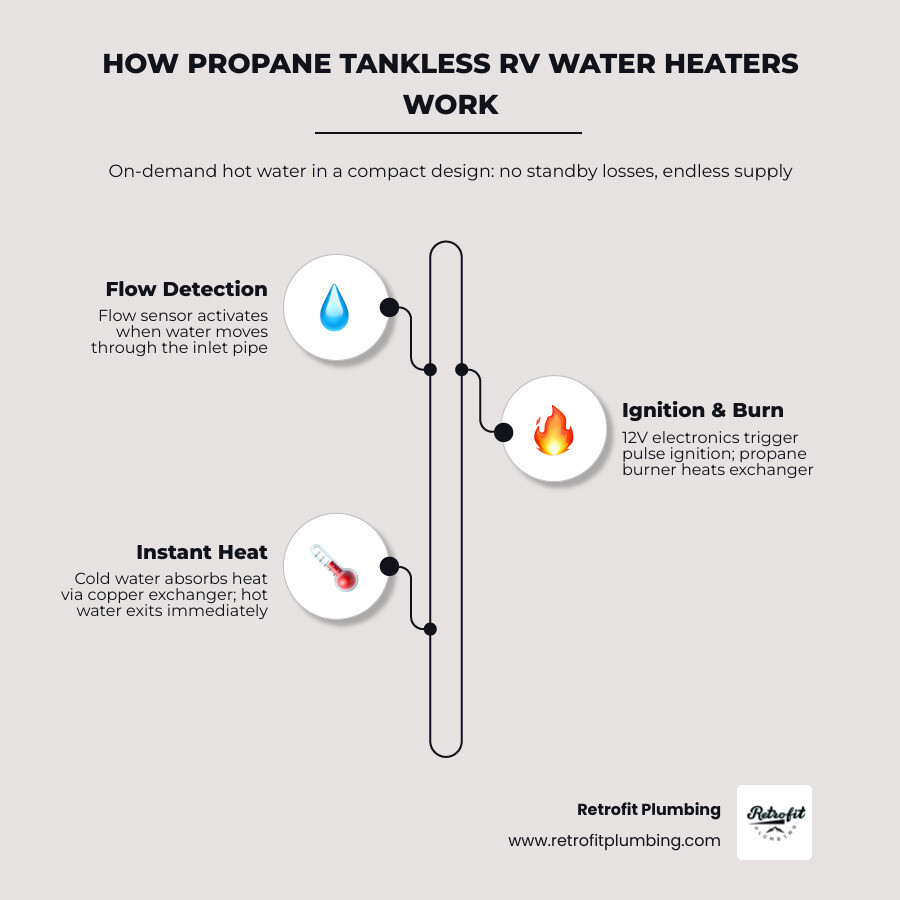
When you flip that hot water handle, a flow sensor detects the movement of water. This triggers an automatic pulse ignition—no pilot lights here! The unit draws 12V DC power from your RV’s battery to run the electronics and a forced exhaust fan. Simultaneously, the propane burner ignites, sending intense heat through a copper or stainless steel heat exchanger. As cold water travels through this exchanger, it picks up heat instantly.
Modern units, like those from Girard or Fogatti, use onboard microprocessors to monitor the temperature of the water coming in and the water going out. If the water coming from your fresh tank is freezing cold, the unit ramps up the propane flame to ensure your shower stays at a steady 115°F.
| Feature | Traditional 6-Gallon Tank | Tankless On-Demand Unit |
|---|---|---|
| Hot Water Supply | Limited (8-10 mins) | Endless |
| Recovery Time | 20-30 minutes | Zero |
| Weight | ~70-90 lbs (Full) | ~20-35 lbs |
| Energy Use | Constant reheating | On-demand only |
| Space | Large footprint | Compact/Flush-mount |
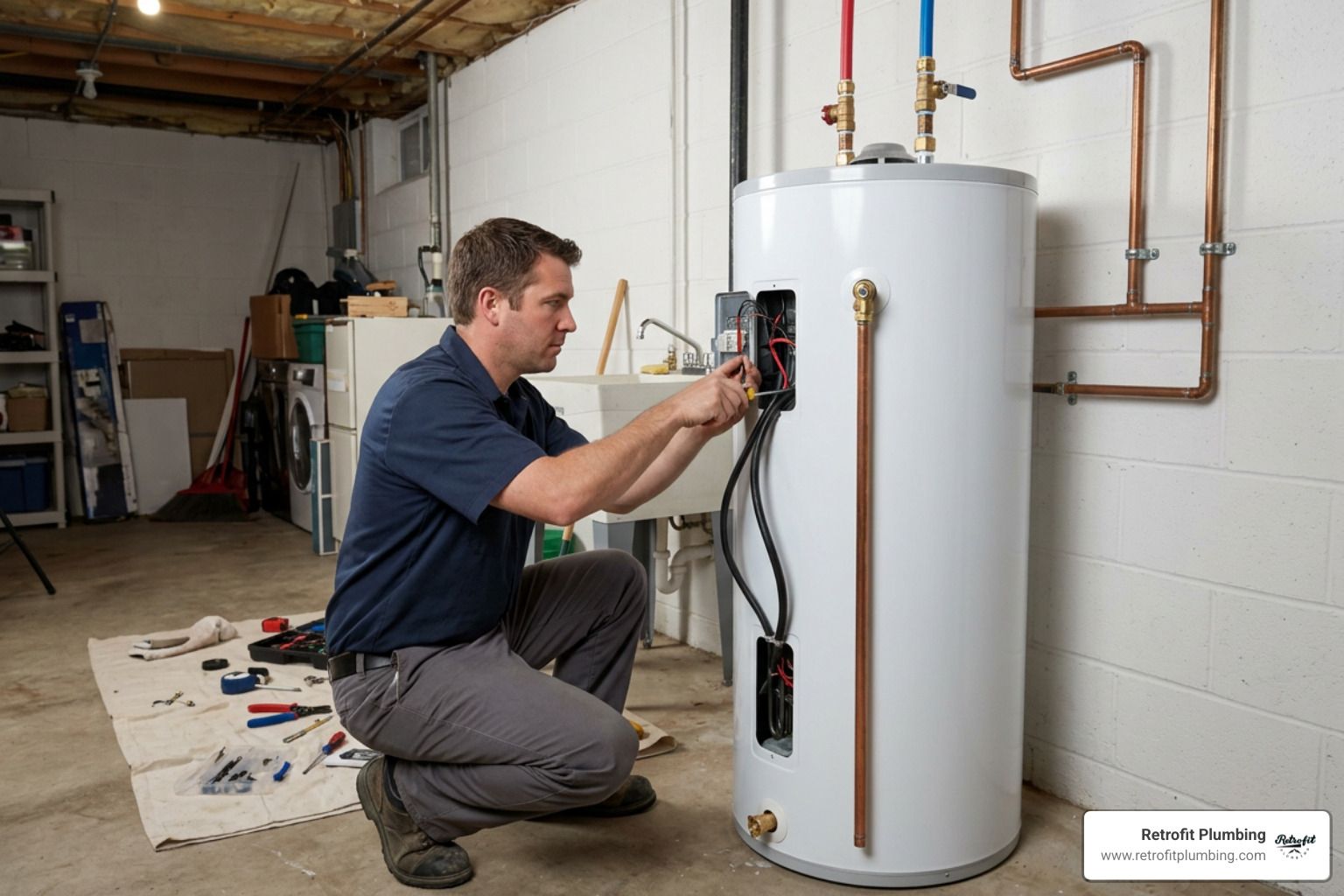
If you're curious about how these residential-style systems compare to the units we install in homes throughout Covington and Renton, check out our tankless water heater services for a deeper dive into the technology.
Benefits of an On-Demand System
Why are so many travelers in the Pacific Northwest ditching their old tanks? It comes down to freedom and comfort.
Endless Showers
The most obvious perk is the "endless" factor. In a standard RV, a 6-gallon tank gives you about eight minutes of hot water if you're lucky. If you have a family of four, someone is getting a cold sponge bath. With a propane tankless water heater rv, as long as you have propane in your bottles and water in your tank (or a city hookup), you can shower until the grey tank is full.
Space and Weight Savings
Space is the ultimate currency in an RV. Tankless units are significantly smaller and lighter. A full 10-gallon tank adds nearly 100 pounds to your rig's weight. A tankless unit like the Fogatti or RVMP weighs around 25 pounds. This weight reduction can actually improve your fuel mileage over thousands of miles.
Energy Efficiency
Traditional tanks suffer from "standby heat loss." They lose heat through the tank walls, requiring the burner to kick on periodically just to maintain temperature. Tankless units eliminate this waste. Research shows some models consume half the LP gas of a standard six-gallon tank heater because they only burn fuel when you're actually using water.
For those living in our local service areas like Auburn or Kent, we often help customers transition to these high-efficiency systems. You can read more about our efficient hot water tank installation in Covington to see how we prioritize energy savings in every job.
Choosing the Right Propane Tankless Water Heater RV
Not all units are created equal. When shopping, you need to look at two primary numbers: BTU and GPM.
- BTU (British Thermal Units): This measures the heating power. Most RV units range from 42,000 to 65,000 BTU. If you plan on camping in colder climates (like a chilly Washington autumn), a higher BTU rating (60,000+) is better because it can handle a larger "temperature rise"—the difference between the icy water in your tank and your desired shower temp.
- GPM (Gallons Per Minute): This is the flow rate. A unit with 2.9 GPM can comfortably handle a high-flow shower head, while a 1.5 GPM unit might feel a bit more like a drizzle if you try to run the kitchen sink at the same time.
Digital Controls and Retrofitting
Look for units with a wired digital remote. This allows you to set your exact temperature (e.g., 115°F) so you don't have to play the "mixing game" with cold water, which can sometimes cause the heater to shut off if the flow gets too low.
Also, consider "retrofit compatibility." Brands like Camplux and Girard design their units to fit into the exact 12.5" x 12.5" or 15" x 15" square holes left behind by old Atwood or Suburban tanks. This makes the physical installation much cleaner.
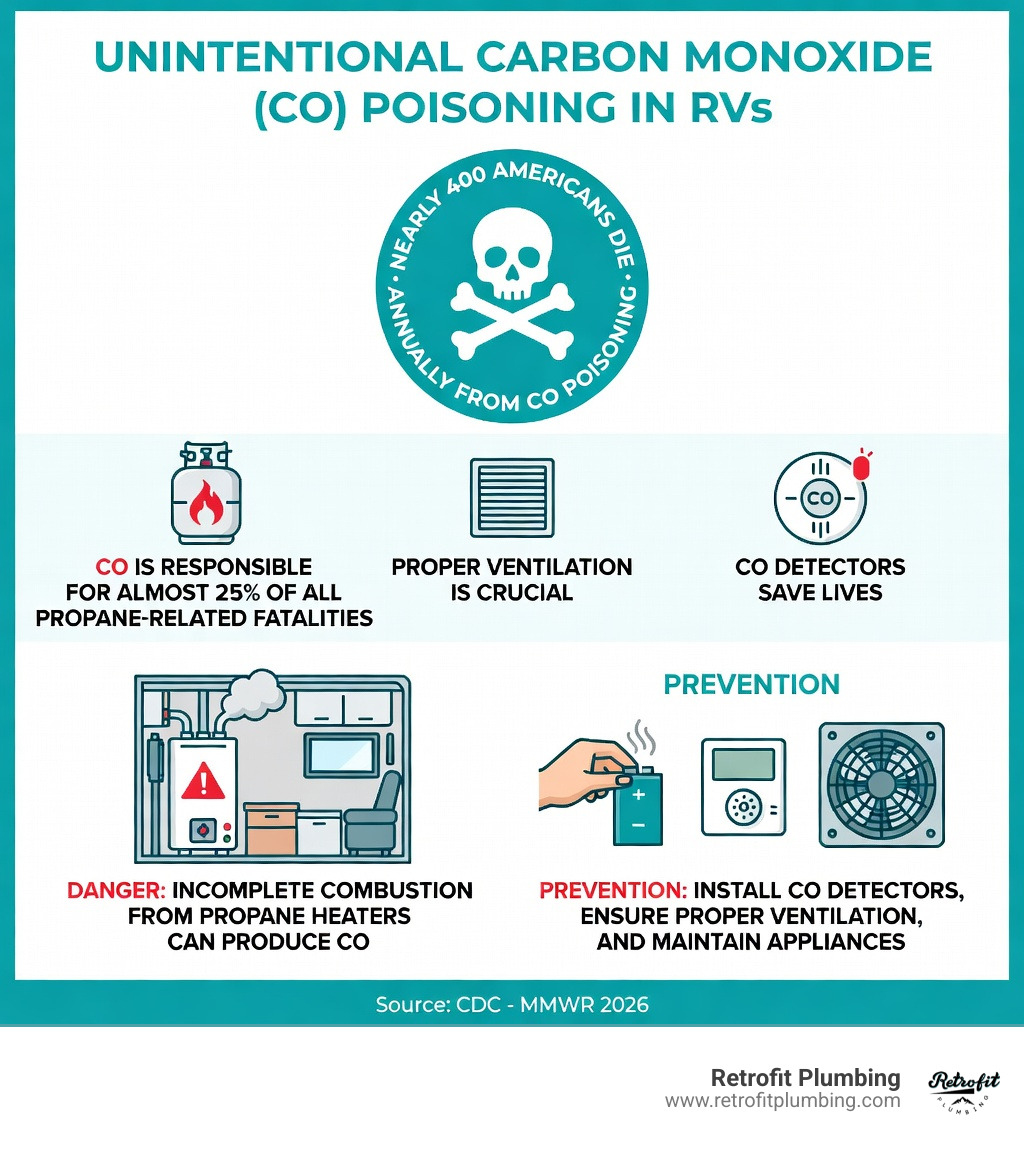
Before you buy, safety is paramount. According to unintentional carbon monoxide poisoning statistics, over 2,000 people died from CO poisoning between 2010 and 2015. Choosing a unit with integrated safety sensors is not just a luxury—it's a necessity.
Safety, Ventilation, and Altitude Considerations
When you're burning propane in a small, enclosed space like a van or a travel trailer, ventilation isn't just a suggestion—it’s a life-saving requirement.
The Danger of Carbon Monoxide (CO)
Propane is a clean-burning fuel, but incomplete combustion (often caused by a lack of oxygen or a dirty burner) produces Carbon Monoxide. CO is invisible, odorless, and deadly. Statistics from propane and carbon monoxide safety facts indicate that CO is responsible for nearly 25% of all propane-related fatalities.
To stay safe:
- Never use an outdoor-only "portable" heater inside an RV without a dedicated, sealed venting system.
- Ensure your unit has a forced exhaust fan that pushes combustion gases outside.
- Install a high-quality CO detector. Some advanced units, like the RVMP Flex Temp, even include built-in CO and propane leak alarms that shut the unit down automatically if a leak is detected.
Oxygen Depletion and Air Quality
In tight spaces, a propane flame consumes oxygen. If you're using a non-vented unit (which we strongly advise against for indoor use), oxygen levels can drop rapidly. Many overlanders now use devices like the Aranet4 to monitor CO2 levels, as a spike in CO2 is often a precursor to dangerous air quality.
High-Altitude Performance
If your travels take you into the Cascades or the Rockies, altitude becomes a factor. At high elevations, the air is thinner, which can cause "staged combustion" issues or pilot failure. Some units, like the Fogatti InstaShower 8 Plus, are specifically designed to operate at altitudes up to 9,800 feet by adjusting the air-to-fuel ratio automatically. If you're a mountain lover, check the altitude rating before you buy!
Maintenance and Winterization Procedures
A propane tankless water heater RV is a precision instrument. If you treat it well, it can last up to 20 years—roughly double the lifespan of a tank heater.
Descaling
In the Pacific Northwest, our water can sometimes be hard. Over time, calcium and magnesium deposits (scale) build up inside the narrow copper tubes of the heat exchanger. This acts as insulation, making the heater work harder and eventually causing it to fail. We recommend a "descale flush" once a year using food-grade white vinegar and a small pump kit.
Draining and Winterization
Frozen water is the #1 killer of tankless units. Because the water paths are so narrow, even a small amount of ice can burst the heat exchanger.
- Draining: Locate the drain valve (usually a small plastic plug or a lever) and empty the unit completely if you're storing the rig.
- Antifreeze: Most manufacturers allow RV antifreeze (the pink stuff) to be pumped through the system. However, always check your specific manual. Some units have sensitive internal seals.
- Freeze Protection: Many modern units have a "built-in freeze protection" sensor that will fire the burner for a few seconds if the internal temperature drops near freezing. Warning: This only works if your propane is on and your 12V battery is charged!
If you're unsure about the state of your heater or suspect a leak after a cold snap, our team provides expert water heater repair services throughout the South Sound area to get you back on the road.
Frequently Asked Questions about RV Water Heaters
How do I winterize my propane tankless water heater rv?
First, turn off the gas and the 12V power supply. Open all hot water faucets in the RV to let air into the system. Locate the exterior access panel and open the drain valve or remove the filter plug to let the water out. If you use compressed air to blow out your lines, keep the pressure below 30 PSI to avoid damaging the internal sensors. If you're using antifreeze, ensure the unit is powered off so the burner doesn't try to ignite the "pink stuff."
Can I use a portable propane tankless water heater rv indoors?
Generally, no. Portable units (like the ones you hang on a fence for an outdoor shower) are usually "vent-free," meaning they exhaust heat and gases directly into the surrounding air. In a small RV, this leads to rapid oxygen depletion and carbon monoxide buildup. If you must use a unit indoors, it must be a model designed for permanent RV installation with a sealed combustion chamber and a dedicated exhaust vent that goes through the exterior wall.
What BTU and GPM ratings are best for my RV?
For a standard travel trailer or camper van, a 42,000 to 55,000 BTU unit is usually plenty. This provides a flow rate of about 1.5 to 2.0 GPM, which is perfect for a residential-style shower. If you have a large Class A motorhome with multiple bathrooms or a washing machine, look for a 65,000 BTU unit with a 2.6+ GPM flow rate to ensure you can run two fixtures at once without a "cold water sandwich" effect.
Conclusion
Upgrading to a propane tankless water heater RV system is one of the best ways to bring the comforts of home to the campsite. From the endless hot showers to the significant weight savings, it’s a win-win for any serious traveler. However, because these units involve both high-pressure gas and complex electronics, the installation needs to be perfect.
At Retrofit Plumbing, we’ve built our reputation on honest pricing and 100% satisfaction. Whether you’re in Covington, WA, or the surrounding cities like Federal Way, Lynnwood, or Seattle, we’re here to help. Our trucks are fully stocked, and we offer same-day service to ensure you’re never stuck without hot water.
Ready to upgrade your road trip experience? Explore our full range of tankless water heaters or give us a call today. We'll make sure your RV is ready for whatever adventure the Pacific Northwest throws your way!