What Is a Hydronic Heating Cooling System?
A hydronic heating cooling system is a climate control setup that uses water — instead of air — to move thermal energy through your home.
Here's a quick breakdown:
| Feature | What It Means for You |
|---|---|
| Heat transfer medium | Water circulates through pipes to heat or cool your space |
| Heating mode | A boiler or heat pump warms the water, which radiates heat into rooms |
| Cooling mode | A heat pump or chiller coolsers the water, which absorbs heat from rooms |
| Distribution methods | Radiant floor tubing, fan coil units, wall panel radiators, baseboard heaters |
| Key advantage | Water absorbs more than 3,000x the heat energy of the same volume of air |
| Efficiency | Can be up to 10x more energy efficient than forced-air systems |
Most South Sound homeowners are familiar with forced-air furnaces and central AC. But hydronic systems work on a completely different principle — and it's one that engineers and building scientists have trusted in large commercial buildings for decades.
Now, that same technology is available for homes. And it does both heating and cooling from a single system.
I'm Josh Klimp, a licensed plumber with 20+ years of hands-on experience designing and installing hydronic heating cooling systems across the Pacific Northwest. In the sections below, I'll walk you through exactly how these systems work, what they cost, and whether one is right for your home.
Understanding the Modern Hydronic Heating Cooling System
To understand why a hydronic heating cooling system is so effective, we have to look at the physics of water. In the industry, we often say that "water is the ultimate messenger." While traditional HVAC systems try to blow hot or cold air through bulky ducts, a hydronic system uses liquid water as the medium to carry thermal energy.

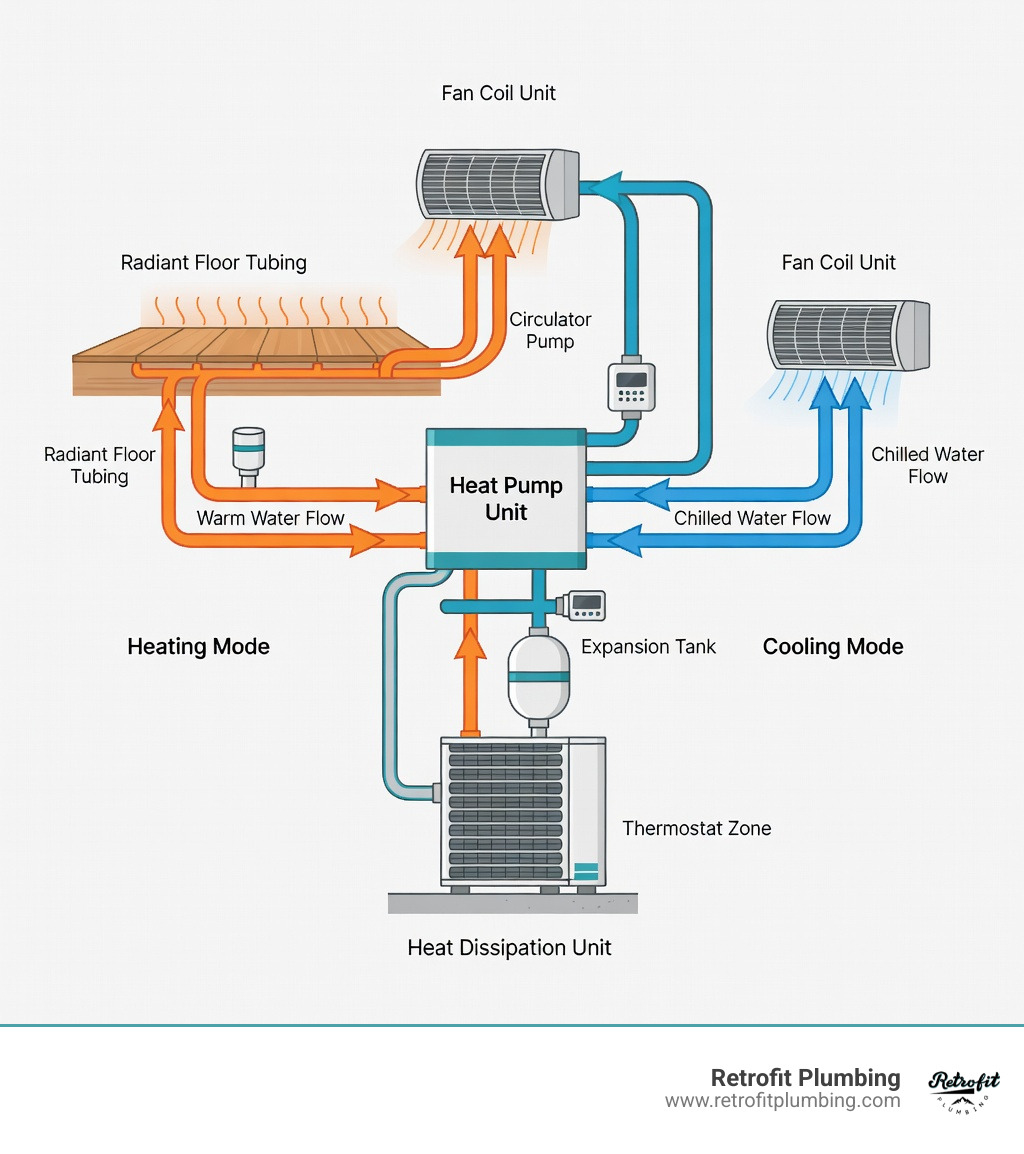
At its core, this is a closed-loop system. This means the water is recycled over and over again. It starts at a central source—like a high-efficiency boiler or a modern heat pump—where it is either heated or chilled. From there, a series of quiet circulator pumps push that water through small, flexible PEX piping hidden in your floors or walls.
The etymology of "hydro" comes from the Ancient Greek word for water, and that is exactly what powers this comfort. Because water is so dense, it can absorb and hold more than 3,000 times the amount of heat energy than the same volume of air. This incredible energy capacity is why hydronic systems don't need to work nearly as hard as a furnace to keep your Covington home at the perfect temperature.
Furthermore, these systems utilize both convection and radiation. While forced-air systems only heat the air (which then quickly cools down), hydronic systems heat the objects in the room—the floors, the furniture, and even you. This creates a "thermal mass" effect where the room stays warm long after the heat source has cycled off.
How Hydronic Technology Delivers Year-Round Comfort
In the past, many people thought of hydronics only as "radiant floor heating." While that’s a big part of it, modern technology has evolved to provide world-class cooling as well. By using a reversible air-to-water or water-to-water heat pump, the same pipes that kept your toes toasty in January can keep you crisp and cool in July.
The Science Behind a Hydronic Heating Cooling System
The "magic" happens through a combination of heat pumps, chillers, and reversible valves. In the winter, the heat pump extracts thermal energy from the outside air (even when it’s cold!) and transfers it to the water loop. In the summer, the process reverses. The system pulls heat out of your home’s water loop and dumps it outside, leaving you with chilled water to circulate through the house.
According to the Uniform Mechanical Code for hydronic systems, these setups must be designed to handle specific pressures and temperatures to ensure safety and longevity. One of the best parts for families in the South Sound is the zoning control. Because we are moving water through pipes rather than air through ducts, we can easily install valves that allow you to set different temperatures for every room in the house. No more fighting over the thermostat!
Cooling Mechanics and Dew Point Management
You might be wondering: "If I run ice-cold water through my floors, won't they get slippery with condensation?" That is a great question, and it’s where professional design comes in.
Hydronic cooling typically uses two methods:
- Hydronic Fan Coil Units: These look like small AC vents but use chilled water coils instead of refrigerant. They are the most economical and effective way to provide hydronic cooling because they also help dehumidify the air.
- Radiant Cooling: Chilled water runs through the floor or ceiling panels.
To prevent "sweating" (condensation), we use smart sensors to monitor the dew point. The system ensures the water temperature stays just a few degrees above the point where moisture would form. This results in silent, draft-free cooling that feels much more natural than a blast of cold air from a traditional AC unit.
Hydronic vs. Forced-Air: Efficiency and Comfort
When we sit down with customers in Renton or Kent, the conversation usually turns to the "Why." Why spend more upfront on a hydronic heating cooling system? The answer lies in the long-term savings and the sheer quality of the air you breathe.
| Comparison Factor | Hydronic System | Forced-Air System |
|---|---|---|
| Energy Efficiency | Up to 10x more efficient | Standard efficiency |
| Air Quality | High (no dust circulation) | Lower (blows allergens/dust) |
| Noise Level | Virtually silent | Loud fans and duct whistling |
| Lifespan | 25+ years (Boilers/Piping) | 15–20 years (Furnaces) |
| Comfort | Even, radiant warmth | Hot/cold spots and drafts |
Because hydronic systems don't rely on blowers, they don't kick up dust, pet dander, or pollen. This makes them the gold standard for homeowners with asthma or allergies. Additionally, a hydronic system can be around 10 times more energy efficient than forced-air because it avoids the "duct loss" that happens when heated air leaks out of drafty ductwork in your attic or crawlspace.
If you are interested in learning more about the heating side of things, check out our detailed guide to hydronic heating services.
Essential Components and Installation Considerations
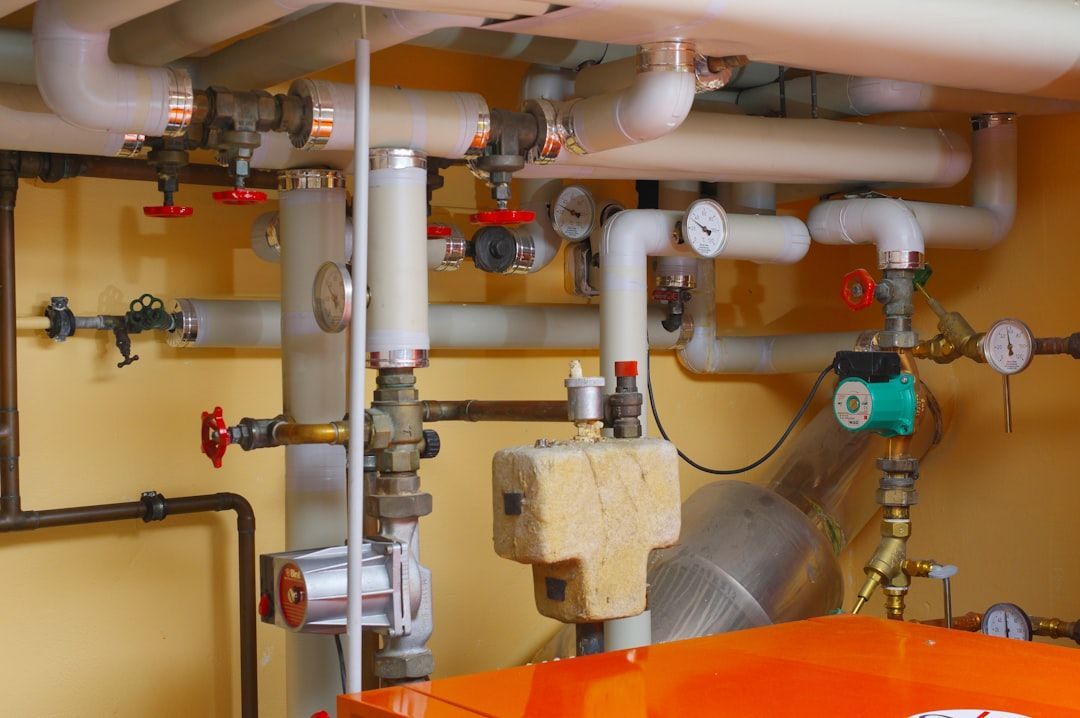
A hydronic heating cooling system is a finely tuned machine. It requires specific hardware to keep the water moving, the pressure stable, and the air out.
Essential Hardware for a Hydronic Heating Cooling System
- The Heat Source: Usually a high-efficiency condensing boiler or a hydronic heat pump.
- Circulator Pumps: These are the "heart" of the system, quietly moving water through the loops.
- Expansion Tanks: Water expands when it heats up. These tanks give that extra volume a place to go so your pipes don't burst.
- Air Elimination: Did you know that tap water contains between 8-10% dissolved air by volume? If that air stays in your pipes, it causes "gurgling" noises and corrosion. We install specialized air scoops and separators to keep the system "silent and violent" (in a good way!).
- PEX Piping: Modern systems use cross-linked polyethylene (PEX) which is flexible, durable, and won't corrode like old copper or iron pipes.
Professional Installation in the Pacific Northwest
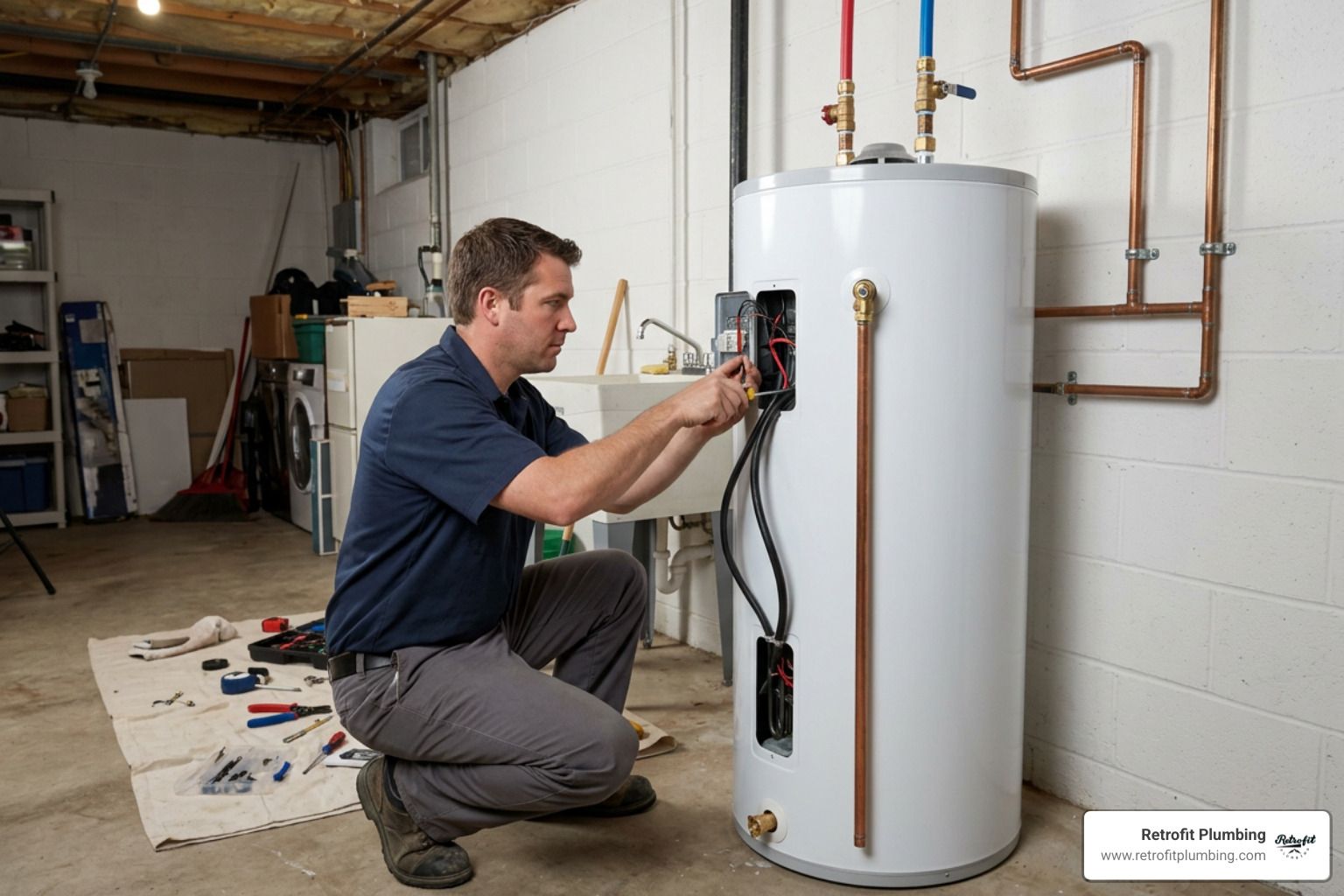
At Retrofit Plumbing, we serve the entire South Sound area, from our home base in Covington to Renton, Kent, and Auburn. Installing a hydronic system isn't a "DIY" project. It requires precise system balancing —measuring the flow to every single radiator or floor loop to ensure the bedroom isn't freezing while the kitchen is boiling.
We also focus heavily on water treatment. We add specialized inhibitors to the water to prevent scale buildup and internal rust, ensuring your investment lasts for decades.
Frequently Asked Questions about Hydronic HVAC
Can one hydronic system provide both heating and cooling?
Absolutely! By using a reversible air-to-water heat pump, the system can switch modes depending on the season. In "four-pipe" systems, you can even have some parts of the house heating while others are cooling—though that’s usually reserved for larger commercial buildings or very high-end custom homes.
How energy efficient are hydronic systems compared to furnaces?
Hydronic systems are significantly more efficient. Because water is a better conductor of heat than air, you lose much less energy during the "delivery" phase. Homeowners often see fuel consumption savings of up to 40% compared to an old-fashioned gas furnace.
What maintenance is required for a hydronic heating cooling system?
Maintenance is actually quite simple but very important:
- Annual Inspections: Checking the boiler or heat pump for efficiency.
- Air Purging: Ensuring no new air has entered the lines.
- Pump Check: Verifying the circulators are lubricated and spinning freely.
- Filter Cleaning: If you use fan coil units, their small filters need a quick rinse once or twice a year.
Conclusion
The shift toward the hydronic heating cooling system is making waves for a reason. Between the 10x efficiency gains, the incredible "feet-warm, head-cool" comfort of radiant heat, and the silent operation of chilled water cooling, it is truly the premium choice for modern living.
Beyond the comfort, it's a smart financial move. These systems have a much longer operational lifespan than traditional HVAC units, and they significantly increase the resale value of your home.
Whether you are in Covington, Federal Way, or Tacoma, our team at Retrofit Plumbing is ready to help you design a system that fits your lifestyle. We offer honest pricing, same-day service, and a 100% satisfaction guarantee.
Ready to upgrade your home's comfort? Schedule your hydronic heating cooling system consultation today and experience the difference that "the ultimate messenger" can make.