Why Proper Gas Water Heater Installation Matters in the South Sound
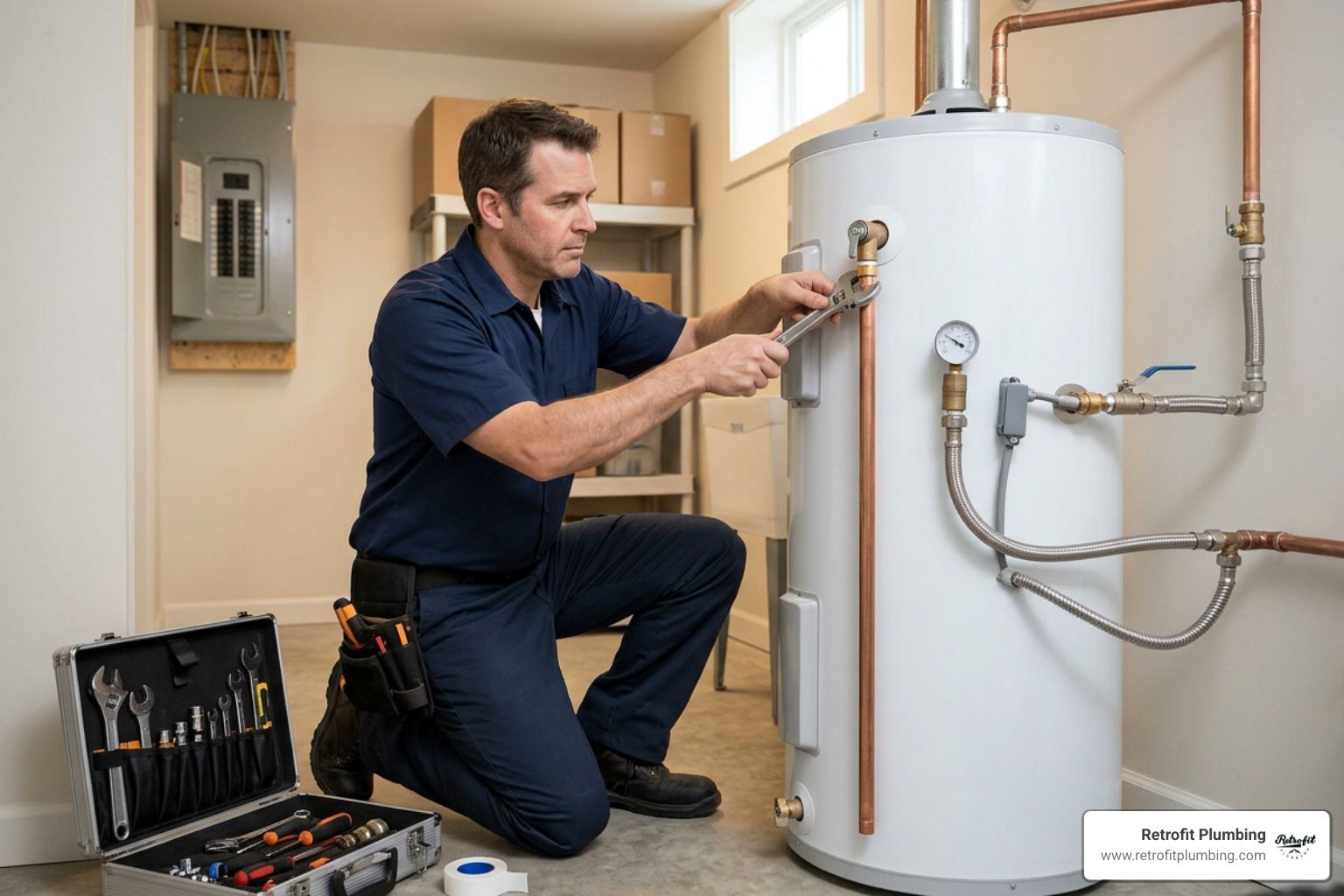
Gas water heater installation is one of the most common — and most consequential — plumbing jobs in any home. Do it right, and you'll have reliable hot water for the next 8 to 12 years. Do it wrong, and you're looking at gas leaks, carbon monoxide risks, flooded utility rooms, or a failed inspection.
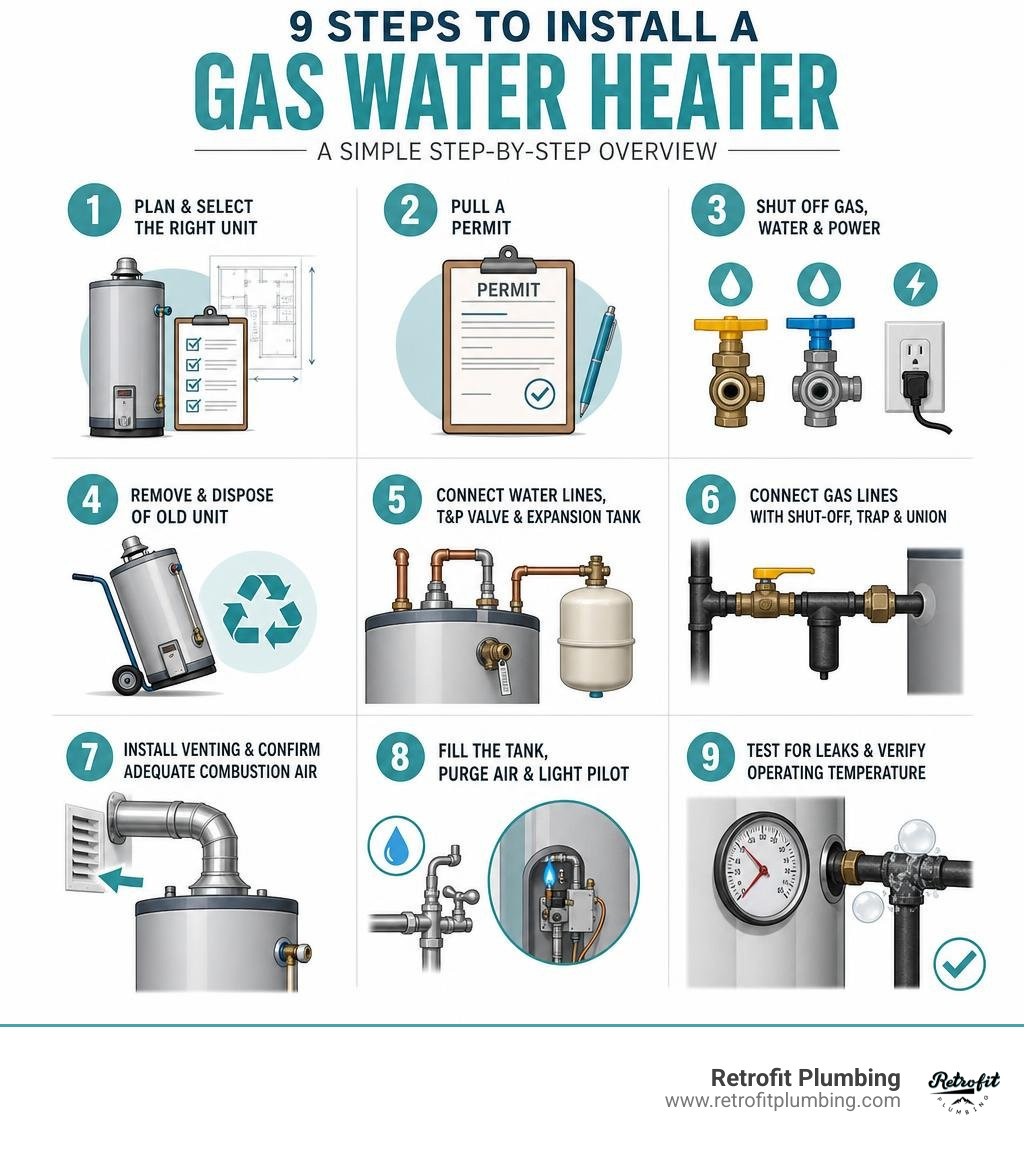
Here's a quick overview of what gas water heater installation involves:
- Plan and select the right unit for your home's hot water demand
- Pull a permit from your local municipality (required in King County)
- Shut off gas, water, and power before touching anything
- Remove and dispose of the old unit safely
- Connect water lines, install the T&P relief valve, and add an expansion tank if needed
- Connect gas lines with a proper shut-off, sediment trap, and union
- Install venting and confirm adequate combustion air supply
- Fill the tank, purge air, and light the pilot
- Test for leaks and verify the unit reaches operating temperature
This isn't a small job. A full 40-gallon water heater weighs roughly 500 pounds when full — and that's before you factor in tight utility closets, aging gas lines, or the strict Washington State plumbing codes that apply everywhere from Covington to Bellevue.
Whether you're tackling this yourself or deciding when to call a pro, this guide walks you through every step clearly and safely.
I'm Josh Klimp, owner of Retrofit Plumbing, with over 20 years of hands-on experience managing gas water heater installation projects across residential and commercial properties throughout the South Sound. I've pulled the permits, passed the inspections, and handled everything from straightforward tank swaps in Covington to complex gas line conversions in medical facilities — so the advice here comes straight from the field.
Planning Your Gas Water Heater Installation
When the cold winds roll off the Puget Sound and our classic Pacific Northwest winters bring freezing rain to Covington, the last thing you want to worry about is a lukewarm shower. Planning your gas water heater installation before your current unit completely fails is the best way to avoid a cold-water emergency.
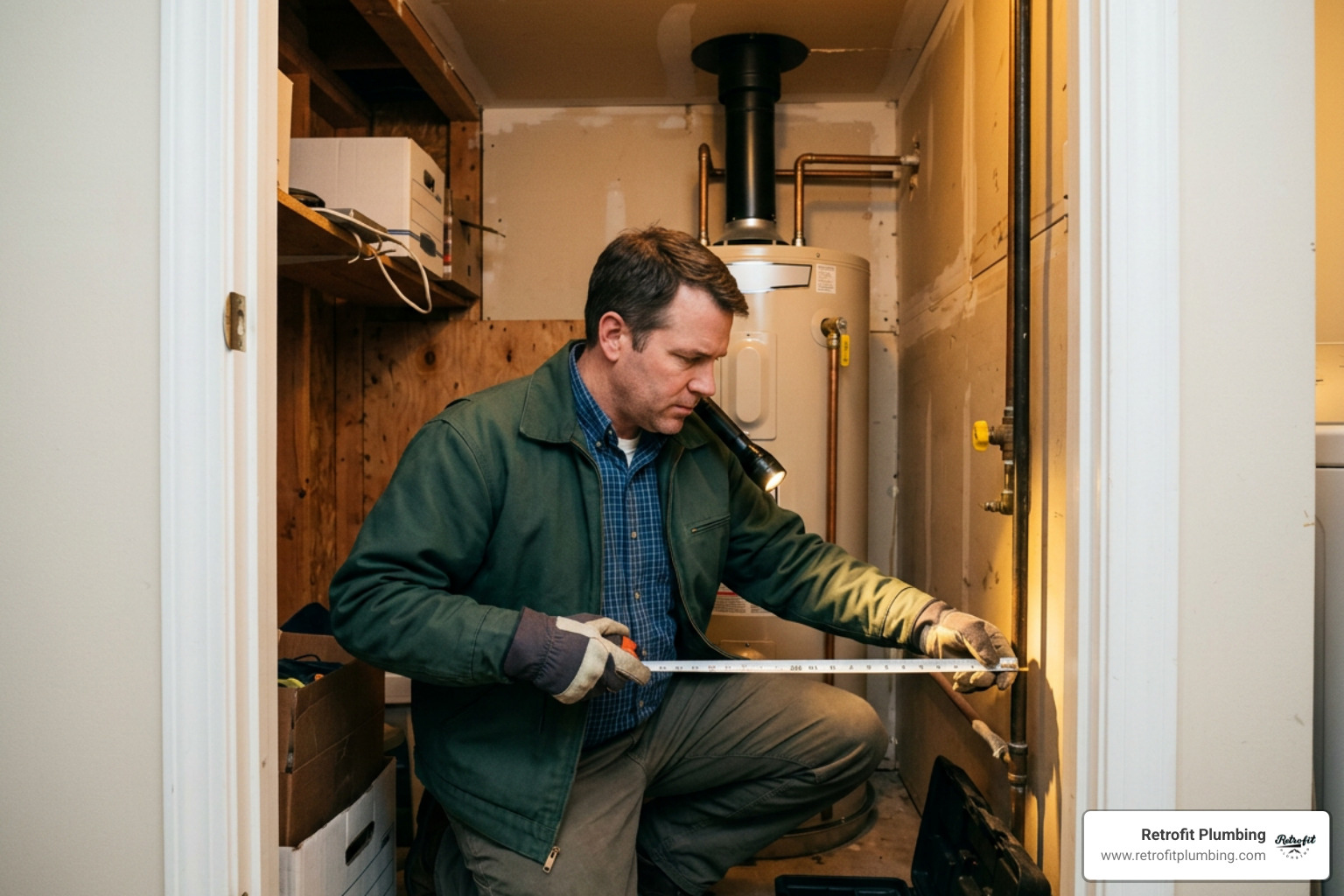
In King County, planning means understanding both your physical space and local building codes. If your water heater is tucked away in a small utility closet surrounded by towering Douglas firs outside, you must ensure there is enough clearance for both safety and code compliance.
One of the most critical structural requirements in Washington State is earthquake strapping. Because we live in a seismically active zone, local codes require water heaters to be securely strapped to the wall studs at two points—one in the upper third of the tank and one in the lower third. Additionally, if your water heater sits in a closed plumbing system (which is common in municipal water systems across Renton and Kent), thermal expansion must be managed. When water is heated, it expands. In a closed system with a backflow preventer, this expansion has nowhere to go, causing rapid pressure spikes that can destroy your tank. Installing a thermal expansion tank on your cold water line solves this issue and keeps you code-compliant.
Sizing and Selecting Your Unit for Gas Water Heater Installation
Getting the right size water heater is about more than just matching the gallon capacity of your old tank. You need to look at the first-hour rating (FHR), which measures how much hot water the heater can deliver during its first hour of continuous operation when fully heated.
To determine your peak hot water demand, calculate the busiest hour of the day in your household. If you have multiple teenagers taking back-to-back showers while the washing machine is running, your peak demand will be high.
- 1 to 2 People: Typically require a 30- to 40-gallon tank.
- 3 to 4 People: Usually need a 40- to 50-gallon tank.
- 5+ People: Require a 50- to 80-gallon tank.
If you are planning to stick with a standard storage tank, reviewing the Cost to Install 40 Gallon Gas Water Heater will give you a clear baseline of what to expect financially before you begin purchasing materials.
Safety Precautions for Gas Water Heater Installation
Working with natural gas or liquid propane (LP) requires absolute respect for safety protocols. Unlike electric models, gas water heaters introduce the risk of carbon monoxide (CO) poisoning and highly flammable vapor ignition.
Before starting any work, you must locate your manual gas shut-off valve—usually a quarter-turn brass valve located on the supply pipe near the heater—and turn it perpendicular to the pipe to shut off the gas supply completely. If you have an older brass valve, use a small adjustable wrench and turn it gently; applying too much force on an old, brittle valve can break it and cause an immediate leak.
Always review the manufacturer's Installation guide for specific clearance requirements. Keep the area around your water heater entirely free of gasoline, paint thinners, household cleaners, or aerosol sprays. The corrosive vapors from these everyday chemicals can react with the burner flame, accelerating tank corrosion and voiding your manufacturer warranty.
Tools and Materials Required
Having the right tools lined up before you start prevents those frustrating mid-project trips to the local hardware store in Covington or Bellevue. Here is what you will need for a standard storage tank installation compared to a tankless upgrade:
| Feature | Standard Storage Tank Gas Water Heater | Tankless Gas Water Heater |
|---|---|---|
| Space Required | High (requires utility closet or dedicated floor space) | Low (wall-mounted, compact design) |
| Lifespan | 8 to 12 years | 15 to 20+ years |
| Upfront Cost | Lower initial equipment and installation cost | Higher initial equipment and installation cost |
| Venting Style | Standard atmospheric draft hood or power vent | Direct vent (often dedicated PVC/stainless steel) |
| Gas Supply Line | Standard 1/2-inch line is usually sufficient | Often requires a larger 3/4-inch gas line upgrade |
Essential Tool Checklist:
- Pipe wrenches (two are recommended to hold back pressure on gas pipes)
- Adjustable wrenches
- Tubing cutter (for copper pipes)
- Propane torch and lead-free solder (if sweating copper lines)
- Non-corrosive gas leak detection solution (or dish soap and water)
- Teflon tape rated for gas lines (yellow tape) and water lines (white tape)
- Dielectric unions (to prevent galvanic corrosion between dissimilar metals)
- Screwdrivers and a level
Removing and Disposing of the Old Unit
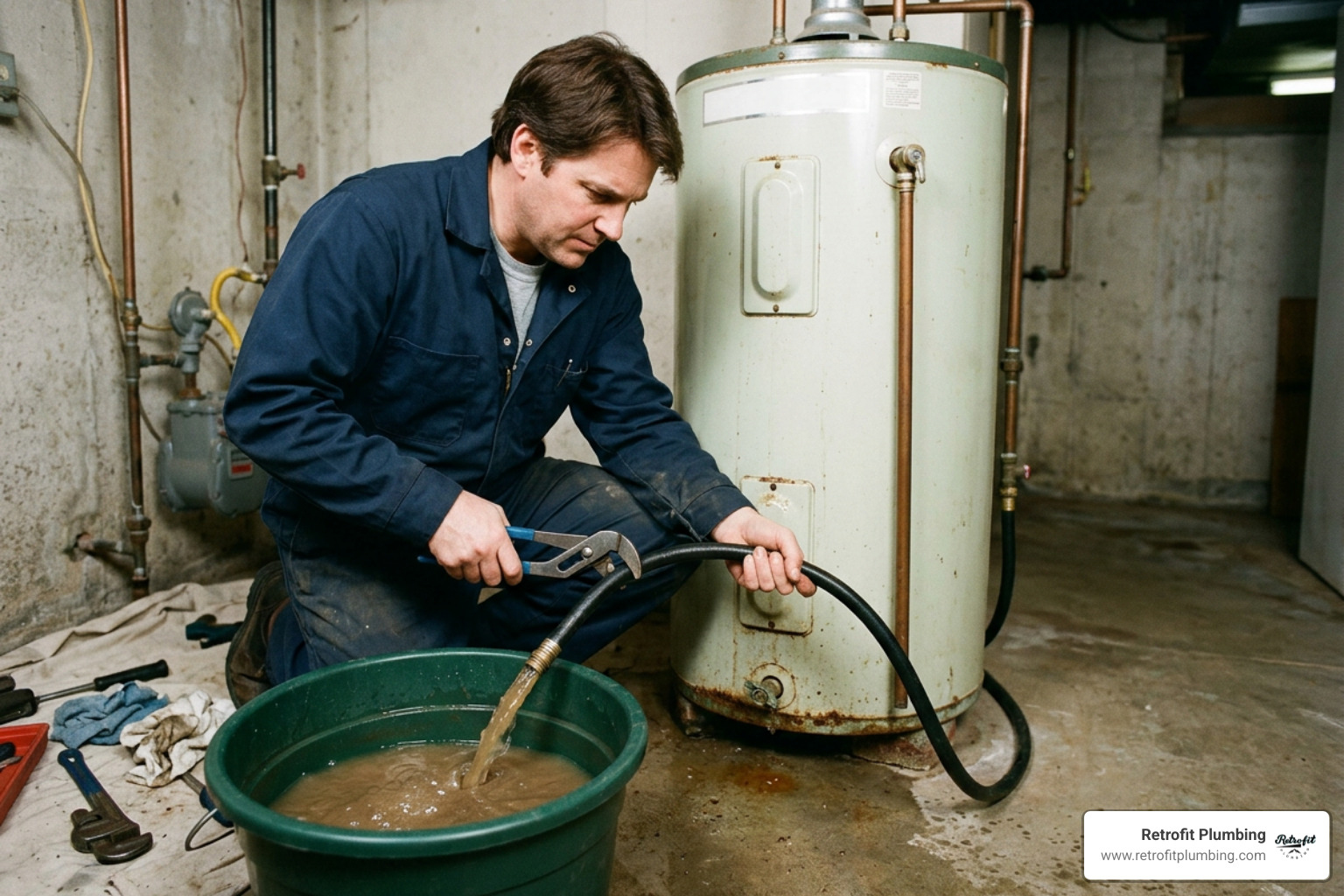
Before you can bring in the new, you have to get rid of the old. Draining a water heater that has been sitting in a basement for a decade is rarely as simple as hooking up a hose and opening the valve. Over the years, calcium and mineral sediment build up at the bottom of the tank, often completely clogging the plastic drain valve.
To safely remove your old unit, follow these steps:
- Turn off the Utilities: Shut off the gas valve and turn off the cold water supply valve. If your water heater uses a power vent, unplug it from the 115V electrical outlet.
- Cool the Water: Run a hot water faucet inside your home for about 10 minutes until the water runs cool. This prevents you from getting scalded by boiling water if a hose slips or leaks during draining.
- Drain the Tank: Connect a standard garden hose to the drain valve at the bottom of the tank and run the other end to a floor drain or driveway. Open a hot water faucet upstairs to break the vacuum, then open the drain valve. If the water only trickles out due to sediment, you can use a small transfer pump to draw the water out, or call us for a professional Plumber Water Heater Replacement to handle the heavy lifting.
- Disconnect and Move: Once empty, disconnect the gas line, vent pipe, and water lines. A standard 40-gallon tank can weigh up to 500 pounds when filled with water and heavy sediment, but once fully drained, the steel shell is manageable with a heavy-duty appliance dolly and a helper.
For eco-friendly disposal, residents in Bellevue and King County can recycle old water heaters at local transfer stations or scrap metal facilities, keeping heavy appliances out of our local landfills.
Step-by-Step Installation and Connection Process
Position your new water heater in place, ensuring it is level. If you are placing it on an uneven concrete floor in a garage or basement, use rubber isolation pads or approved shims to level the unit.
In Washington State, you must install heavy-duty earthquake straps anchored directly into the wall studs. This is a non-negotiable safety code designed to keep the heavy tank from tipping and breaking gas lines during seismic activity. For detailed physical clearances and mounting steps, refer to the Owner’s Guide Installation Instructions.
Connecting Water Lines and the T&P Valve
Start by preparing your water connections. Modern codes require dielectric unions or flexible copper connectors with built-in dielectric sleeves. These prevent galvanic corrosion, which occurs when copper and galvanized steel make direct contact, leading to premature leaks.
- Avoid Heat Damage: When installing water lines, never apply heat directly to the water heater's inlet and outlet nipples. These nipples contain plastic liners that will melt instantly under a plumber's torch. Instead, solder your copper adapters to a short piece of copper tubing first , let them cool completely, and then thread them into the water heater using Teflon tape.
- The T&P Relief Valve: The Temperature and Pressure (T&P) relief valve is your water heater's ultimate safety mechanism. If pressure or temperature climbs to dangerous levels, this valve opens to prevent the tank from exploding. Install a new T&P valve (never reuse an old one) and connect a 3/4-inch discharge pipe. This pipe must run downward by gravity and terminate between 1 and 6 inches above the floor or drain pan. If your relief valve is dripping later on, check our guide on Replacing Water Heater Relief Valve.
- Thermal Expansion Tank: If you have a closed plumbing system, install a thermal expansion tank on the cold water inlet side. Learn more about why this is necessary and how to maintain it in our guide on Replacing Water Heater Expansion Tank.
Connecting Gas Lines and Testing for Leaks
Connecting the gas supply line requires precision. Use black steel pipe and fittings rather than copper or brass, which can degrade when exposed to certain types of natural gas.
Every proper gas connection must include three things:
- A manual gas shut-off valve.
- A drip leg (also called a sediment trap). This is a 3-inch vertical tee extension at the bottom of the gas line that catches moisture, dirt, and scale before they can enter and ruin the gas control valve.
- A union fitting to allow for easy disconnection in the future.
Once your black steel piping is securely threaded together using gas-rated yellow Teflon tape, it is time to test for leaks. Mix a solution of dish soap and water (or use a commercial non-corrosive gas leak detection spray) and brush it liberally over every joint. Turn the gas valve on. If you see growing bubbles, you have a leak. Shut off the gas immediately, disassemble the joint, clean the threads, reapply tape, and tighten it again.
Venting and Combustion Air Requirements
Proper venting is a matter of life and death. If combustion gases cannot escape, carbon monoxide will spill back into your home.
- Atmospheric Venting: Standard gas water heaters use a draft hood that sits on top of the unit, connecting to a metal B-vent chimney. Ensure the vent pipe pitches upward continuously with no sagging sections. Test for proper draft by holding a lit match near the edge of the draft hood after the burner has been running for a few minutes; the flame should be drawn into the hood, not blown away.
- Power Venting: Power-vented models use an electric blower fan to push exhaust gases horizontally through a side wall using approved PVC or ABS plastic piping.
- Combustion Air: Gas burners require oxygen to burn cleanly. If you install your water heater in a confined space (less than 50 cubic feet per 1,000 BTUH of the total appliance input), you must install permanent ventilation grilles to draw fresh air from adjacent rooms or the outdoors. Always place a certified carbon monoxide detector on the wall outside the utility room.
Frequently Asked Questions about Gas Water Heaters
How long does a gas water heater typically last?
On average, a standard gas water heater lasts 8 to 12 years, while high-quality tankless models can push past 20 years. As of July 2026, modern manufacturing standards have improved energy efficiency, but tanks are still highly susceptible to internal corrosion.
To maximize your water heater's lifespan, flush the tank annually to remove crusty sediment buildup. Additionally, check your sacrificial anode rod every three years. The anode rod attracts corrosive elements in the water, sacrificing itself to protect the steel tank. Once it degrades, the tank itself begins to rust, leading to irreversible leaks.
Can I convert an electric water heater to gas?
Yes, you can convert from electric to gas, but it is not a direct swap. Converting requires running a new gas line from your home's main meter, installing a proper venting system (either through the roof or out a side wall), and modifying your plumbing layout.
While the upfront installation cost is higher, gas water heaters typically heat water much faster than electric units and can lower your monthly energy bills. If you are considering making the switch, check out our guide on Replacing an Electric Water Heater to weigh the pros and cons for your specific home layout.
Do I need a permit for water heater installation in King County?
Yes. Both King County and municipal building departments (such as Covington, Renton, and Bellevue) require a permit and a post-installation safety inspection for all new water heater installations.
Permits ensure that critical safety features—like correct venting, proper gas piping, and earthquake strapping—are installed up to code. Skipping a permit can create major liabilities if you ever decide to sell your home, and it can even cause insurance companies to deny claims in the event of water or fire damage.
Conclusion
A successful gas water heater installation keeps your home safe, comfortable, and up to code through the dampest Pacific Northwest winters. While an experienced DIYer with the right tools can manage a standard tank replacement, working with pressurized gas, water, and venting systems carries significant risks.
At Retrofit Plumbing, we pride ourselves on providing honest pricing, fully stocked trucks, and a 100% satisfaction guarantee. Whether you are in Covington, Renton, Kent, Bellevue, or Seattle, our team is ready to deliver professional, same-day service to ensure your hot water runs flawlessly.
If you would rather leave the heavy lifting, gas connections, and permit paperwork to the licensed professionals, visit our Services / Water Heater Repair page or contact us today to schedule your installation!