What Homeowners Need to Know About Main Water Replacement
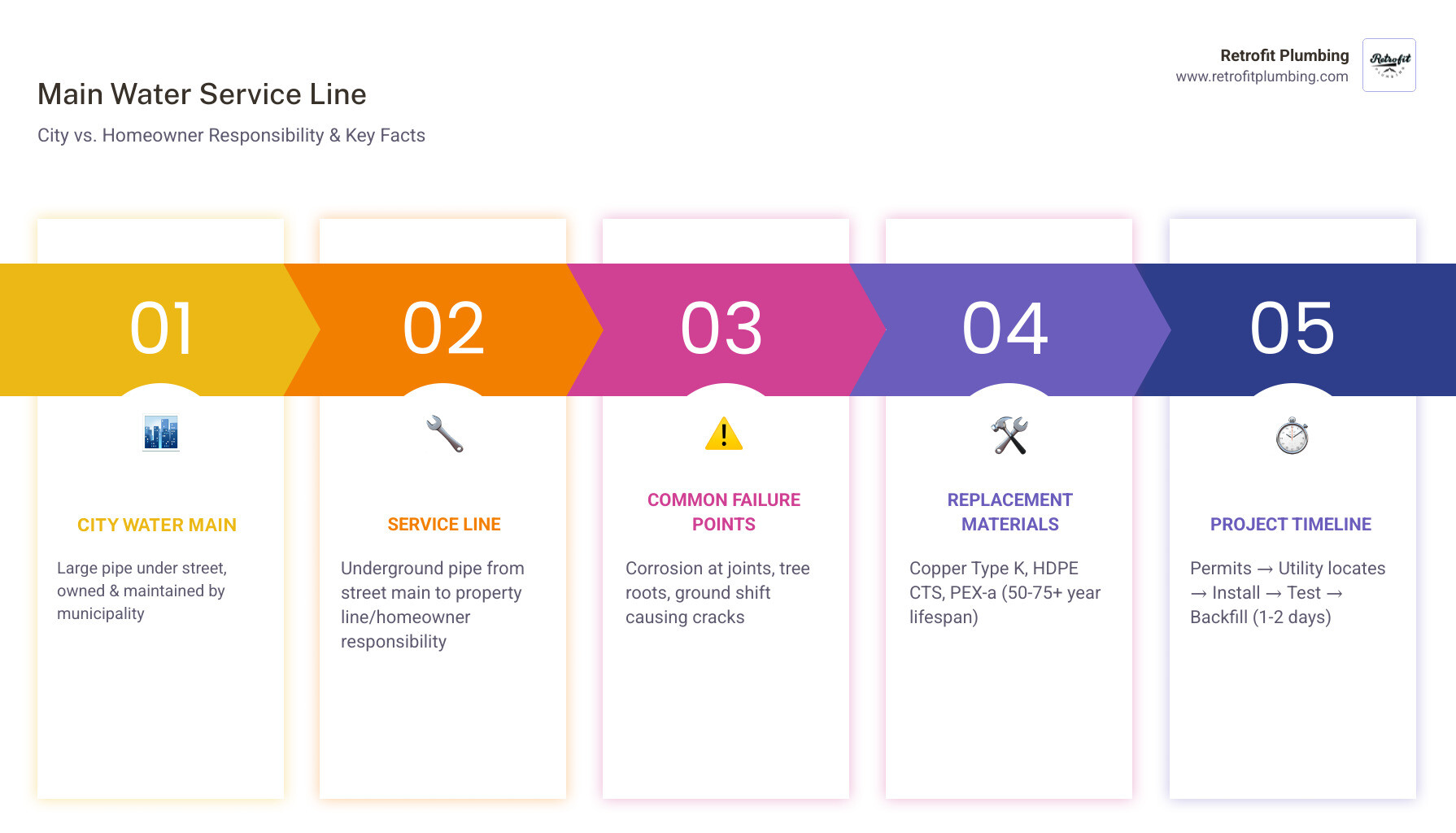
Main water replacement is the process of removing and installing a new service line — the pipe that carries fresh water from the city's water main in the street directly into your home.
Here's a quick overview of what's involved:
- What it is: Replacing the underground pipe that runs from the municipal water main to your home
- When you need it: Persistent low pressure, discolored water, soggy yard patches, high water bills, or pipes older than 30 years
- How long it takes: Spot repairs ~1 day; full trenchless replacement 1–2 days
- What it costs: Repairs run $800–$2,500; full replacement typically $3,000–$8,000
- Key steps: Permit, utility locates, water shut-off, new pipe installation, pressure testing, backfill
- Best materials: Copper Type K, HDPE, or PEX-a — all rated 40–75+ years
Most homeowners don't think about their water main until something goes wrong. Then it becomes urgent, fast. A burst or failing service line can flood your yard, drop your water pressure to a trickle, and — in older homes — expose your family to lead contamination.
The problem is, it's buried underground and out of sight. By the time you notice the warning signs, the damage may already be significant.
I'm Josh Klimp, a licensed plumber with over 20 years of experience handling main water replacement projects across a wide range of home types and pipe conditions. In this guide, I'll walk you through everything you need to make a smart, informed decision.
Signs and Health Risks of a Failing Water Main
Identifying a failing water main early can be the difference between a controlled upgrade and a midnight plumbing catastrophe. Since the pipe is buried several feet underground, you have to play detective.
Common physical signs include:
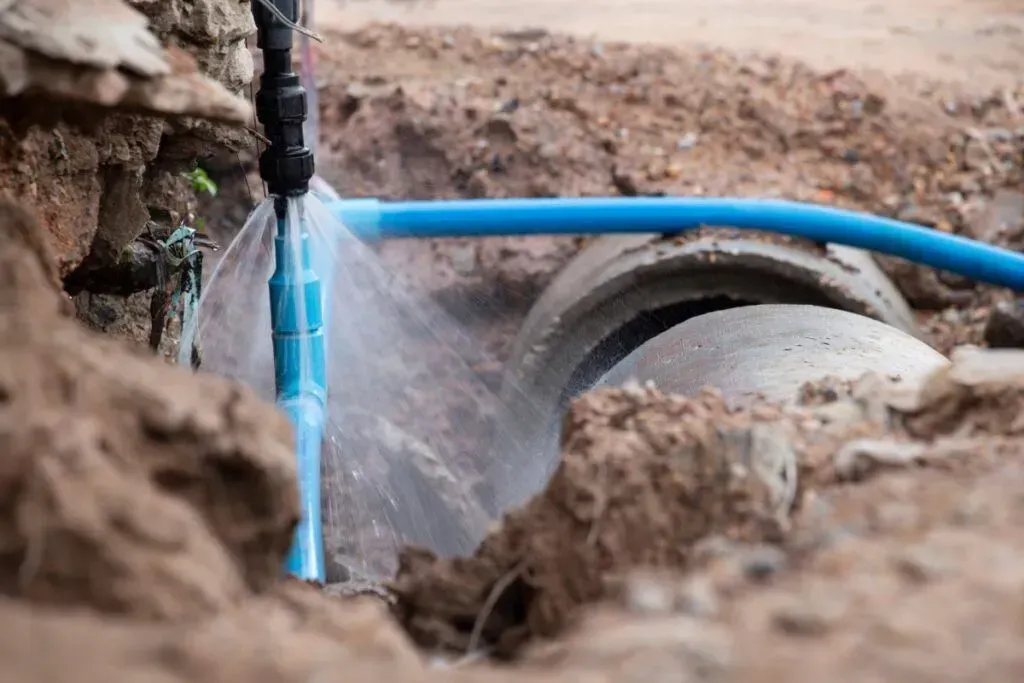
- Unexplained Water Pooling: If it hasn't rained in three days but your front lawn feels like a sponge, you likely have a leak.
- Sudden Drop in Water Pressure: If your morning shower feels more like a leaky faucet, there might be a breach or a significant clog in the service line.
- Discolored Water: Rusty or murky water often indicates that your old metal pipes are corroded and breaking down from the inside out.
- Spiking Utility Bills: A sudden, unexplained jump in your water bill is a classic sign that water is escaping into the soil before it even reaches your meter.
Beyond the annoyance of a soggy yard, there are real structural and health risks. Water escaping from a main line can undermine your home's foundation, leading to leak detection issues that are far more expensive to fix than the pipe itself. For more on how these issues impact your overall home system, check out our guide on residential plumbing.

Identifying Lead and Outdated Materials
If your home was built before the mid-1950s, there is a high probability that your service line is made of lead. Homes built between the mid-1950s and 1989 might not have lead pipes, but they often contain lead solder or brass fixtures that can leach lead into your drinking water.
Lead is a potent neurotoxin. According to Health Canada, Effects of Lead on Human Health, children under six and pregnant women are at the highest risk. Lead exposure can impair learning capacity and intellectual development.
Another common culprit is galvanized steel. These pipes were popular in mid-century homes but are notorious for rusting. Over time, the internal diameter of the pipe shrinks due to rust buildup (tuberculation), which chokes your water flow.
Pro Tip: Never opt for a "partial replacement" where you connect a new copper pipe to an old lead line. This can actually make lead levels worse. The connection between two different metals can trigger an electrochemical reaction that causes the old lead to dissolve into your water even faster. When we perform a main water replacement, we strongly recommend replacing the entire line from the property line to the house.
Repair vs. Full Replacement: The Breakeven Rule
When we arrive at a home in Covington or Renton for a water line issue, the first question is always: "Can we just patch it?"
The answer depends on the "Breakeven Rule." If your pipe is relatively new (under 20 years old) and the damage was caused by a specific event — like a stray shovel during landscaping — a spot repair is often the way to go. However, if the pipe is over 30 years old or made of lead/galvanized steel, a repair is usually just a "stopgap" that buys you 6 to 36 months before the next leak.
The Cost-Benefit Breakdown
| Factor | Spot Repair | Full Replacement |
|---|---|---|
| Typical Cost | $800 – $2,500 | $3,000 – $8,000 |
| Lifespan Added | 6 – 36 months | 50 – 75 years |
| Disruption | Minimal (one hole) | Variable (trenchless is low) |
| Warranty | Usually 30-90 days | 5-year workmanship / 50-year material |
If a repair costs $2,000 and a full replacement is $6,000, and we expect the old pipe to fail again within two years, the math clearly favors replacement. Frequent leaks not only cost money but also increase the risk of broken pipes repair needs during an emergency plumbing situation, which always carries a premium price.
When to Choose Spot Repairs
We generally recommend a spot repair if:
- The pipe material is modern: If you already have copper or HDPE and it has a single, isolated leak.
- The pipe is young: Anything under 20 years old typically has enough structural integrity to hold a repair clamp or coupling.
- Immediate Budget Constraints: If you need the water back on today but aren't ready for the full investment, a repair can act as a bridge.
We use isolation testing — shutting off the main valve and watching the meter — to confirm exactly where the leak is before suggesting the best path forward.
The Main Water Replacement Process and Methods
In the "old days," replacing a water main meant digging a massive trench through your prize-winning rose bushes and across your driveway. Today, we use much smarter methods.
Trenchless vs Traditional Excavation
Most of our main water replacement projects in the South Sound area utilize trenchless technology.
- Moling: We use a pneumatic "mole" that bores a horizontal hole through the soil from a small entry pit to an exit pit. The new pipe is pulled through behind it.
- Pipe Bursting: We pull a heavy-duty bursting head through the old pipe, breaking it apart while simultaneously pulling the new pipe into the same space.
These methods are "no-dig" (or rather, "low-dig") and preserve your landscaping, which is often the biggest hidden cost of traditional plumbing.
Step-by-Step Guide to Main Water Replacement
When we handle your main water replacement, we follow a strict professional protocol:
- Site Inspection & Diagnosis: We confirm the leak location and identify the pipe material.
- Permit Acquisition: We handle the paperwork with your local city (Covington, Kent, etc.) to ensure everything is up to code.
- Utility Locates (811): Before any digging or moling, we call 811 to have gas, power, and fiber optic lines marked. This is non-negotiable for safety.
- Water Shut-Off Coordination: We coordinate with the municipal water department to turn off the water at the street.
- Installation: We pull the new line (usually HDPE or Copper) using trenchless methods.
- Pressure Testing & Disinfection: We test the line at high pressure to ensure zero leaks and flush it to ensure the water is safe to drink.
- Backfilling & Restoration: We fill the small access pits and leave your yard looking as close to original as possible.
Choosing the Best Materials for Main Water Replacement
Selecting the right material is vital for a 50-year solution. We typically work with three main types:
- Copper Type K: This is the "gold standard" for durability and burst resistance. It is a thick-walled metal pipe that has been used for decades. It typically lasts 50–75 years.
- HDPE (High-Density Polyethylene): This is our favorite for trenchless installations. It is flexible, corrosion-proof, and comes in long rolls, meaning there are no joints underground to leak. It’s rated for 50+ years and handles ground movement exceptionally well.
- PEX-a: A flexible, freeze-tolerant plastic. It’s great for residential mains where local codes allow it, offering a 40–50 year lifespan.
We strictly follow SDR-9 standards for plastic pipes to ensure they can handle the high pressure of our local municipal systems.
Costs, Permits, and Local Assistance Programs
Understanding the financial side helps you plan without surprises. A standard main water replacement in our service area typically ranges from $3,000 to $8,000.
Factors Influencing the Final Bill:
- Pipe Length: The distance from the street to your house.
- Depth: Pipes buried deeper (to avoid the frost line) require more labor.
- Surface Restoration: If we have to cut through a concrete driveway instead of moling under it, the cost goes up.
- Shut-off Valves: Replacing an old, seized main shut-off valve is a common addition. New valve installations typically range from $170 to $650 depending on the size (1/2" to 1").
We pride ourselves on honest pricing. When we give you a quote for main water line install & repair, it includes the labor, materials, and the peace of mind that comes with our 100% satisfaction guarantee.
Navigating Permits and Financial Aid
Every city from Tacoma to Seattle has different permitting requirements. We handle the "Check Size and Type" inspections and coordinate with the city for the final sign-off.
While some cities offer loan programs for lead pipe replacement, these vary by municipality. We recommend calling your local utility department or 311 service to see if there are current grants or low-interest loans available for upgrading substandard lines.
Regardless of the program, we provide a workmanship warranty on every job, which stands alongside the manufacturer's guarantee on the pipe material itself.
Frequently Asked Questions about Service Lines
How long does a full replacement take?
For most residential properties using trenchless methods, the work takes 1–2 days. Your water will only be shut off for a portion of that time (usually 4–8 hours). We recommend storing a few gallons of water for drinking and filling a bathtub to manually flush toilets during the outage.
Will my insurance cover the replacement?
Standard homeowner's insurance often covers the damage caused by a leak (like foundation seepage), but they rarely cover the replacement of the pipe itself unless you have a specific "service line endorsement." It’s worth checking your policy or calling your agent before work begins.
What is the difference between trenchless and open-cut?
Open-cut is the traditional method of digging a trench. It’s sometimes necessary if the soil is full of large boulders or if the pipe needs to be "upsized" significantly. Trenchless (moling/bursting) is much less invasive, preserving your driveway and landscaping, and is almost always the more cost-effective choice when you factor in the cost of fixing your yard afterward.
Conclusion
A main water replacement is a significant home improvement, but it’s one that pays off in water quality, pressure, and property value. Whether you are dealing with a sudden emergency in Auburn or planning a proactive upgrade for an older home in Kent, our team is here to help.
At Retrofit Plumbing, we serve Covington, WA, and all surrounding areas including Renton, Tacoma, and Seattle. We offer same-day service, fully stocked trucks, and a commitment to honest, transparent pricing. Don't wait for a soggy lawn to become a flooded basement.
Arrange your main water line replacement today and let us handle the hard work so you can get back to your life with water you can trust.