What You Need to Know About Commercial Kitchen Sink Plumbing Before You Start
Commercial kitchen sink plumbing is a different animal from anything you'd find in a home — and getting it wrong can delay your opening, trigger a failed inspection, or shut you down mid-service.
Here's what's required at a glance:
| Requirement | Key Detail |
|---|---|
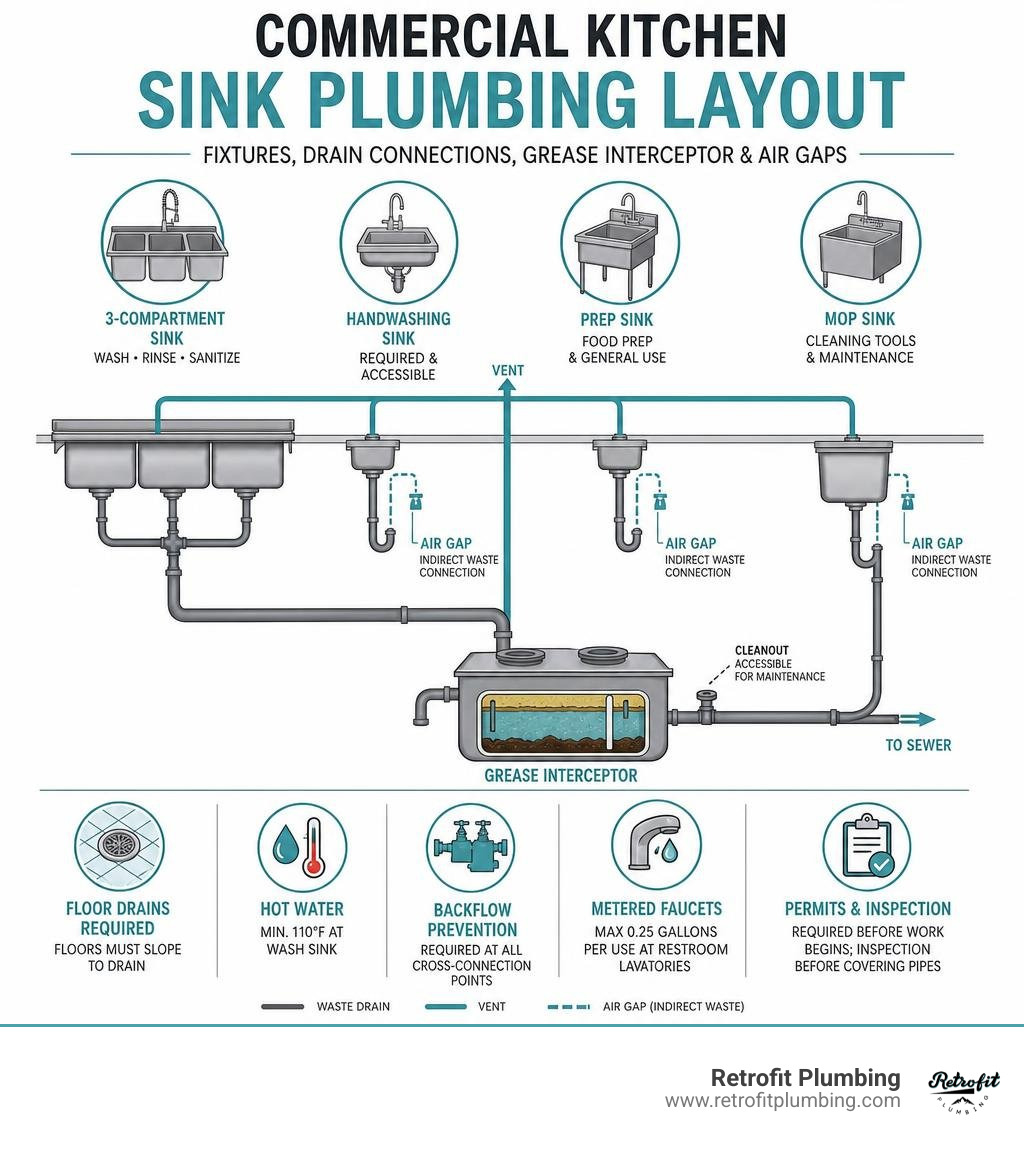
| Required sinks | 3-compartment sink, handwashing sink, prep sink, mop sink |
| Floor drains | Required in all commercial kitchens; floor must slope to drain |
| Grease interceptor | Required for any fixture discharging food waste or FOG |
| Indirect waste | Food equipment must drain via air gap — not direct connection |
| Hot water | Minimum 110°F at wash sink; 180°F for high-temp dishwasher final rinse |
| Backflow prevention | Required at all cross-connection points (RPZ, vacuum breakers) |
| Metered faucets | Max 0.25 gallons per use at restaurant restroom lavatories |
| Permits | Required before work begins; inspection needed before covering pipes |
Whether you're opening a new restaurant in Bellevue, building out a commissary kitchen in Covington, or remodeling an older food service space in the South Sound area, the stakes are high. A backed-up floor drain at 6 PM on a Friday doesn't just create a mess — it can force you to close the kitchen, send staff home, and cancel reservations.
This guide walks you through every major code requirement, material choice, and installation standard for commercial kitchen sink plumbing so you can plan smart and pass inspection the first time.
I'm Josh Klimp, and with over 20 years of experience managing commercial kitchen sink plumbing installations — from tenant improvements and new construction to full kitchen remodels — I've seen exactly where projects go sideways and how to avoid it. Let's get into the details so your project runs clean from rough-in to final inspection.
Navigating Commercial Kitchen Plumbing Codes
Understanding the code landscape is your first step to a successful build. In Washington State, commercial plumbing installations are primarily governed by the Washington State Plumbing Code (WSPC), which is based on the Uniform Plumbing Code (UPC), alongside local King County Public Health regulations.
While some states use the International Plumbing Code (IPC), Washington’s reliance on the UPC means our local rules for trap arms, venting, and grease interceptors are generally more stringent. If you are planning a mobile setup or a modular build, understanding how these standards overlap with the FDA Food Code is essential, as detailed in this guide to Container Kitchen Plumbing Rough-In: All Requirements.
Before you purchase fixtures, you must understand the "non-negotiable" sink configurations required for a commercial kitchen. According to the Commercial Kitchen Plumbing Requirements: The Complete Code Guide - RestaurantLaunchpad, every food service establishment must have:
- Three-Compartment Sink (3-CS): Used for manual dishwashing. Each compartment must be large enough to completely submerge your largest pots and pans (typically at least 14" x 16" x 12" deep).
- Handwashing Sinks: Dedicated strictly to hand hygiene. They must be located within 25 feet of any food preparation or cooking area.
- Food Preparation Sink: A dedicated basin with an indirect waste connection used exclusively for washing ingredients.
- Mop Sink (Service Sink): A floor-mounted or deep basin sink used for cleaning mops and disposing of wastewater.
For a broader look at how these commercial systems compare to residential configurations, see our Kitchen Plumbing Guide 2026.
Restroom and Accessibility Requirements
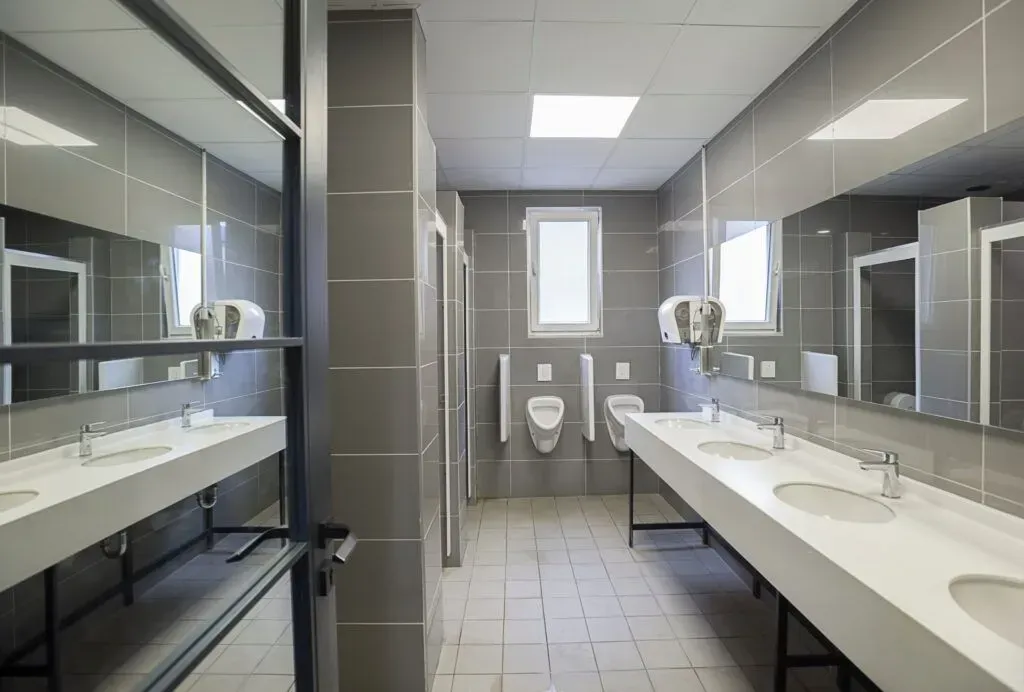
When laying out commercial plumbing in Renton commercial spaces or downtown Bellevue restaurants, occupant load dictates your restroom requirements. Under local building codes, food service establishments with an occupant load of 100 or more must provide separate restrooms for employees and customers.
Furthermore, if you are performing alterations greater than 50% to an existing commercial space, the law requires you to bring the plumbing fixtures up to modern accessibility standards. This means installing ADA-compliant water closets, urinals, and lavatories. Lavatory faucets in public restrooms must also be metered, delivering no more than 0.25 gallons of water per cycle to prevent waste.
Ventilation, Hoods, and Make-Up Air
Your commercial kitchen's plumbing does not exist in a vacuum; it must be closely coordinated with your mechanical systems. Under the Washington State Mechanical Code, commercial cooking areas require Type I or Type II hoods to capture grease, heat, and steam.
Type I hoods, which handle grease-laden vapors, require heavy-duty grease ducts and integrated fire suppression systems. These systems must comply with local State Fire Marshal amendments. They also require a dedicated supply of make-up air to replace the air exhausted by the hood, ensuring your kitchen maintains proper air pressure and doesn't pull sewer gases through your floor drains.
Sizing and Materials for Commercial Kitchen Sink Plumbing
Selecting the right materials and sizing your pipes correctly is what separates a reliable industrial system from one that suffers from constant backups and weak water pressure.

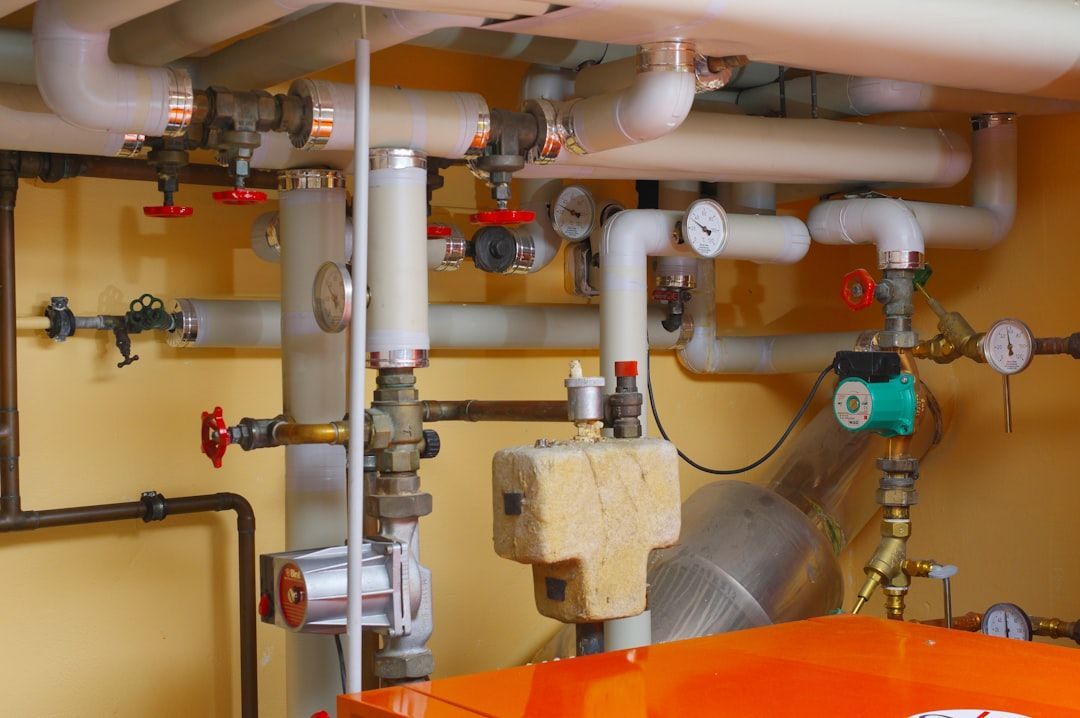
Commercial kitchens generate an immense volume of wastewater. To handle this load, drain and waste lines are sized using Drainage Fixture Units (DFUs), while water supply lines are calculated using Water Supply Fixture Units (WSFUs). Underestimating your DFUs will lead to slow-draining sinks and frequent clogs.
The materials you choose must withstand high temperatures and corrosive cleaning chemicals:
- Water Supply Lines: Copper Type L is the gold standard for commercial hot and cold water lines in Bellevue and Seattle due to its durability and resistance to scale buildup. CPVC and commercial-grade PEX are also approved in many local jurisdictions under specific conditions, though PEX is never permitted for gas piping or drainage.
- Drainage Lines: Schedule 40 PVC is commonly used for its smooth interior and affordability. However, for high-temperature applications—such as the discharge from commercial dishwashers—epoxy-coated cast iron or stainless steel is preferred to prevent pipe warping.
If you're retrofitting an older building in Kirkland or Tacoma, you might need to replace aging, corroded galvanized pipes under your existing fixtures. To understand the financial scope of this work, refer to our guide on the Cost to Replace Pipes Under Kitchen Sink.
Backflow Prevention and Water Hammer Arrestors
Cross-connection control is one of the most heavily inspected aspects of commercial kitchen sink plumbing. You must protect the municipal potable water supply from contamination.
According to the Plumbing Code in Commercial Kitchens, different fixtures require specific backflow prevention assemblies:
- Reduced Pressure Zone (RPZ) Assemblies: Required for high-hazard connections, such as chemical dispensers at mop sinks.
- Atmospheric Vacuum Breakers (AVB): Commonly installed on pre-rinse sprayers. AVBs must be installed at least 6 inches above the flood level rim of the fixture, and you cannot install any shutoff valves downstream of an AVB.
- ASSE 1022 Devices: Double check valve backflow preventers with an atmospheric vent are required for carbonated beverage dispensers. Crucially, you must use only stainless steel or plastic piping downstream of an ASSE 1022 device; copper or brass is strictly prohibited because carbon dioxide reacts with copper to produce toxic copper carbonate.
To protect your copper pipes from the shockwaves of rapidly closing solenoid valves (common in commercial dishwashers and ice machines), you must also install water hammer arrestors at key points in the water supply line.
Hot Water Systems and Temperature Control
Maintaining proper water temperature is a strict health department requirement. Your primary water heater must be sized to meet the peak hourly demand of your kitchen.
To deliver safe, compliant water throughout the building, use the following temperature controls:
- Handwashing Sinks: Must deliver water between 85°F and 120°F. We install thermostatic mixing valves (TMVs) at these hand sinks to blend hot and cold water, preventing accidental scalding.
- Three-Compartment Sinks: Require a minimum hot water temperature of 110°F at the faucet to effectively cut through grease during manual washing.
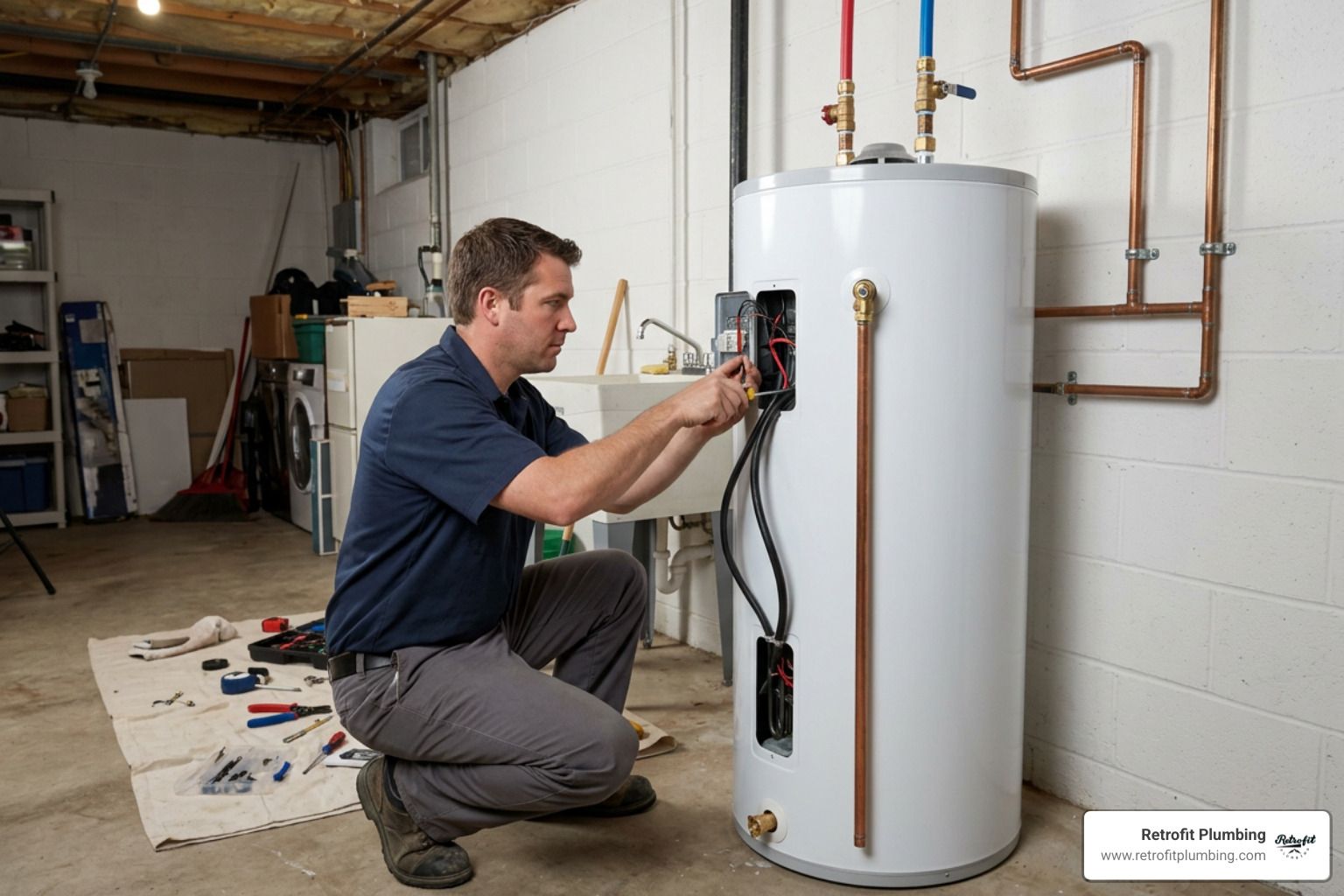
- Commercial Dishwashers: High-temperature sanitizing dishwashers require a final rinse temperature of 180°F. Because standard commercial water heaters cannot safely store water at this temperature, you must install a dedicated booster heater adjacent to the dish machine.
For professional installation of high-capacity commercial water heaters and TMVs, check out our Kitchen Plumbing Services.
Essential Products for Commercial Kitchen Sink Plumbing Compliance
To keep your kitchen compliant and minimize maintenance costs, we recommend installing physical drain protection products. Standard residential strainers will not cut it in a busy commercial environment.
Products from specialized manufacturers like Drain-Net offer excellent protection:
- Floor Sink Baskets and Cone Strainers: These fit directly into your floor sinks to catch food scraps, paper, and trash before they enter your main drain lines.
- Disposable Drain Socks: Functioning like coffee filters, these catch fine debris like rice or hair and are simply thrown away when full.
- Twist Handle Drains and Waste Valves: Heavy-duty brass waste valves allow line cooks to drain large three-compartment sinks quickly by turning a lever located beneath the basin, keeping hands out of dirty water.
Preventing food solids from entering your drains is the easiest way to avoid emergency service calls. For more tips on managing commercial clogs, see our Clogged Sink Repair Complete Guide.
Drainage, Indirect Waste, and Grease Management
Managing how wastewater leaves your kitchen is just as important as how fresh water enters it.
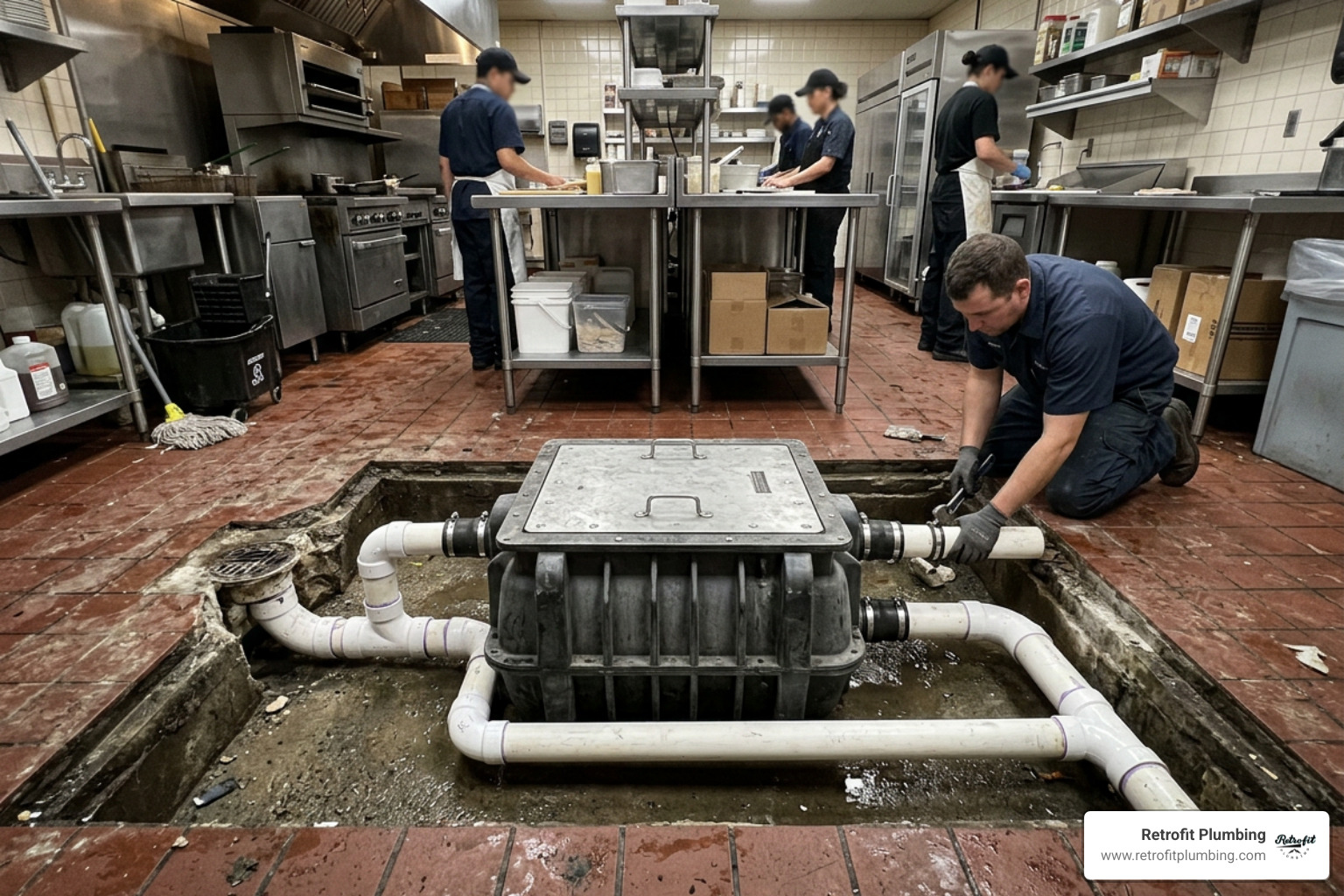
Under the Washington State Plumbing Code, floor drains must be installed in all commercial kitchens. The surrounding floor must slope toward the drain (typically creating a 4-foot diameter sloped drainage area) to prevent pooling water and slip hazards.
Every floor drain and floor sink must have a P-trap. Because some floor drains may go unused for weeks, local codes require the installation of trap primers. These devices automatically inject a small amount of water into the trap whenever a nearby fixture is used, maintaining the water seal and preventing sewer gases from entering the kitchen.
For large-scale kitchen layouts or new builds, we handle everything from trenching to drain placement during the Commercial Plumbing Construction phase.
Indirect Waste Connections and Air Gaps
To protect public health, food preparation and storage equipment cannot connect directly to the building's drainage system. If the sewer lines back up, raw sewage must never be allowed to force its way up into a food prep sink or ice machine.
This is achieved using an indirect waste connection with an air gap:
- Air Gap: An unobstructed, vertical physical separation between the end of the waste pipe and the flood-level rim of the waste receptor (such as a floor sink). The air gap must be at least twice the effective diameter of the drain pipe (for example, a 1-inch drain pipe requires a minimum 2-inch air gap). This is required for all food prep sinks, ice machines, and steam tables.
- Air Break: A connection where the waste pipe terminates below the flood-level rim of the receptor but above the trap seal. While air breaks are acceptable for some non-food equipment, like refrigeration condensation lines, they are never permitted for food preparation or food handling equipment.
Waste receptors, such as hub drains or floor sinks with funnels, must be installed in ventilated, readily accessible areas to allow for easy cleaning and inspection.
Grease Interceptors and Pretreatment Requirements
Fats, Oils, and Grease (FOG) are the arch-enemies of municipal sewer systems. If you discharge FOG directly into the sewer, it solidifies, causing massive blockages. The EPA and King County sewer regulations mandate that any fixture discharging greasy wastewater must pass through a grease interceptor.
There are two primary types of grease interceptors:
- Hydromechanical Grease Interceptors (HGIs): Compact units installed indoors, often directly under the three-compartment sink. They use flow control vents and internal baffling to separate grease from water. They are sized by flow rate in Gallons Per Minute (GPM) per PDI-G101 standards (common sizes include 20, 35, 50, and 75 GPM).
- Gravity Grease Interceptors (GGIs): Massive concrete or fiberglass tanks (typically 1,000 to 2,500 gallons) buried outdoors. They rely on gravity and longer retention times (2.5 to 5 minutes) to separate grease. GGIs are required for high-volume restaurants and must be positioned where pump trucks can easily access them.
Inspection, Testing, and Commissioning
Before you can open your doors to the public in Seattle, Kent, or Renton, your plumbing system must undergo rigorous testing and inspection by local authorities.
The inspection sequence typically follows these stages:
- Underground/Slab Inspection: Checked before the concrete floor is poured.
- Rough-In Inspection: Checked before walls are closed up, ensuring all waste, vent, and water lines are properly sloped and sized.
- Final Inspection: Checked once all fixtures, backflow preventers, and water heaters are fully installed and operational.
During these inspections, we perform several critical tests:
- Drainage Testing: Drain lines are capped and filled with water to verify there are no leaks under hydrostatic pressure.
- Water Supply Testing: Potable water lines are pressure-tested (typically to 150 PSI) to ensure joints and fittings are completely secure.
- Gas Piping Inspection: Gas lines are pressurized and tested with a pressure gauge to ensure there are no fuel leaks.
- Fire Suppression Coordination: The kitchen's hood fire suppression system must be tested to ensure that, when activated, it automatically shuts off the gas supply and electrical power to all cooking equipment beneath the hood.
For a complete breakdown of what to expect during this phase, consult our Commercial Plumbing Repair Guide 2026.
Troubleshooting and Maintaining Commercial Kitchen Sink Plumbing
Even the best-designed commercial kitchen plumbing systems require ongoing maintenance to survive the daily grind. Keep an eye out for these common warning signs:
- Sewer Gas Odors: Usually caused by a dried-out P-trap. Pouring water down floor drains or checking your trap primers will often resolve this.
- Gurgling Sounds: A classic symptom of a blocked vent stack. If air cannot flow freely through the vents, draining water will pull air through your sink traps instead.
- Slow Drainage: Indicates a grease buildup or physical clog. In Western Washington, we also frequently deal with external sewer line issues caused by invasive Douglas fir roots seeking out water.
To prevent costly downtime, establish a strict maintenance schedule. Empty your drain baskets daily, check your grease trap weekly (and pump passive indoor traps before they reach 75% capacity), and schedule professional drain clearing annually. If you need a reliable local partner, search for Commercial Plumbing Companies Near Me to find our team.
Frequently Asked Questions about Commercial Kitchen Plumbing
How many floor drains are required in a commercial kitchen?
Local health and building codes typically require at least one floor drain per 400 square feet of kitchen area. However, you must also install dedicated floor sinks or drains adjacent to any water-discharging equipment, including ice machines, commercial dishwashers, and prep sinks.
What is the difference between an air gap and an air break?
An air gap provides a complete, physical, unobstructed vertical separation between the drain pipe and the receptor's flood-level rim, making it impossible for wastewater to back up into the fixture. An air break allows the drain pipe to terminate below the flood-level rim, which prevents back-siphoning but does not protect against a major physical backup. Food prep equipment always requires an air gap.
How often should a commercial grease interceptor be cleaned?
Indoor hydromechanical grease interceptors in high-volume kitchens should be cleaned every 2 to 4 weeks. Large outdoor gravity interceptors are typically pumped every 3 to 6 months. Under the "1/4 Rule," any grease interceptor must be cleaned once the combined volume of grease and settled solids reaches 25% of its total capacity.
Conclusion
Getting your commercial kitchen sink plumbing right is about more than just passing your rough-in inspection—it is about protecting your business from costly downtime, health code violations, and structural water damage.
At Retrofit Plumbing, we bring years of specialized commercial experience to every project we touch in Covington, Bellevue, Renton, Kent, and the surrounding Puget Sound communities. We understand the local King County health codes, we know how to size grease interceptors for peak-volume kitchens, and we back our work with honest pricing, fully stocked trucks, and a 100% satisfaction guarantee.
If you are planning a restaurant build-out, need to replace aging pipes, or require emergency drain clearing, don't leave your plumbing to chance. More info about commercial plumbing services is just a click away, or you can check out our main Plumbing Services and Commercial Plumbing pages to see how we can keep your commercial kitchen running smoothly. Give us a call today to schedule your system evaluation!