What to Do When Your Hot Water Heater Is Broken: Quick Answer
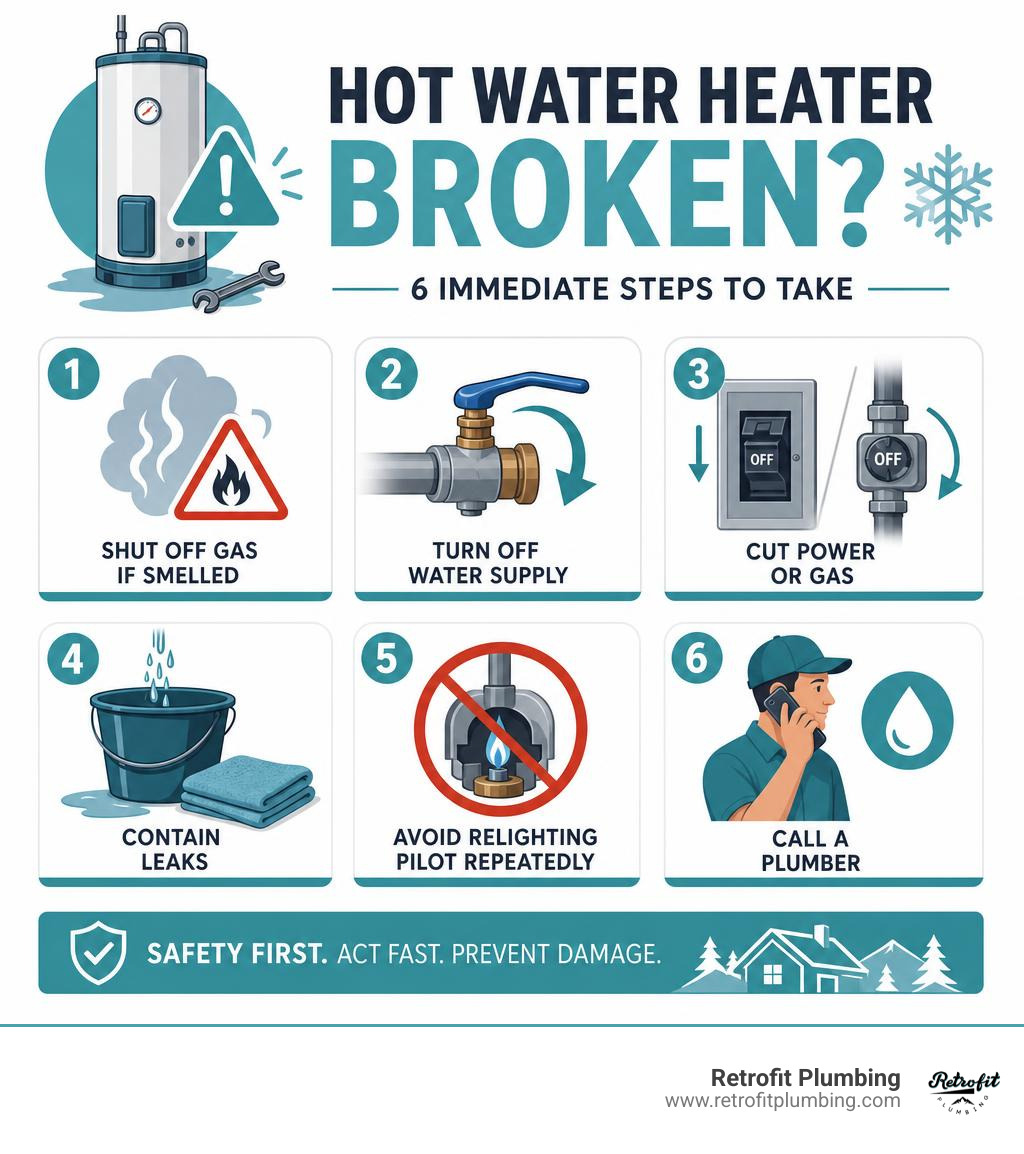
If your hot water heater is broken, here are the immediate steps to take:
- If you smell gas — leave the house immediately and call your gas company from outside.
- If it's leaking — turn off the cold water supply valve above the unit.
- Shut off power or gas — flip the breaker or turn the gas control valve to OFF.
- Contain the water — place towels or buckets to limit floor damage.
- Don't relight the pilot repeatedly — this can mask a failing thermocouple or gas valve.
- Call a licensed plumber if basic checks don't restore hot water.
It's a cold Pacific Northwest morning — maybe a frosty January day in Covington, the kind where the Cascade foothills are dusted in snow — and you step into the shower expecting warmth. Instead, you get ice water. Few home problems trigger panic faster than a hot water heater broken in the middle of winter, and for South Sound homeowners, getting it wrong can mean water damage, safety hazards, or days without hot water.
The good news? Most water heaters show warning signs before they quit completely. And when they do fail suddenly, a few calm, quick actions can prevent the situation from getting much worse.
I'm Josh Klimp, and I've spent over 20 years in the plumbing trade handling everything from commercial medical facility builds to residential water heater failures — including plenty of hot water heater broken emergencies right here in the South Sound. I'll walk you through exactly what to do, step by step.
Emergency Triage: What to Do When Your Hot Water Heater Is Broken
When you realize your water heater has given up the ghost, the very first step is to prevent a minor issue from turning into a major household flood. Water heater leaks account for roughly 10% of household water waste, and a ruptured tank can dump dozens of gallons of water into your basement, garage, or utility closet in a matter of minutes.
Before you start searching for tools or searching the web for a quick fix, you need to perform basic emergency triage. Securing the system immediately protects your home’s structure and keeps your family safe. If you find yourself in the middle of a major plumbing crisis, bookmark our guide on handling a hot water heater emergency so you can act fast.
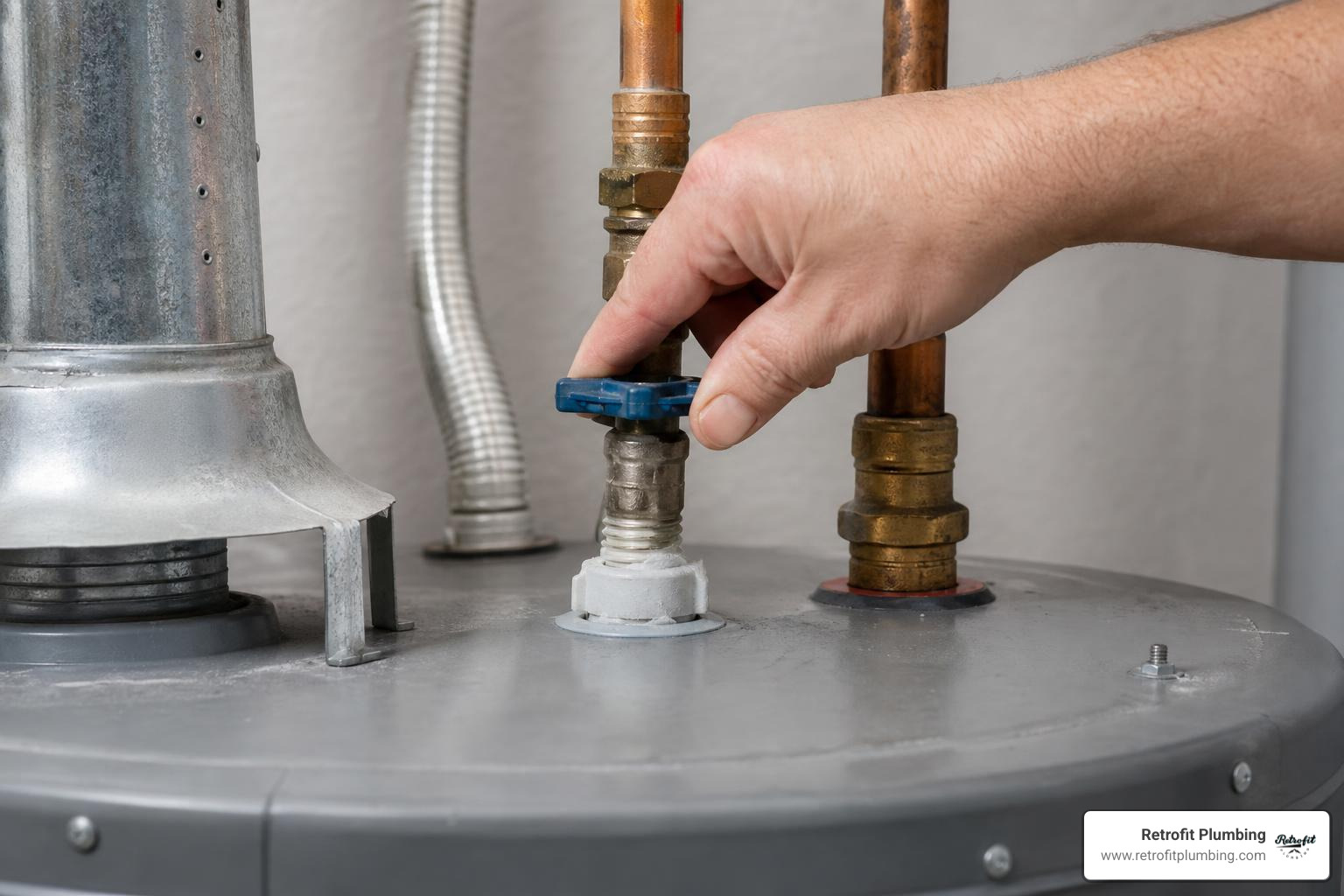
To neutralize a failing water heater, follow these three steps:
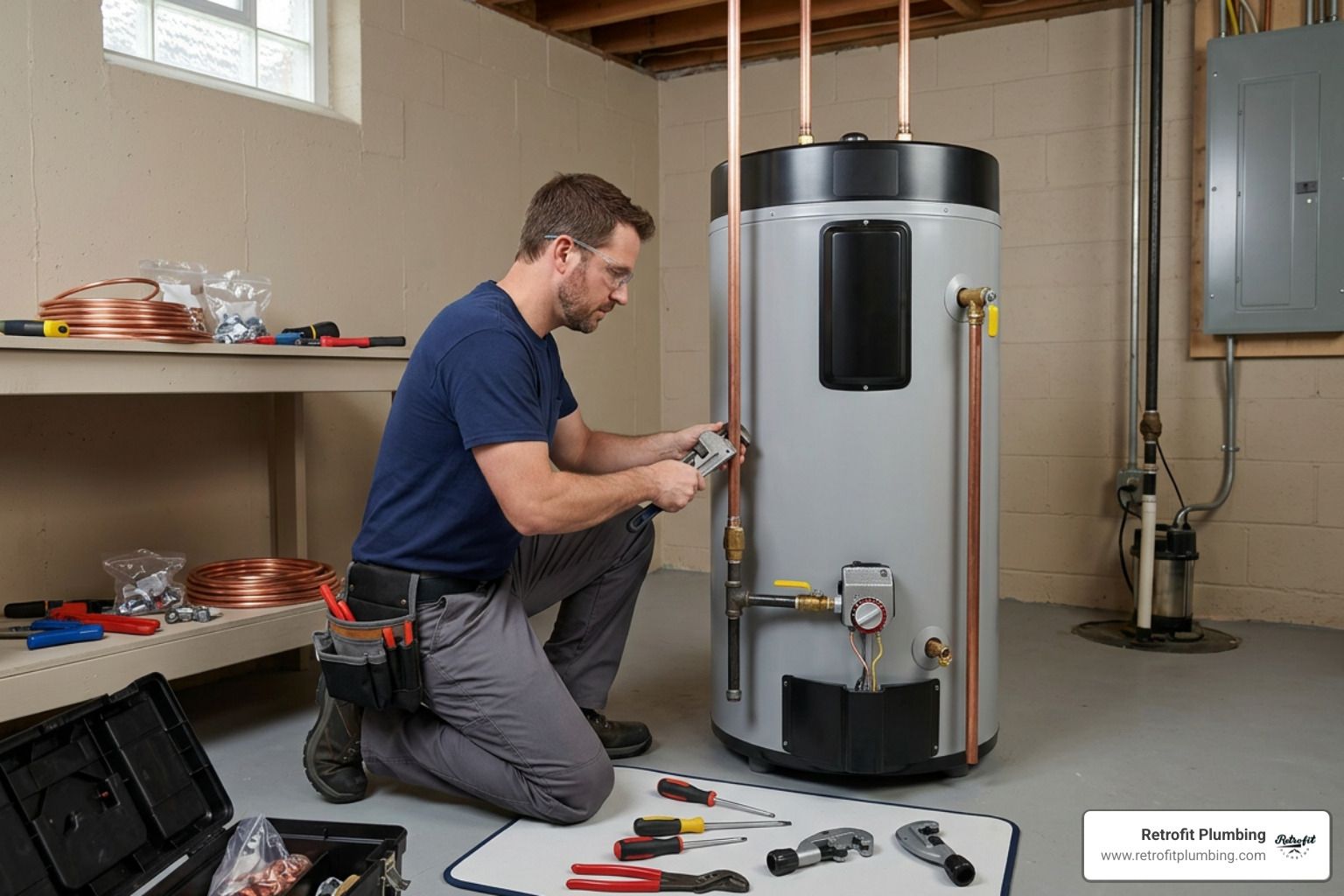
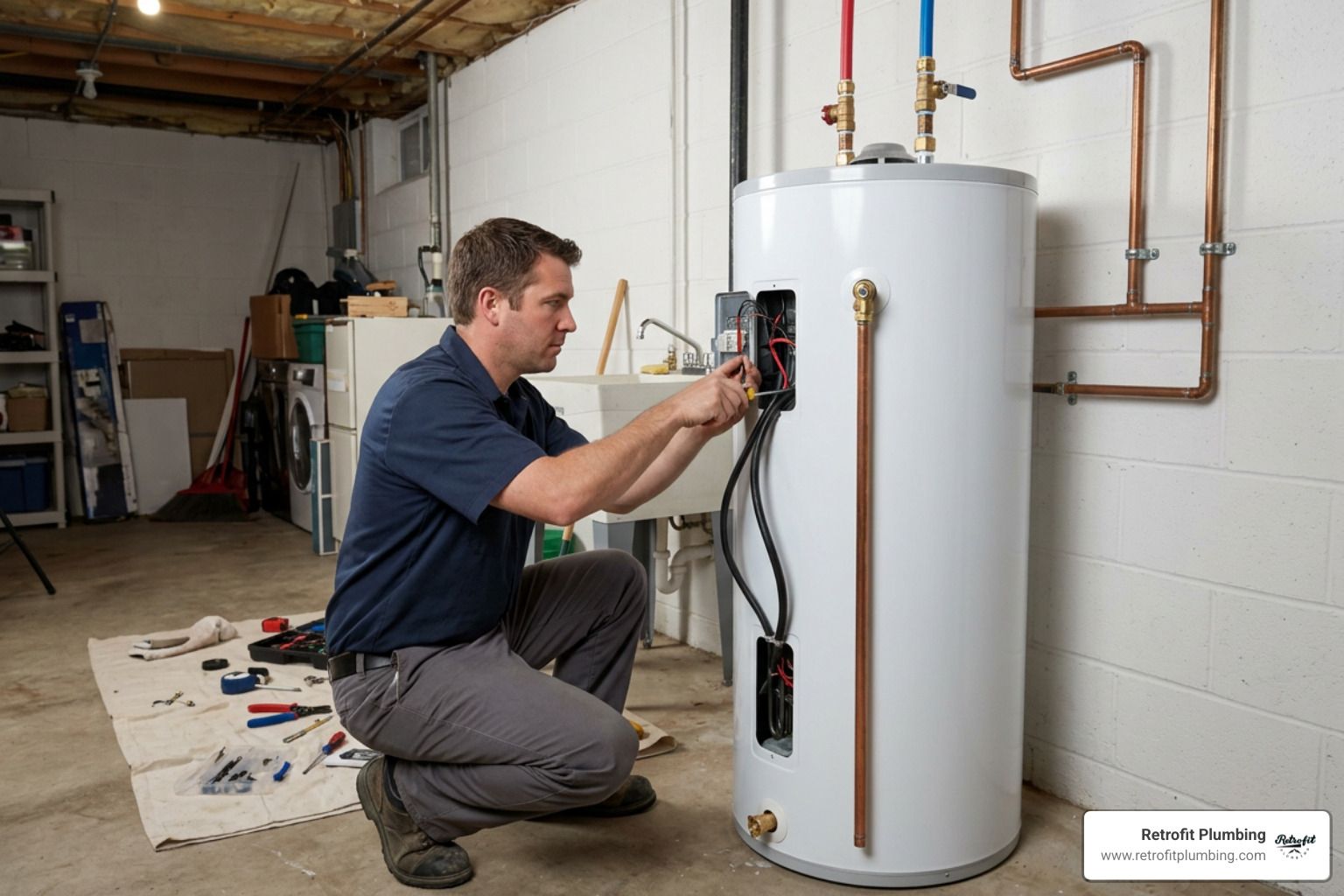
- Shut Off the Water Supply: Locate the cold water shutoff valve directly above your water heater tank. This is usually a lever (ball valve) or a round dial (gate valve). Turn the lever 90 degrees so it is perpendicular to the pipe, or turn the dial clockwise until it stops. This stops the continuous flow of cold water into the tank, halting any active flooding.
- Turn Off the Fuel Source:
- For Gas Units: Locate the gas control valve near the bottom of the tank and turn the dial to the "OFF" position. You should also close the dedicated gas shutoff valve on the incoming gas line.
- For Electric Units: Head straight to your home’s main electrical panel. Locate the double-pole circuit breaker labeled "Water Heater" (usually a 30-amp breaker) and flip it completely to the "OFF" position. Never work on or drain an electric water heater with the power still running, as this can burn out the heating elements instantly or cause severe electrical shock.
- Contain the Damage: Use buckets, old towels, or plastic bins to catch any dripping water. If the tank is actively draining from a structural crack, you won't be able to stop the leak entirely until the tank is empty, but stopping the incoming supply will limit the total volume to what is currently trapped inside the tank.
Immediate Safety Steps for a Broken Hot Water Heater
Safety is our absolute priority. When a water heater fails, it is not just a plumbing inconvenience; it can present serious gas and electrical hazards.
If you have a gas unit and smell a distinct "rotten egg" odor near the appliance, stop what you are doing immediately. Do not flip any light switches, do not use your phone inside the house, and do not attempt to turn off the gas valve if you have to search for it in the dark. Evacuate everyone in the home immediately, move a safe distance down the street, and call Puget Sound Energy or your local emergency services.
For electric units, standing water around the base of the tank represents an immediate shock hazard. If the floor is wet and the breaker is still on, do not step into the water to reach the tank. Go straight to your electrical panel to shut off the power first.
Once you have secured the area and verified that there is no immediate danger, you can begin assessing the damage. Understanding what to do when your water heater breaks helps you make smart decisions under pressure. If you are dealing with structural pooling around the base of the unit, read our specialized breakdown on resolving water heater leaks to determine if your tank is salvageable or completely rusted through.
Is Your Hot Water Heater Broken or Just Needs a Quick Reset?
Before you assume you need a costly replacement, it is worth checking if your system has simply experienced a temporary glitch. Electric water heaters feature a high-limit safety switch (often called the ECO, or Energy Cut Off switch) designed to shut down the unit if the water temperature gets dangerously high.
To check this, turn off the power at the breaker, remove the upper access panel on the side of your electric tank, pull back the insulation, and look for a small red button. Press it firmly. If you hear a click, the unit has reset. Put the cover back on and turn the breaker back on. If the breaker trips again immediately or the water doesn't heat up, you likely have a failed heating element or thermostat.
For gas units, a pilot light that has gone out is a common culprit. Drafts, a sudden drop in gas pressure, or a failing thermocouple can extinguish the flame. You can attempt to relight the pilot following the manufacturer instructions printed on the side of the tank. However, do not keep relighting the pilot repeatedly. If the pilot light refuses to stay lit after one or two attempts, it is usually a sign of a failing thermocouple or a faulty gas control valve. Continually trying to light it can cause gas to build up, creating an explosion hazard.
If you want to walk through these diagnostics step-by-step, check out our comprehensive water heater emergency repair guide to safely rule out simple fixes before calling in the pros.
Common Signs and Causes of Water Heater Failure
Water heaters rarely fail without dropping a few hints first. Recognizing these signs early can save you from a freezing cold shower or a flooded utility closet.
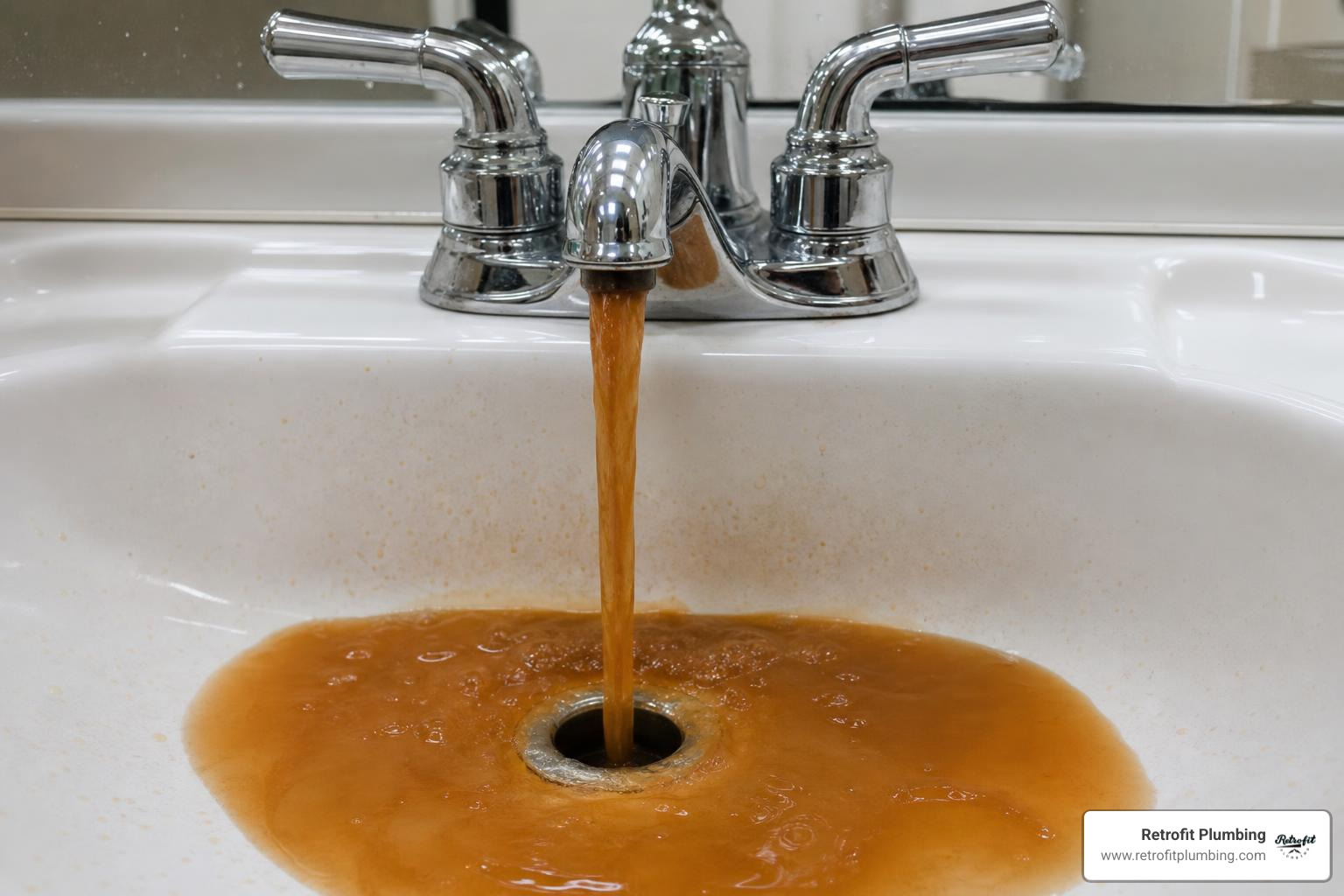
Keep an eye and ear out for these common warning signs:
- Inconsistent or Lukewarm Water: If your showers are getting shorter or you can only get lukewarm water, one of your electric heating elements may have failed, or sediment has built up to the point where heat cannot transfer efficiently.
- Unusual Noises: Popping, rumbling, or banging sounds coming from your tank are not normal. As water heaters age, mineral scale settles at the bottom of the tank. When the burner or element heats the water, steam bubbles escape through this thick crust of sediment, causing loud popping noises. This sediment buildup can reduce your system's operating efficiency by up to 25%.
- Rusty or Discolored Water: If rusty water is coming out of your hot water taps but your cold water runs crystal clear, the inside of your steel tank is actively corroding. This is a clear sign that your sacrificial anode rod has expired and the tank itself is beginning to break down.
- Water Pooling Around the Base: If you spot moisture, damp drywall, or actual pooling around the bottom of your water heater, inspect the tank body. While some leaks come from loose fittings or a dripping valve, moisture coming directly from the tank shell means the inner lining has cracked. Once a tank body begins to leak, it cannot be repaired; the entire unit must be replaced.
If you live in the South Sound area, from Covington and Kent down toward Auburn and Tacoma, getting a professional evaluation early can save you from a major headache. Retrofit Plumbing can help with local water heater repair services before these symptoms turn into a full-scale emergency.
Why Pacific Northwest Water Quality Affects Your Tank
Here in the Pacific Northwest, we are blessed with some of the cleanest, most delicious drinking water in the nation. Much of our regional water supply comes from pristine surface water sources, like the Cedar River Watershed which serves Seattle, Renton, and parts of Bellevue. This surface water is incredibly "soft," meaning it contains very low levels of dissolved minerals like calcium and magnesium.
While soft water is fantastic for your skin, hair, and laundry, it has a hidden downside for plumbing appliances. Soft water is naturally hungry for minerals, making it highly corrosive to metals. It aggressively attacks the copper pipes and steel tanks inside our homes. To protect the steel tank from this corrosion, water heaters are equipped with a sacrificial anode rod - usually made of magnesium or aluminum. This rod actively attracts corrosive elements, rusting away so your tank doesn't have to.
However, because our local water is so hungry, these anode rods degrade quickly. Once the anode rod is entirely eaten away, the water begins attacking the steel tank walls, leading to rust-colored water and eventual tank failure.
On the flip side, if you live in communities like Covington, Kent, or Maple Valley, your water may come from local groundwater wells rather than surface reservoirs. This groundwater travels through underground aquifers, picking up minerals along the way. If you have this harder well water, you will deal with rapid sediment and scale buildup at the bottom of your tank, which insulates the heating elements, causes loud popping noises, and overheats the tank bottom.
Whether you are dealing with aggressive soft water corrosion or heavy groundwater sediment, regular professional attention is key. If you are experiencing scale, rust, or hot water issues in South King County, our local team can inspect the tank, check the anode rod, and recommend the right next step through our water heater repair services.
DIY Troubleshooting vs. Calling a Professional Plumber
Many homeowners love the satisfaction of a good DIY project. However, when it comes to water heaters, you are dealing with a complex appliance that combines high-voltage electricity (240 volts), explosive gas, and pressurized water heated up to 140°F.
To help you decide whether to grab your tool bag or pick up the phone, we have put together a quick reference guide:
| Water Heater Issue | DIY or Pro? | What Is Required? | Risk Level |
|---|---|---|---|
| Tripped Circuit Breaker | DIY | Reset breaker once; check high-limit switch on tank. | Low |
| Extinguished Pilot Light | DIY | Relight pilot following manufacturer instructions. | Low-Medium |
| Leaking T&P Relief Valve | Pro | Replace valve; inspect for dangerous system pressure/temperature. | High |
| Failed Heating Element | Pro / Experienced DIY | Drain tank, test with multimeter, unscrew and replace element. | Medium-High |
| Leaking Tank Body | Pro | Full system replacement and local permit compliance. | High |
| Water Expansion Tank Failure | Pro | Install and calibrate a new thermal expansion tank. | Medium |
If you are an experienced DIYer comfortable working with electrical testers and plumbing tape, you might tackle some component swaps yourself. If you suspect your pressure relief valve is failing, read our walkthrough on replacing water heater relief valve to understand the process.
For homes on closed water systems, a failing expansion tank can cause rapid pressure spikes that break your main heater. Learn how to address this by reading our guide on replacing water heater expansion tank.
If you have isolated your issue to a burned-out electric element, you can follow our step-by-step how to replace water heater element guide to get your hot water back online safely.
When to Repair vs. Replace Your System
If your water heater is acting up, you are likely asking yourself: Should I pay to fix it, or is it time to invest in a brand-new unit?
To make an informed decision, start with the Age of the Unit. Standard tank water heaters typically last about 10 years. If your unit is under 6 years old, it is almost always worth repairing. If it is between 6 and 10 years old, you will need to weigh the cost of the repair against the remaining life of the tank. If your water heater is over 10 years old and starts having major component failures, replacing it is usually the smartest, most cost-effective long-term move.
Next, apply the One-Third Rule. If the cost of the repair exceeds one-third of the cost of a complete replacement, and the unit is past its midway point of life, put that money toward a new, more efficient system instead of patching up an old, failing tank.
Finally, look at the Type of Failure. If you need to replace a thermostat, a thermocouple, or a heating element, these are affordable repairs that can extend the life of an otherwise healthy tank. However, if your tank body is leaking, if there is rust flaking off the exterior, or if the bottom of the tank is heavily corroded, a repair is physically impossible.
When you do need to make the switch, make sure you hire a licensed team who understands the specific steps for replacing an electric water heater. Retrofit Plumbing serves homeowners across Covington, Renton, Kent, Seattle, Tacoma, Auburn, Bellevue, and Kirkland with honest recommendations, fully stocked trucks, and same-day service whenever possible.
Local building codes are strict. For example, if you live in the Eastside, you must comply with Kirkland permit requirements which dictate specific safety inspections, strapping for seismic activity, and proper discharge piping for relief valves.
Upgrading to High-Efficiency and Tankless Systems
If it is indeed time to replace your broken water heater, you are no longer limited to the exact same type of tank you had before. Plumbing technology has advanced significantly, offering options that can slash your energy bills and provide endless hot water.
One of the most popular upgrades in the Pacific Northwest is the Hybrid Heat Pump Water Heater. These units pull heat right out of the surrounding air and transfer it into the water. Because they move heat rather than generating it through raw electrical resistance, they can be up to 5X more efficient than a standard electric tank. While they have a higher upfront cost, they can save the average family hundreds of dollars a year in electricity, quickly paying for themselves.
Another fantastic option is upgrading to tankless water heaters. Instead of keeping 50 gallons of water hot 24 hours a day, tankless units use high-powered burners or elements to heat water instantly on demand.
The benefits of going tankless include:
- Endless Hot Water: You will never run out of hot water, even if you have back-to-back showers and run the washing machine at the same time.
- Space Savings: Tankless units are about the size of a small suitcase and mount directly to the wall, freeing up valuable floor space in your utility closet or garage.
- Longer Lifespan: While standard tanks last around 10 years, a well-maintained tankless system can easily last 20 years or more.
If you are interested in making the switch, explore our services for tankless water heaters to see if they are a good fit for your daily routine. To find the top-performing models on the market today, check out our guide on the best residential tankless water heater.
For Eastside homeowners in Bellevue and Kirkland, or South King County homes near Covington, Kent, and Renton, a tankless or high-efficiency upgrade can be a smart move if your current tank is aging, noisy, or leaking.
Frequently Asked Questions About Broken Water Heaters
How long do conventional tank water heaters typically last?
On average, a standard tank water heater lasts between 8 and 12 years, with 10 years being the typical turning point. In areas of the Pacific Northwest with aggressive, highly corrosive soft water, tanks can fail even sooner if the sacrificial anode rod is not replaced every 2 to 3 years. Keeping up with annual tank flushes to remove sediment can help your system reach or exceed its 10-year lifespan.
Why is my water heater making a loud rumbling or popping noise?
Loud rumbling, popping, or banging noises are almost always caused by sediment buildup at the bottom of the tank. As mineral scale precipitates out of your water, it settles into a thick layer on the bottom. When the burner underneath fires up, water trapped beneath this sediment boils and turns to steam, popping violently to escape. Flushing your tank once a year (or twice a year in groundwater areas) is the best way to prevent this buildup and keep your system running quietly.
What should I do if I smell gas near my water heater?
If you smell gas (a distinct rotten egg odor) near your water heater, do not attempt to light the pilot, do not flip any light switches, and do not use your phone inside. Leave the house immediately, leaving the front door open behind you to help ventilate. Once you are a safe distance away from the property, call your local gas utility provider or 911 to report the leak.
Conclusion
A hot water heater broken in the middle of a chilly Pacific Northwest winter can throw your entire household into chaos. But with a calm head, quick safety steps, and a basic understanding of how your system works, you can easily protect your home from water damage and get your hot water restored fast.
At Retrofit Plumbing, we are proud to serve our local communities across Covington, Bellevue, Renton, Kent, Seattle, Tacoma, Auburn, and Kirkland. We believe in honest, upfront pricing, and our fully stocked trucks are always ready to provide rapid, same-day service to get your home back in order. We back all of our work with a 100% satisfaction guarantee, so you can rest easy knowing the job was done right.
If you are tired of shivering through cold showers or are worried about a leaking tank, do not wait for a minor drip to turn into a major flood. Contact us today to schedule our professional water heater repair services and let our expert team get your hot water running perfectly again!